Start with condition, not the prettiest box
An embroidered cloth, a delicate shawl and a heavy bedcover may all be textiles, but they do not present the same storage problem. Spread out only what can be handled safely and note differences in weight, decoration and condition. If the fabric is fragile, stained in an unfamiliar way or showing possible pest activity, obtain advice before packing it with the rest.
Do not treat washing as an automatic preparation step. Old dyes, fibres, finishes and attached decoration may require specialist assessment. A textile that seems slightly dusty is not an invitation to test a favourite laundry method. Record what you know about previous cleaning and leave uncertainty visible in the notes.
Support rather than compress
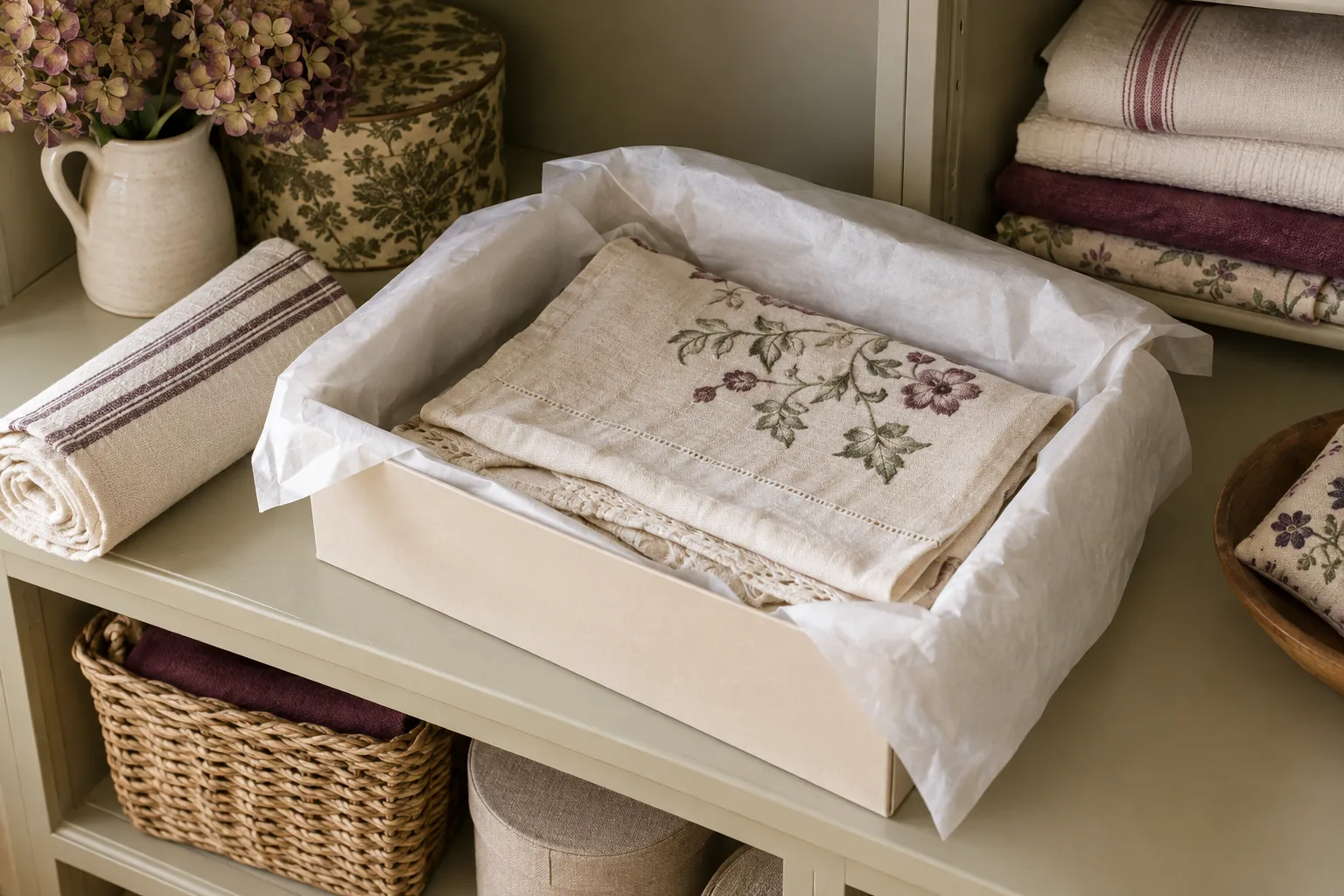
The Canadian Conservation Institute describes flat storage as useful for supporting many textiles and recommends minimising folding. Practical arrangements depend on the individual piece and the available space. Ask a textile conservator about valuable, fragile, heavily decorated or unusually large items before choosing a method.
A small box that requires tight folds may be convenient for the cupboard and unhelpful for the cloth. Compare the textile's dimensions with suitable storage options before purchasing containers. Think about how the piece will be lifted out as well as how it will fit in. Storage should support future access, not simply make the lid close.
Where folds or layers are appropriate, obtain advice on suitable support and interleaving materials. Do not assume ordinary coloured tissue, wrapping paper or a scented drawer liner is an equivalent substitute. The exact material matters more than whether the finished package looks beautifully presented.
Keep groups understandable
Store related pieces in a way that preserves their association without making the container too heavy or crowded. A set of napkins can have one reference, while an individual embroidered panel may deserve its own record. Photograph the contents before closing the box, so you can identify them later without unnecessary handling.
Label the outside clearly and keep a copy of the description in your household inventory. Include dimensions, any known history and the date of packing. Distinguish observations from assumptions: pale mark near one corner is a better note than water damage if the cause has not been established.
Choose the cupboard as carefully as the box
Look at access, plumbing, heat and the room's general condition. A storage system should not depend on a box remaining safe beneath a pipe or in a place with persistent damp. Address building concerns with an appropriate professional and ask a conservator about suitable conditions for important pieces.
Leave enough room to retrieve one container without pulling out an unstable stack. If boxes are large, plan where they can be opened fully. A textile should not have to balance across the edge of a bed while you search for somewhere to put the lid.
Keep everyday household textiles separate from fragile stored pieces where practical. That reduces the chance of a guest reaching into the wrong box for a spare tablecloth. Clear labels and an ordinary explanation are usually more effective than relying on everyone to recognise which fabric needs special care.
Plan the next look
A storage date is useful only if the object is not forgotten indefinitely. Arrange sensible checks, with frequency informed by condition and professional advice where needed. Look for changes and review the container and surrounding area as well as the textile. Record the findings briefly so the next check has a reference.
When a piece comes out for display or use, reassess whether that role is appropriate. Something inherited as everyday linen may now be too fragile for the same routine. You can appreciate its workmanship through careful viewing, photography or a suitable display instead. Thoughtful storage keeps those choices open, with the textile supported, identified and available when you are ready to enjoy it again.