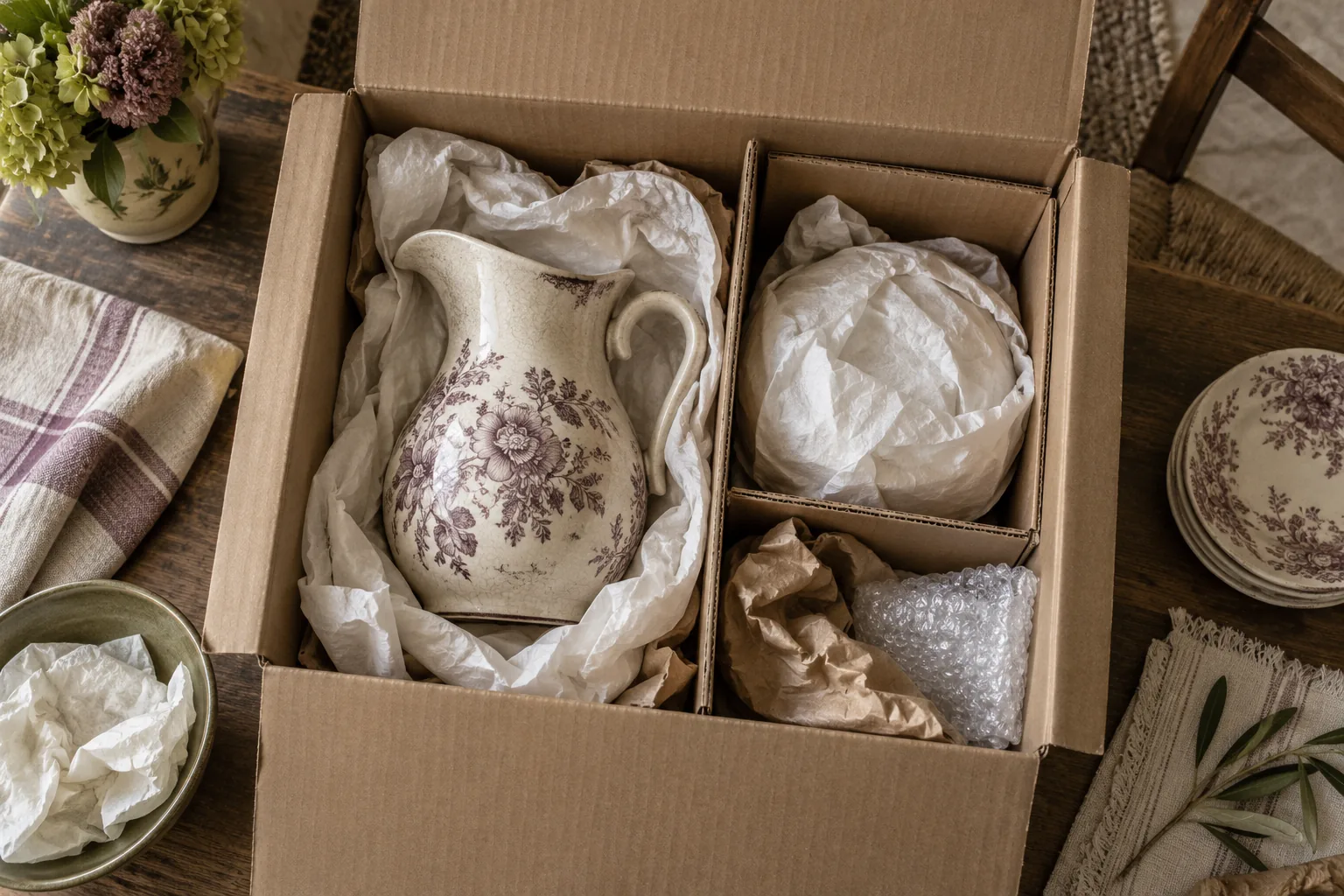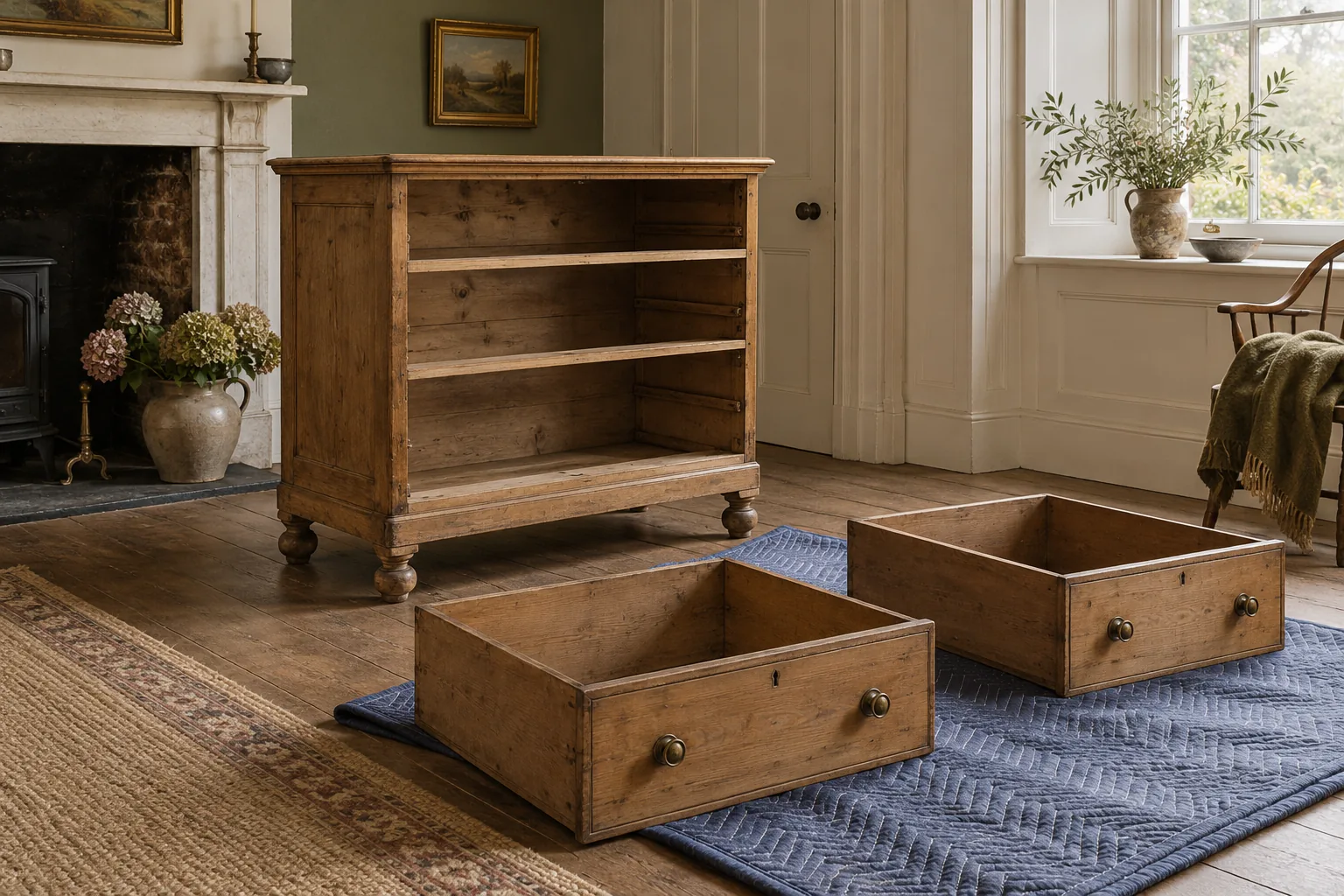
An empty chest is not the whole plan
When a chest has to move, attention naturally goes to its weight and the doorway ahead. Drawers are easily treated as an afterthought. Yet their contents, movement and individual fit all need consideration. Begin while the furniture is still in its ordinary place, with enough time to work without the delivery team waiting in the hall.
Empty the drawers and sort the contents separately from the furniture parts. It is easy for a small fitting found inside to become mixed with pens, jewellery or household paperwork. Set aside anything that might belong to the chest and record where it was found. That information may be useful later.
Find out what can be removed safely
The Canadian Conservation Institute recommends checking furniture for damage before moving it and considering removable elements as part of handling. That does not mean forcing every drawer out. Stops, runners and previous repairs can affect how a particular drawer is removed. If the method is unclear or the drawer resists, ask an experienced handler or furniture professional.
Tell the movers about fragile fronts, loose handles or other known concerns. A drawer front is not automatically an appropriate lifting point for the whole chest. Agree on the handling plan before anyone begins. For a heavy or valuable piece, a suitable professional service is more sensible than discovering the difficult part halfway down a staircase.
Keep the order understandable
Draw a simple diagram or take a photograph of the chest and give each position a reference in your notes. Keep labels on separate packaging or another suitable place, never stuck casually to finished surfaces. A top-left drawer and a bottom-left drawer may look similar while fitting differently.
Ask the handlers how the drawers will be supported and protected during the move. Avoid placing them in a stack where delicate fronts or projecting handles bear pressure. Keep loose components associated with the correct drawer. The destination should be prepared to receive these parts as well as the main body of the furniture.
Prepare the route and the landing place
Clear the walking route, protect surrounding surfaces appropriately and remove objects that could force a last-minute change of direction. Check where the chest will be put down at the other end. A cleared wall is not enough if packaging, rugs or another cabinet block the final approach.
Consider the room's layout before reassembly. It is easier to confirm the position while the chest is empty than after every drawer is refilled. Check door clearance, sockets and any required securing arrangement. If installation work is needed, organise it rather than treating the furniture's arrival as proof that it is ready for normal use.
Reassemble without forcing the fit
Return drawers to their recorded positions using the appropriate method. If something no longer moves as expected, stop and inspect rather than pushing harder. Confirm that any stops or other components are correctly restored. Ask the professional involved to resolve uncertainty before the chest is filled again.
Keep the moving record with photographs of the piece, including any concerns noted before and after transport. The notes need not be elaborate; they should make it clear what moved, which parts were separate and what changed. A careful move is successful when it becomes an uneventful part of the furniture's history, with every drawer back where it belongs and no mystery bag of screws left on the windowsill.