Preserve the order before improving it
A bundle of letters may arrive tied together, mixed with photographs or arranged in a sequence only one family member understands. Before reorganising, record how it was found. Photograph groups and note any names or dates already attached. An apparently untidy order may preserve relationships that become difficult to reconstruct once everything is sorted by size.
Do not rush to remove every fastener, unfold every sheet or separate anything stuck together. Fragile paper and old attachments can require specialist handling. Begin with what you can observe safely, and keep uncertain items aside for advice. The first useful contribution may be a written description rather than physical intervention.
Create a clean place to look
Choose a clear surface large enough to support the paper without overhang. Keep food, drinks, pens and household cleaning products away from the working area. Arrange suitable support before moving a large sheet. The Canadian Conservation Institute stresses careful handling and protective enclosures as central parts of paper care.
Work with a manageable group at a time. A table covered with dozens of loose sheets makes it easy to lose sequence or place an object on top accidentally. Keep a simple list of what you have looked at and where it will go next. Organisation should reduce handling rather than generate an endless series of piles.
If a document is too fragile to read comfortably, a paper conservator can advise about stabilisation, viewing and possible copying. Do not flatten it under heavy books or introduce moisture in an attempt to make it more cooperative. Those choices change the object before its condition has been understood.
Choose enclosures for the actual material
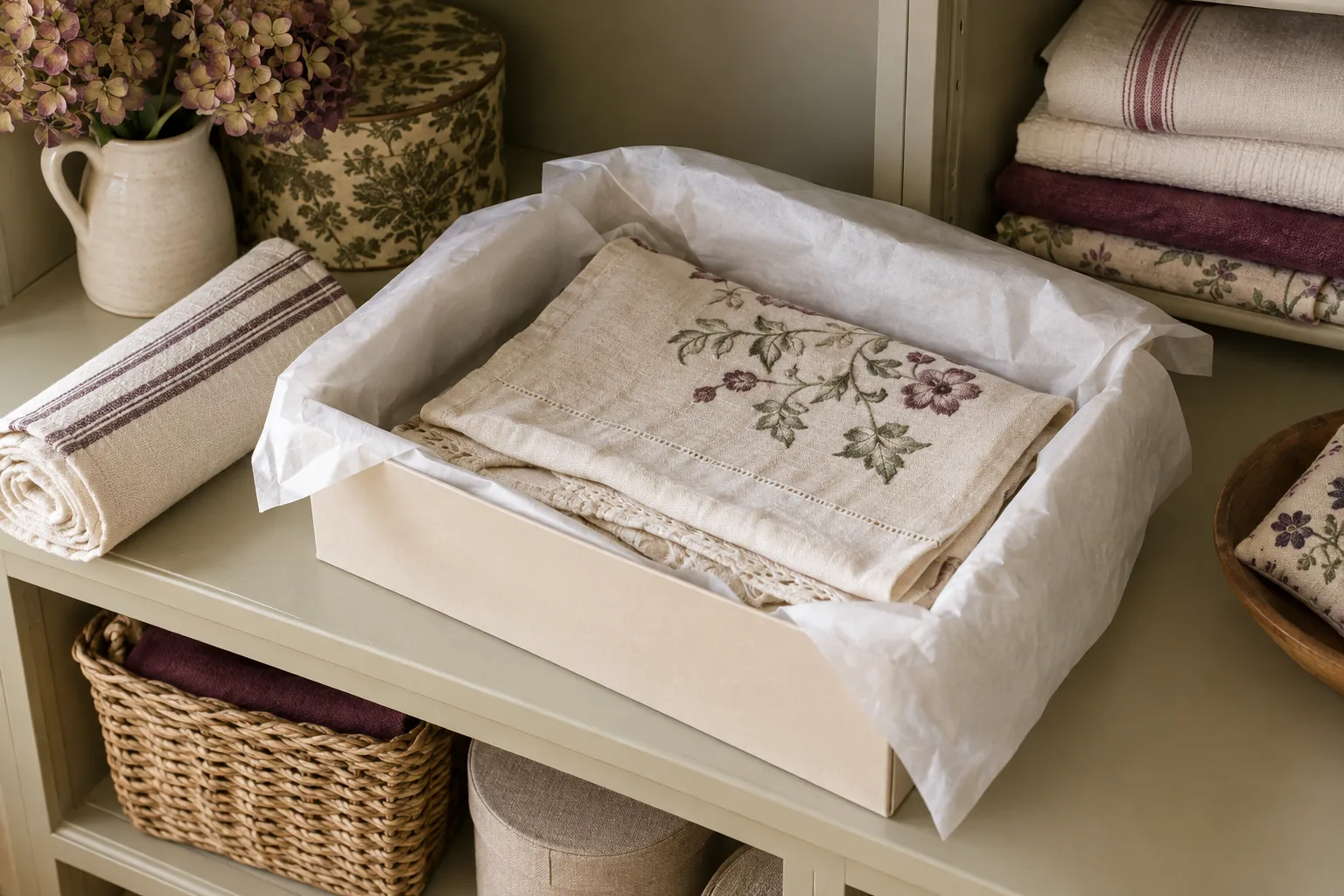
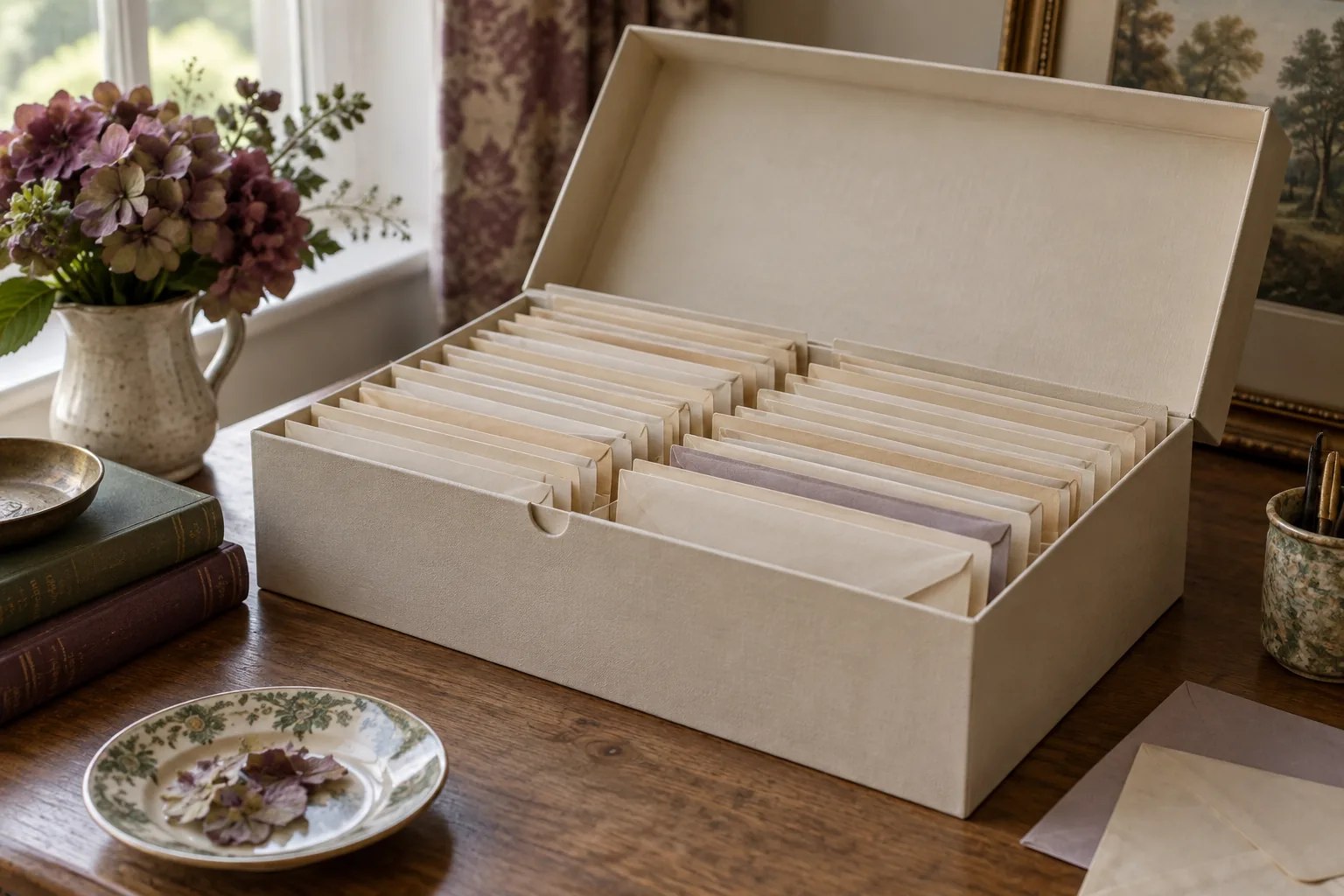
Suitable folders, boxes and other enclosures can protect paper and make access easier. The word archival on a product is not a complete specification, and different media can need different arrangements. Ask a knowledgeable conservation supplier or paper conservator about the paper, inks and surface you are storing.
Provide dimensions and describe any unusual features, such as powdery drawing media, attached seals or photographs mixed into the bundle. A transparent sleeve may seem convenient but is not appropriate for every surface. The aim is a storage system suited to the objects, not simply a uniform set of containers that looks organised on a shelf.
Label the enclosure, not the memory
Use a consistent reference on the folder or box and link it to a short description in your notes. Record names as known, distinguishing certainty from family recollection. For example, believed to be Aunt May is more honest and more useful than silently turning an uncertain identification into a fact.
Keep the level of detail sustainable. A date range, sender, recipient and brief subject may be enough for ordinary correspondence. You can add fuller descriptions later. Avoid postponing sensible storage until you have transcribed every page; the collection can become easier to care for while research continues.
Retain envelopes where their association is known. Postmarks, addresses and notes may contribute information, even if the letter seems more interesting at first. Ask for suitable ways to keep related items together without attaching them physically to one another.
Make access part of the plan
Store the boxes somewhere appropriate and accessible, with enough clear space nearby to open them safely. A well-chosen enclosure is less useful if retrieving it requires dragging it from behind heavy objects. Keep the inventory outside the boxes as well as with them so you can identify the right one before moving anything.
Consider copies for items the family wants to read often, using a method that respects the original's condition. Keep digital filenames linked to the physical references and maintain a backup. The purpose of careful storage is not to make old paper disappear. It is to preserve the object and its connections while making it easier to find the particular letter you wanted, without disturbing every other one.