Watch how the chair is used between sittings
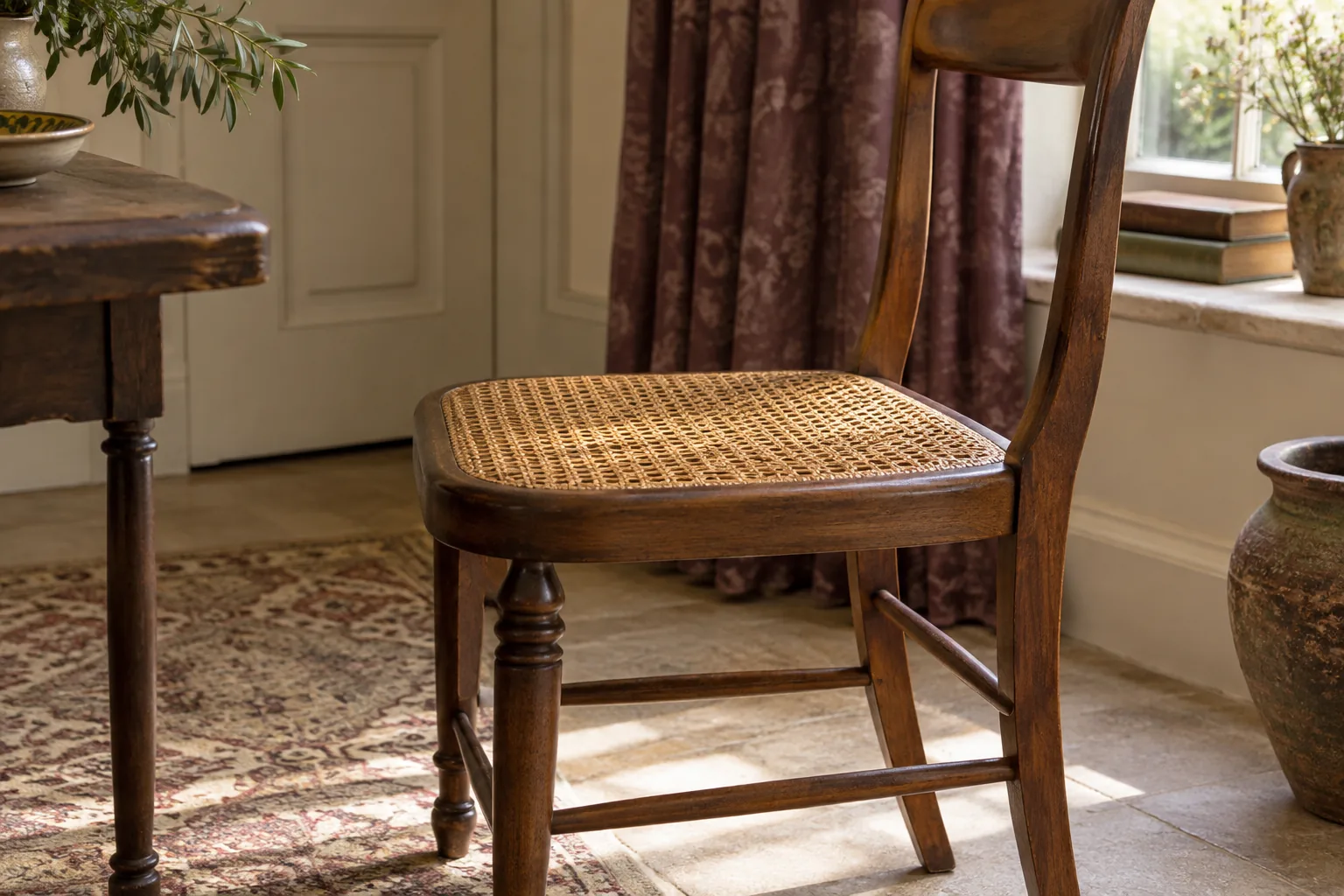
A chair's ordinary life includes more than someone sitting down. It is moved for cleaning, used to hold a bag, leaned against while reaching a shelf and occasionally mistaken for a step. With a cane seat, those incidental moments deserve attention. A knee, shoe or concentrated load is not the same as the use for which a sound chair was intended.
Begin by deciding whether the chair is currently suitable for seating at all. Broken strands, marked sagging or uncertain repairs call for assessment. Do not cover the problem with a cushion and continue using it. A soft pad can disguise a weakness without resolving it.
Look at the frame and weave together
The woven panel belongs to a larger structure. Check visible connections, surrounding rails and the places where the chair back meets the seat. A renewed weave does not establish that the frame is sound. Likewise, a sturdy-looking frame does not tell you that an old panel can support normal use.
Take photographs from the top and underside when that can be done safely, or ask the seller or specialist to provide them. Record previous work if known. The Canadian Conservation Institute's guidance on plant materials is useful background, but the condition of the individual chair remains central to decisions about use and treatment.
Plan how the chair moves
Ask a knowledgeable furniture professional about appropriate lifting points for the particular chair. Decorative backs, arms and woven areas should not be treated automatically as handles. If the chair is fragile or awkward, use suitable help rather than finding the nearest convenient grip.
Clear the destination before moving it. Carrying a chair while deciding where it belongs encourages unnecessary turning and contact with other furniture. If several chairs are being rearranged, move them in a considered sequence rather than creating an unstable temporary stack in the corner.
Make the intended use obvious
In a busy household, explain any limitations plainly. A chair kept only for display should not sit in a place where a visitor naturally assumes it is available seating. Choose its location accordingly, or provide another chair nearby. The responsibility should not depend on guests recognising fragility from appearance.
Keep bags and heavy objects elsewhere. If the chair repeatedly attracts laundry or a pile of books, give those things a more convenient home. This is often a more effective care measure than a reminder that nobody remembers when carrying an armful of washing through the room.
For a chair assessed as suitable for use, ask whether a particular cushion or other arrangement is appropriate rather than choosing one as a supposed repair. Make sure any accessory does not conceal changes you should be monitoring.
Avoid a quick tightening remedy
Online advice may suggest wetting, steaming or otherwise manipulating a sagging seat. Do not apply those methods to an unfamiliar old chair without specialist assessment. The material, finish, attachment method and frame condition all matter. A treatment that seems to improve appearance briefly may not address the actual problem.
If a new break or other change appears, stop using the chair and document it. A caning specialist or conservator can advise on the next step and on whether other work is needed first. Keeping the chair's future role clear—daily seating, occasional use or display—helps that conversation. The aim is to preserve a useful object without asking its familiar silhouette to promise more strength than it presently has.