Look at the edges of the room's pictures
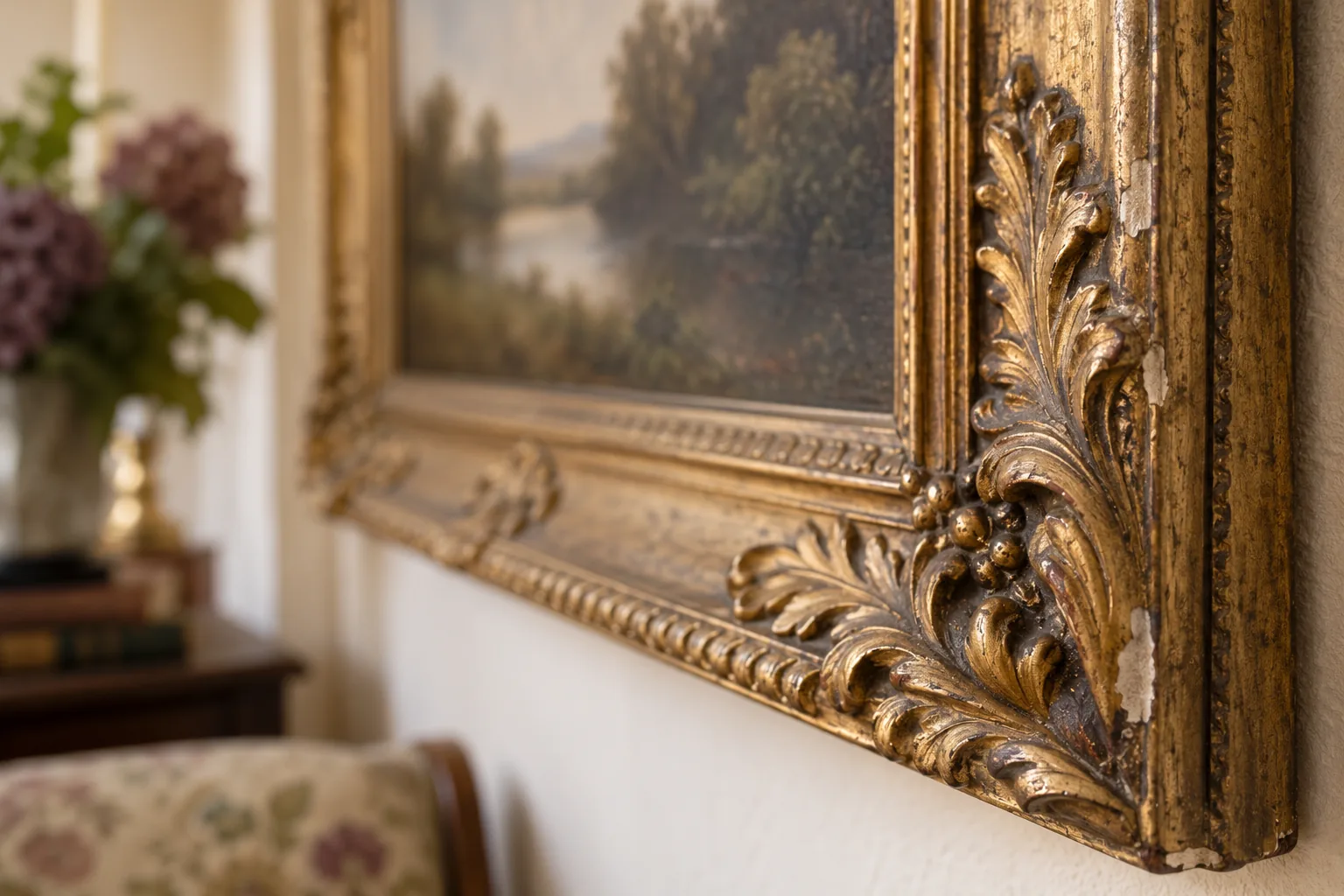
Frames tend to disappear from attention once a picture is hung. We notice the image, straighten it occasionally and perhaps run a cloth around the outer edge. An older frame may deserve a more deliberate look. Check for loose ornament, changes around joints and areas where a surface appears to be lifting or shedding.
Do this visually without pressing on decorative details. A moulded leaf or bead may seem substantial while its attachment is fragile. If something is loose, avoid moving the frame unnecessarily and ask for advice. The condition of the picture behind it does not tell you whether the frame itself is sound.
Keep the finish's complexity in mind
Icon's guidance explains that frames and gilded objects can combine several materials and that their decorative surfaces can be vulnerable to inappropriate cleaning. A gold-coloured finish is not enough information to choose a polish. Nor should an apparently missing patch be filled casually with metallic paint.
The useful first step is documentation. Photograph the whole frame and details of any concern. Note whether a fragment was found beneath it and whether the change seems recent. A conservator can use that information to decide whether an inspection is needed and what should happen in the meantime.
Do not make a falling fragment anonymous
If a piece detaches, preserve it separately and keep a clear record of the frame it came from. Avoid repeatedly testing the fit. A small fragment can be easy to lose during ordinary cleaning, particularly if it resembles household debris. Let other people in the home know what has happened.
Do not tape it to the back of the frame or glue it into place as a temporary measure. Ask the conservator about suitable protection and storage. The aim is to retain both the material and its context so that future treatment has the best information available.
Review the hanging position
Look at what happens around the frame. A door opening towards it, a chair back nearby or a narrow passage can create repeated opportunities for contact. Moving the picture to a quieter position may be sensible, but the move itself should be planned if the frame is fragile or heavy.
Have the hanging arrangement assessed appropriately for the object and wall. Do not assume an old wire remains dependable because it has held the picture for years. If the artwork and frame need to be separated, use a suitable professional rather than treating removal as a routine first step.
The wall and room conditions also matter. A location affected by damp or a leak requires attention to the building as well as the object. Care for a frame cannot compensate for an unresolved problem directly behind it. Record the concern and involve the appropriate people.
Let routine care follow the assessment
Ask what, if any, cleaning is suitable for the frame in its present condition. The answer may be a restrained method at limited intervals or no household cleaning until treatment has taken place. Keep that instruction with your care notes so that it survives a change of cleaner or a well-meant family tidy-up.
Once the frame is stable, enjoy its surface without expecting complete uniformity. A carefully conserved finish may retain wear and variation. Those features can sit comfortably with the picture, provided active problems have been distinguished from age. The frame's purpose is to support and accompany the work, and thoughtful care allows it to do so without quietly losing the details that gave it character.