Describe the object before the problem
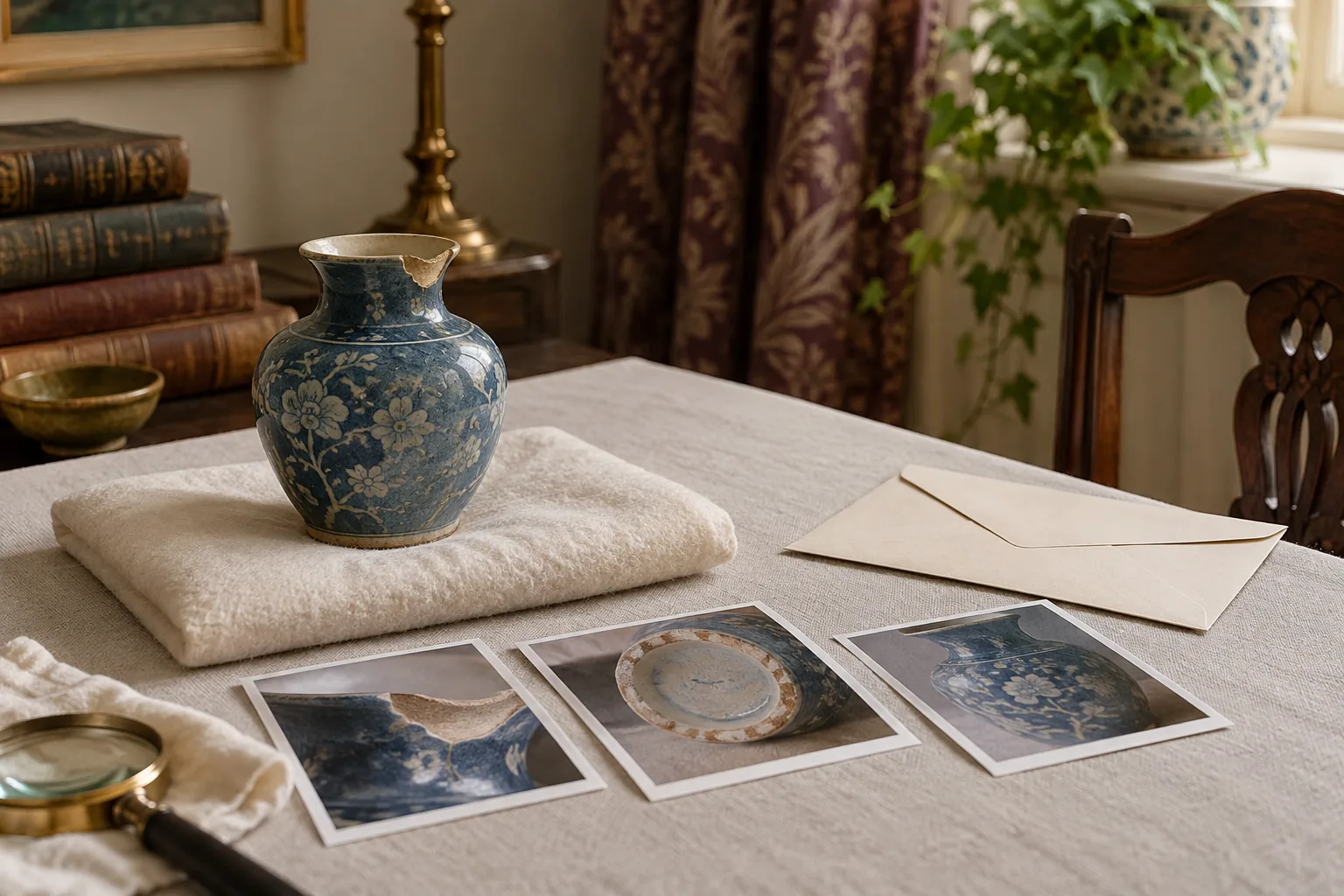
A clear first enquiry begins with the thing itself: what it is, its approximate dimensions, the materials you know and where it is located. Include an overall photograph. A message that says only my antique needs repair leaves the recipient unable to judge whether the object falls within their expertise or whether transport might be difficult.
If you are uncertain about a material, say so. A gold-coloured surface is a description; confirmed gilding is a different claim. Likewise, distinguish a documented maker or date from a seller's suggestion. A conservator can work with uncertainty more usefully when it has not been disguised as fact.
Explain the concern in ordinary language
Describe what you noticed, where it is and when it appeared. Examples might include a small area lifting near the right door, a fragment found beneath the frame or a stain that became visible after a leak. Add close photographs that relate clearly to the overall view.
Do not undertake extra cleaning or dismantling to make the enquiry more complete. If a part is inaccessible, explain that limitation. Ask whether more photographs are necessary and how to obtain them safely. An initial email should help arrange an appropriate assessment, not become an assessment you attempt yourself.
List any recent event or treatment that may be relevant. Include household products already applied, even if you now regret using them. The information can affect the professional's choices, and omitting it makes the object's history harder to understand.
Say what you hope to keep or change
Explain the intended role of the object. A daily-use chair, a decorative cabinet and a family textile kept mainly for its history may call for different discussions. Mention features that matter to you, such as a worn inscription, an existing fabric or a surface you do not want made glossy.
Be clear about practical limits too. Give any meaningful deadline and explain why it exists, rather than assuming that all work can be fitted around an event. State whether there is a budget range and whether you are initially seeking an assessment, preventive advice or a treatment proposal. That clarity saves both sides from working towards different expectations.
Ask about the next step, not only the price
Icon's guidance on working with a conservator recommends agreeing a written proposal and keeping the work documented. In the first conversation, ask what inspection is needed, whether it is charged for and what information a quotation will include. A price without a defined scope is difficult to compare.
Discuss where assessment and treatment would take place and who would arrange transport. For a large object, provide access information before assuming it can be collected easily. Ask about appropriate handling and insurance arrangements through the parties responsible. Keep those practical decisions in writing alongside the treatment discussion.
Check that the practitioner has experience relevant to your object and verify any accreditation through the appropriate professional register. A portfolio of attractive results is useful context, but ask about comparable materials and problems rather than looking only for a matching decorative style.
Keep the exchange focused
Send a manageable set of labelled images rather than dozens of unexplained files. An overall view, relevant details and a short written history usually make a more useful beginning. Offer additional photographs or documents if needed. Keep a copy of the enquiry and replies with the object's record.
If you are contacting more than one practitioner, make that clear and provide the same basic information. Compare proposals according to their scope, reasoning, experience, timing and documentation. Different estimates may represent different work rather than different prices for an identical result.
Carry the brief through the project
Before authorising work, make sure the agreed plan reflects the priorities you described. Ask how changes discovered during treatment will be communicated and approved. It is easier to discuss a possible shift in scope before work starts than after a component has been replaced or a finish altered.
At completion, keep the report, photographs and care recommendations together. Ask any remaining questions while the work is fresh in everyone's mind. A useful first enquiry begins a conversation that should end with more than a treated object: you should understand what was done, what remains uncertain and how the object can be enjoyed and cared for in its next phase of life.