Decide what you want the chair to become
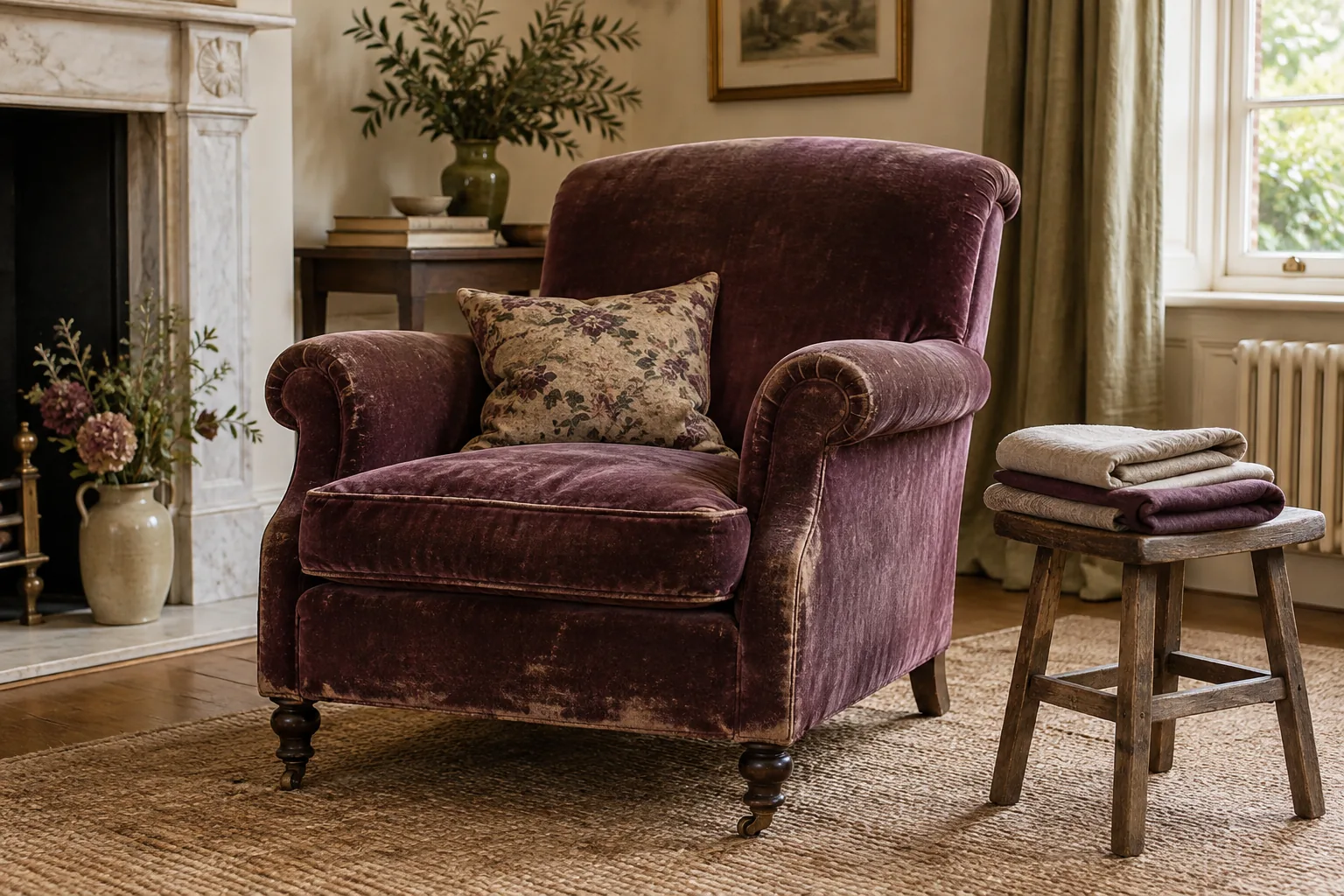
An inherited armchair may be wanted for daily reading, occasional guests or the memory attached to its existing fabric. Those aims can lead to different choices. Before requesting a makeover, decide which features matter to you and how the chair will be used. A discussion that begins with replace everything may close off options you would have preferred.
Photograph the whole chair and any details you value, including trims, stitching and worn areas. Write down what is known about previous upholstery work. Family recollection is useful when identified as such; it should not be presented as a confirmed date or original fabric unless there is evidence.
Separate condition questions
The cover may be faded but intact, while the seat support needs attention. Or the fabric may be fragile even though the frame appears steady. Ask for an assessment that considers the chair as a whole. A new cover is not evidence that the underlying structure has been repaired, and a firm seat does not prove that every component is sound.
Use an appropriately experienced upholsterer for practical refurbishment and a furniture or textile conservator where significant historic material or delicate surfaces are involved. Icon's conservation resources can help explain specialist care and direct you towards relevant expertise. Describe the object and your purpose rather than choosing a service solely by a photograph of completed work.
Leave cleaning experiments out of the preparation
Do not shampoo, steam or spot-treat an unfamiliar old covering simply to make it presentable for assessment. Dyes, finishes, filling and previous repairs can complicate the response. Tell the professional about marks and odours as they are, including any product already applied.
Keep the chair out of use if its structure or covering presents a concern that could worsen through sitting. A throw may be a decorative choice on sound upholstery, but it should not be used to hide a problem from visitors. Make temporary arrangements for another seat while the assessment is underway.
Ask what will be retained
A useful proposal explains which components are to remain, which may need replacement and what cannot be known until work begins. Ask how discoveries will be handled and whether additional work requires your agreement. That helps prevent a small commission from changing scope without a clear conversation.
If retaining old fabric or removed components matters to you, discuss it before the work starts. Ask whether that is appropriate and how they could be documented or stored. A bag of unlabelled offcuts is less useful than a record showing where a material came from and why it was removed.
Request a quotation that distinguishes assessment, structural work, upholstery materials, covering fabric and transport where relevant. Compare like with like. The lowest headline figure may describe a different amount of work rather than the same result at a better price.
Plan the chair's return
Ask for care instructions suited to the completed work and intended use. Include practical questions about cleaning, placement and what changes should prompt further advice. If a new fabric is chosen, keep its specification and relevant care information with the treatment record.
Set the chair in a place that supports its role. A reading chair needs convenient light and a clear route; a delicate retained covering may call for more restrained use. The best outcome is not necessarily the newest-looking chair. It is a chair whose condition, materials and purpose are understood, with the work documented and the qualities you value still present in a form you can enjoy.