A label is the start of a question
Words such as vintage, antique, reproduction and retro appear frequently in listings, but the useful information lies in the seller's specific claim. Is the piece described as old, recently made in an older style or of uncertain date? Read the full text rather than allowing the title alone to establish an age in your mind.
A reproduction may be a perfectly suitable object if you like its appearance and understand what it is. Difficulty arises when you want a period piece but rely on atmosphere, styling or a loosely used word instead of a clear description. Begin by deciding whether age itself matters to you or whether your main interest is the shape, material and practical use.
Separate design reference from attribution
A description that refers to the style of a designer or period is not necessarily claiming that the named person made the item or that it dates from that period. Ask the seller to explain the intended meaning if the distinction affects your decision. Do not upgrade a qualified description into a stronger attribution in your own notes.
Look for the basis of any stated identification. There may be a label, mark, documented history or specialist opinion, each requiring its own assessment. A name appearing in search results or a resemblance to another object is not enough by itself to establish authorship. If the attribution accounts for a substantial part of your interest, seek evidence proportionate to that importance before treating it as settled.
Ask about the object rather than testing the seller
A neutral question is more useful than a challenge built around terminology. Ask what is known about the date, maker, materials and any later alterations. Invite the seller to distinguish confirmed information from their judgement or information received from a previous owner.
Unknown details do not automatically make an object undesirable. Many ordinary older pieces have incomplete histories. What matters is whether the uncertainty is reflected honestly in the description and whether you remain comfortable with the piece without a more impressive story. A table you enjoy for its proportions can still be appealing with an uncertain date; a purchase made specifically for a documented maker requires a different level of confidence.
Inspect condition independently of the label
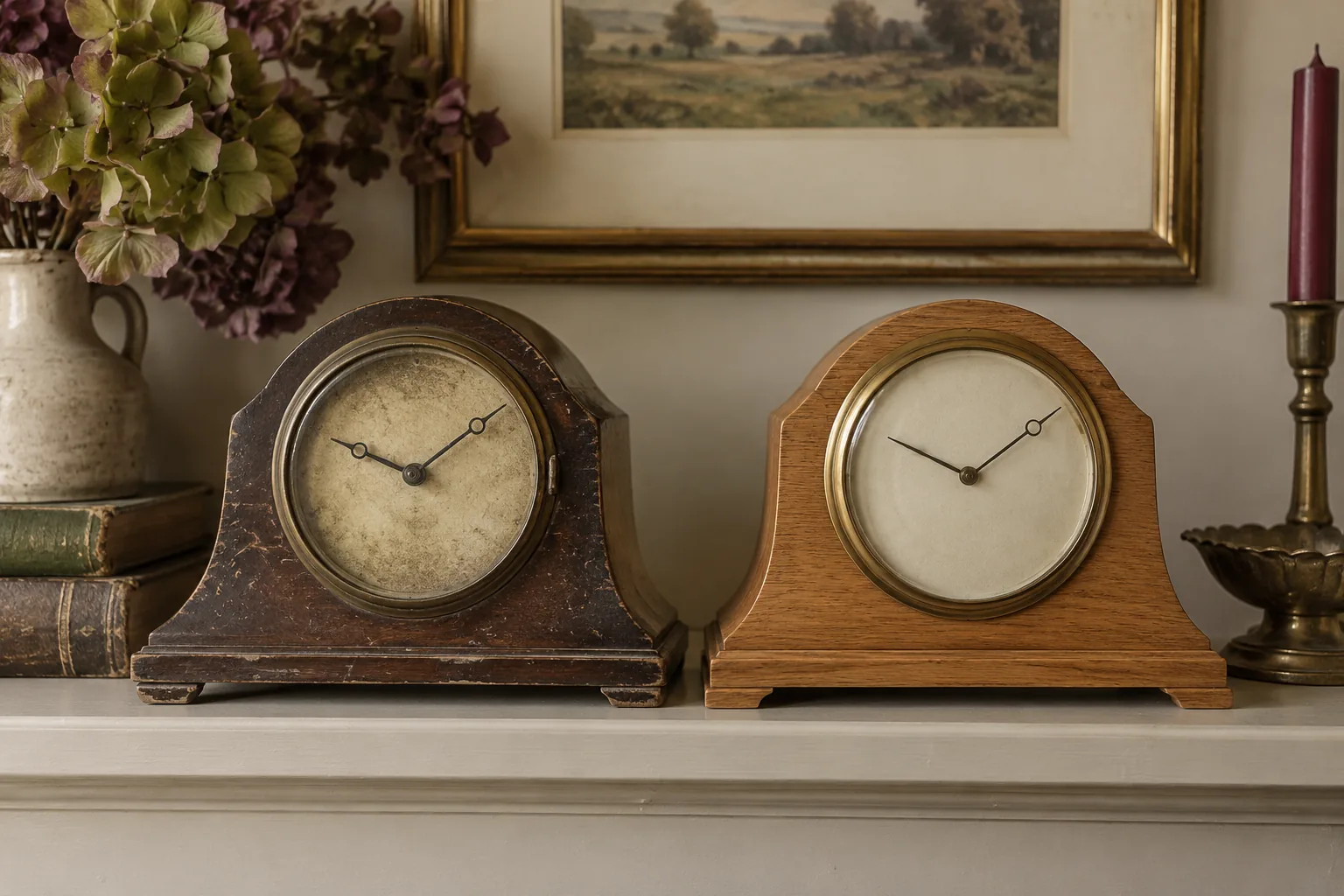
An old object can be heavily altered, and a newer reproduction can be well made or poorly made. Age terminology does not replace an assessment of condition and suitability. Look at the dimensions, construction, wear, repairs and practical requirements relevant to the intended use.
Avoid assuming that visible wear proves age. Distressed finishes and ordinary damage can be misleading when viewed remotely, while a carefully kept older object may look surprisingly fresh. If a precise identification matters, appropriate specialist assessment may be necessary. You can appreciate the object visually while keeping the historical question open. That separation makes it easier to avoid paying for certainty that the available evidence does not actually provide.
Keep the wording with the purchase
If you proceed, retain the exact listing and relevant correspondence rather than rewriting the description more confidently in your own records. Note any qualifications and unanswered points. This is especially helpful if you later seek an appraisal, arrange care or pass the piece to someone else.
The most satisfying purchase is one you would still feel comfortable describing plainly. If it is a later piece inspired by an older design, say that. If the maker is unknown, keep it unknown. Clear language does not diminish the pleasure of living with an object; it lets that pleasure rest on what you actually know and enjoy rather than a story that has grown more certain with each retelling.