Separate atmosphere from evidence
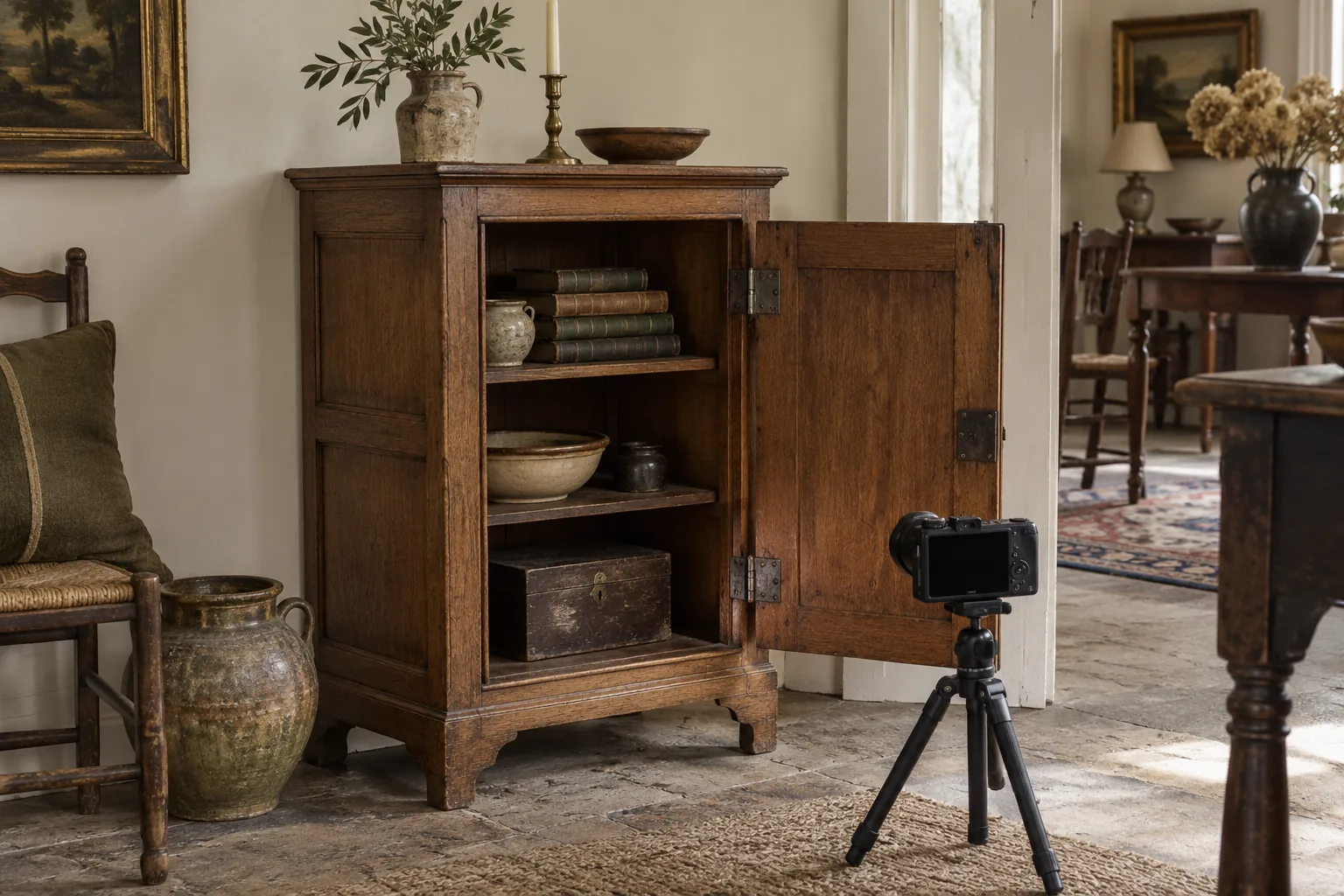
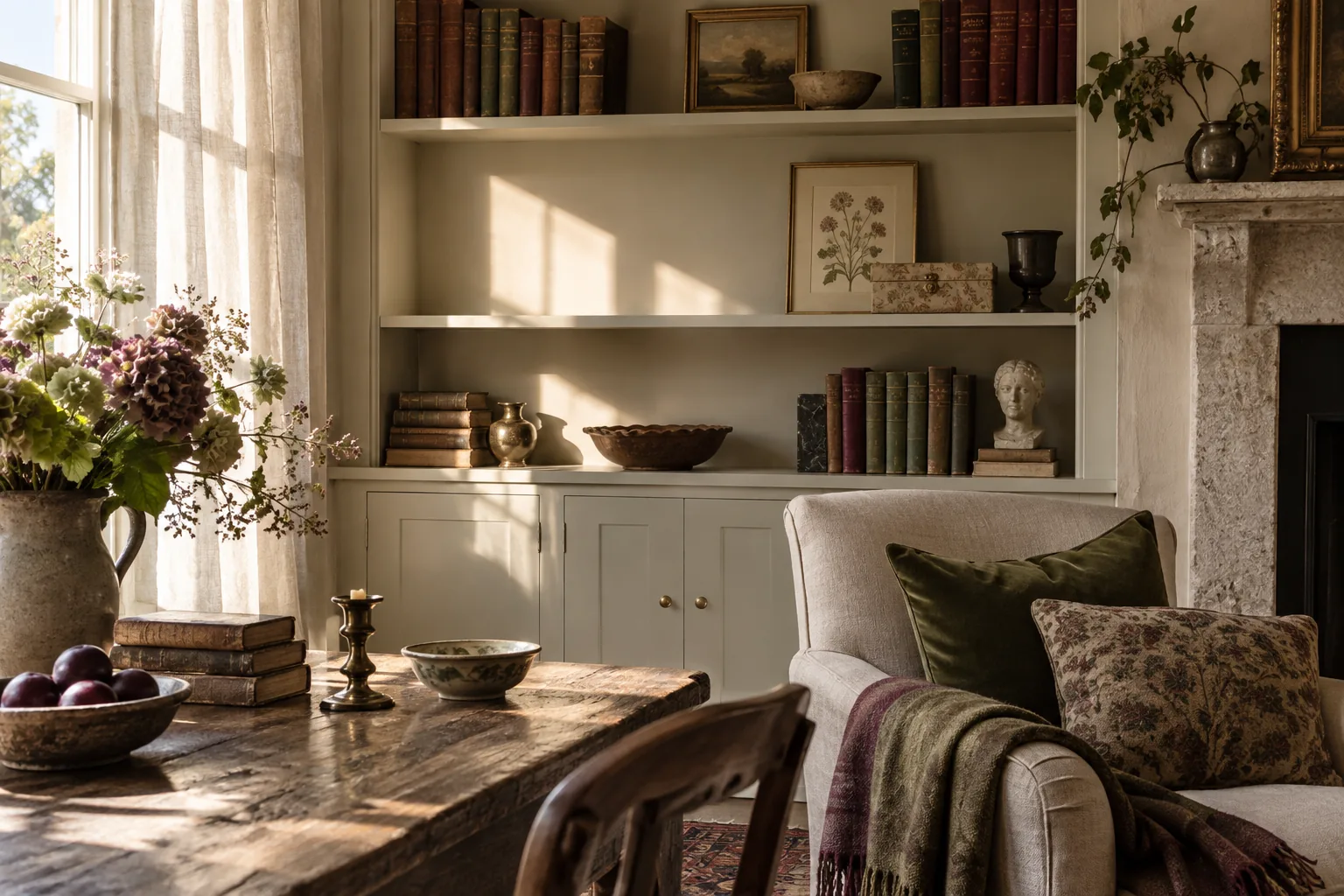
The first photograph of a vintage listing often shows the object at its most appealing. Good light, a thoughtful room and complementary accessories help you imagine living with it. Enjoy that impression, then set it aside long enough to examine the evidence. The photograph needs to tell you about the item itself, not only the mood around it.
Open the full image set and look for a clear overall view from more than one direction. Check whether accessories are included or simply part of the styling. A cloth may conceal a surface, while a flattering angle can make depth difficult to judge. None of these choices proves a problem, but they identify where another image or a written answer would be useful.
Build a simple map of the object
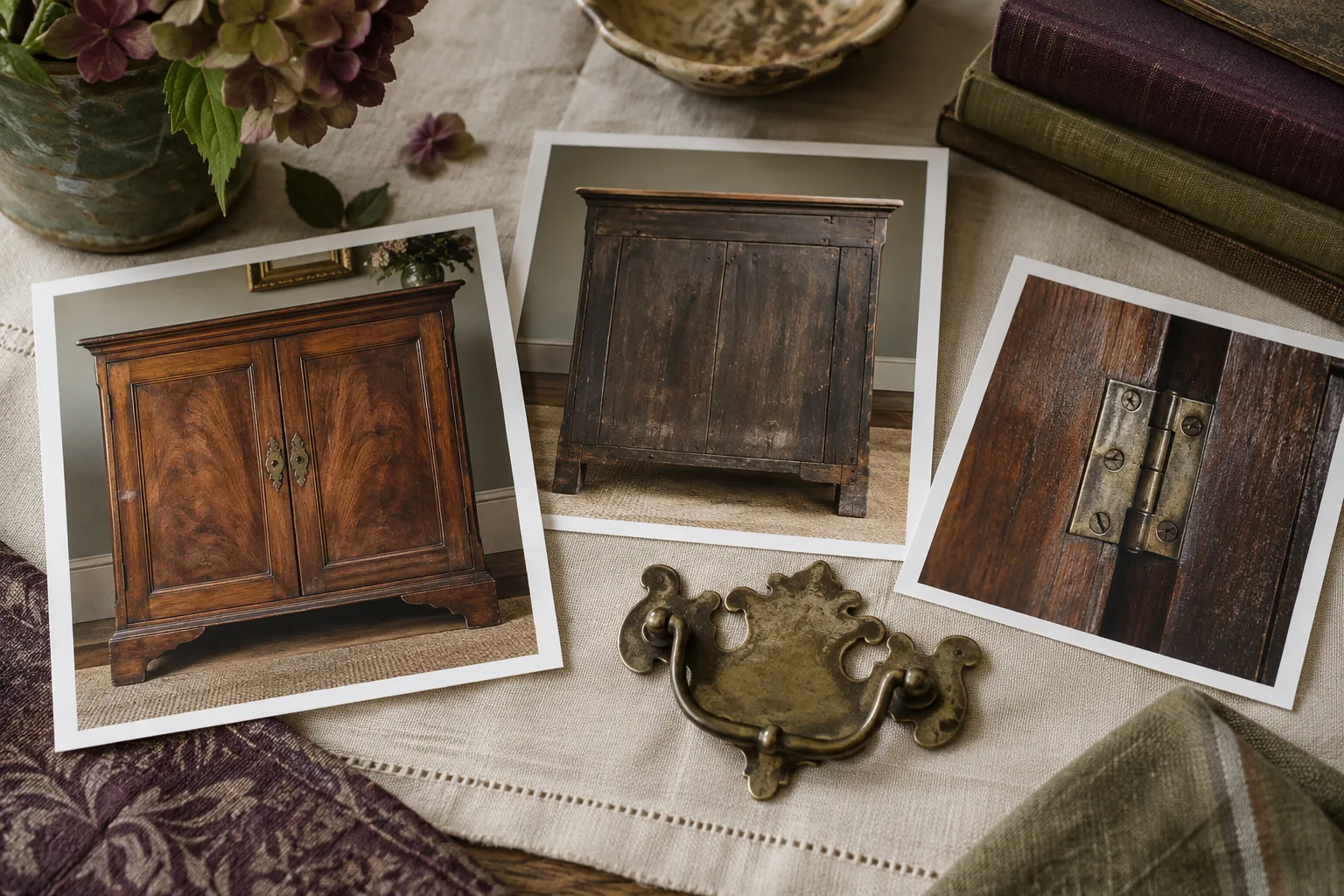
Imagine the piece as a three-dimensional form and identify the views you have. For furniture, that may include front, sides, back, top and relevant interiors. For a decorative object, the base, rim, underside and handles may be particularly informative. The right views depend on its shape and intended use.
Look for consistency between photographs. Are you seeing the same item in every image, with the same marks and details? Do proportions change dramatically because of the lens or angle? Avoid drawing precise measurements from the surrounding room or a casually placed everyday object. Ask for dimensions directly. Photographs can help you understand a form, but they are a poor substitute for clear measurements when fit is important.
Inspect the places wear tends to be noticed
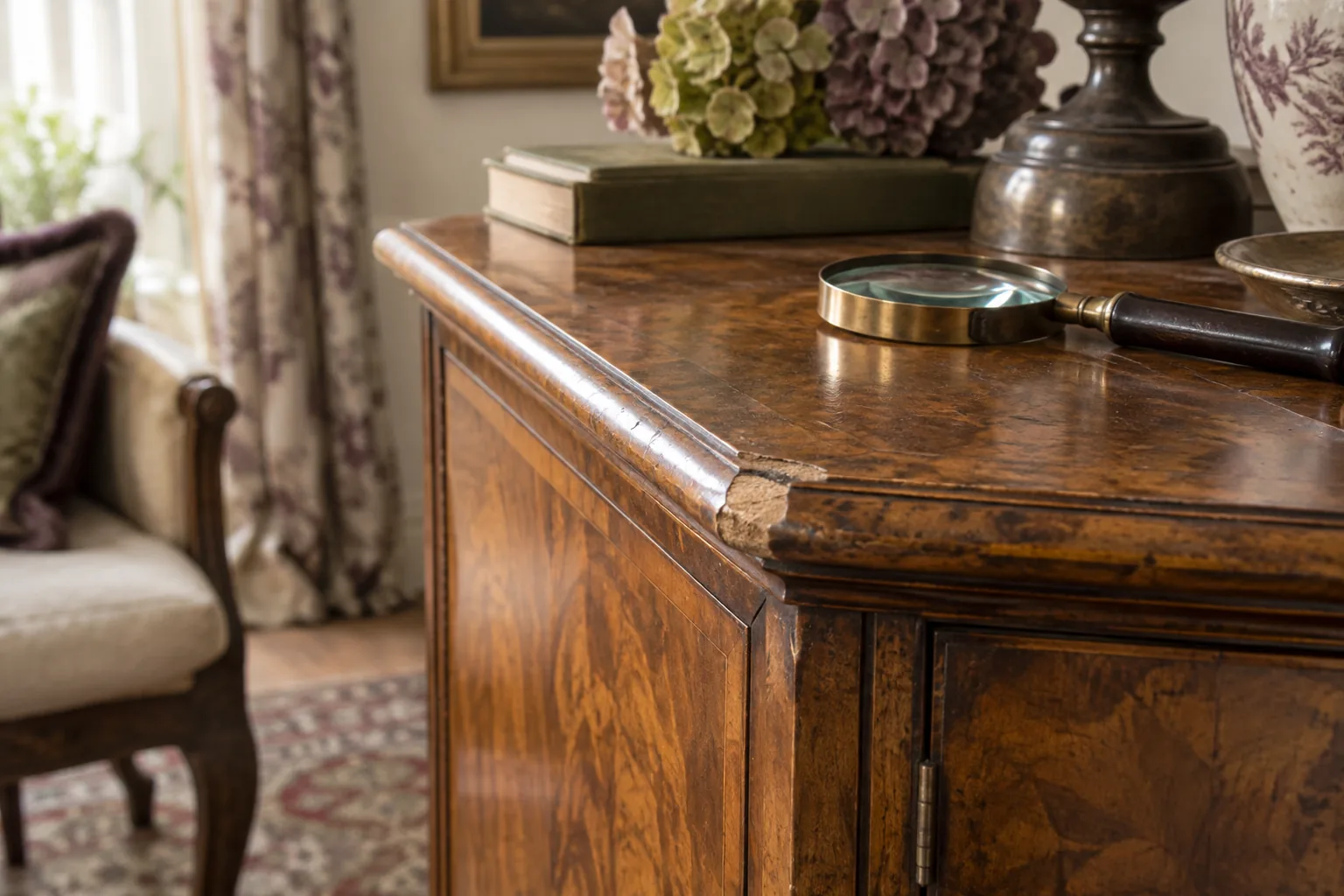
Examine edges, corners, handles and surfaces that receive contact. Zooming can reveal details, but it can also make compression artefacts look like cracks or scratches. If something matters to your decision, request a clearer view instead of treating a blurred patch as a diagnosis.
Pay attention to areas the description mentions. If the seller notes a repair or stain, can you actually see it? An honest written disclosure is useful, but its scale and position may still be unclear. Ask for an image showing the detail both close up and in relation to the whole object. This combination helps you judge whether it is a tiny background mark or a prominent feature you will notice every day.
Do not ask photographs to prove too much
Images cannot reliably establish every aspect of condition, construction or suitability. A chair may look sound without being comfortable or stable; a finish may appear clean without revealing an odour or a sticky surface. Authenticity and precise age can also require evidence beyond photographs. Keep these limits in mind when deciding whether remote buying suits the piece.
For anything that depends on structural, electrical or other specialist assessment, seek appropriate professional input or choose a purchase you can inspect adequately. A confident visual impression is not the same as a completed assessment. The aim of reading the photographs carefully is to improve your questions and judgement, not to convince yourself that every uncertainty can be solved by zooming further into a screen.
Turn the gaps into a short request
Write down the few unanswered points that could change your decision. Ask for specific views and relevant written details rather than requesting an undefined collection of extra pictures. A seller can respond more effectively to a request for the underside and the disclosed repair than to a vague question about whether the item is in good condition.
Keep the replies with the listing so you can compare them calmly. If essential information remains unavailable, recognise that as part of the purchase rather than filling the gap with optimism. You may decide the uncertainty is acceptable for a modest decorative object and unacceptable for something intended for daily use. The same photographs can lead to different decisions depending on what you need the object to do.