Define the usable end point
The asking price describes only one stage of bringing an object into your home. Start by deciding what needs to happen before the piece can serve its intended purpose. It may be ready for use after collection, or it may require professional assessment, repairs, suitable fittings or specialist transport. Write down that end point plainly.
This is particularly helpful with projects. A chair described as needing attention could involve more than the visible fabric, while a cabinet with missing parts may require work you cannot estimate from photographs. Do not treat an uncertain restoration as a small decorative extra. If the piece will not be usable until the uncertainty is resolved, that work belongs at the centre of the buying decision.
List the costs tied to this particular purchase
Separate the item's price from other known charges. Depending on the transaction, these may include collection, delivery, packing, applicable sale fees or necessary professional services. Check the seller's actual arrangements rather than transferring assumptions from a previous purchase.
Ask for clear written quotations where another business will carry out work or transport. Establish what the quote includes, what remains uncertain and whether circumstances could change it. A vague expectation that a friend can help or that a repair will be straightforward is not the same as a confirmed plan. Keep costs that are essential to the purchase separate from optional decorative changes you might choose later.
Allow uncertainty to remain visible
Not every cost can be known immediately. Mark estimates and unanswered questions clearly instead of adding them to a total as though they were fixed. If a specialist needs to inspect the piece before quoting, decide whether that can happen before you commit or whether you are comfortable with the unresolved range of work.
Avoid using a single optimistic assumption to make the purchase fit your limit. You may need to pause, seek more information or choose a simpler piece. That is not an overreaction to an attractive find. The object will be easier to enjoy when the process of making it usable does not depend on everything turning out in the most favourable way.
Count time and space as well
A project also occupies room in your life. Consider where the piece will stay while work is arranged, who will coordinate collection and whether you can manage delays. A large item awaiting attention can prevent another room from being used normally even when its financial cost seems manageable.
Be realistic about work you are qualified and equipped to do. Structural, electrical, upholstery and specialist material issues may require appropriate professionals. Do not make a budget balance by assuming unsafe or unfamiliar work will become a casual weekend task. If you enjoy projects, that interest can be part of the value, but it should be an honest preference rather than a rescue explanation invented after the purchase begins to feel complicated.
Compare complete options
When choosing between two pieces, compare them at the same stage: delivered and suitable for the intended use. A lower asking price may come with more unresolved work, while a more straightforward item may meet the brief immediately. Neither is automatically the better choice; the comparison simply needs to include the same kinds of information.
Keep the final record short enough to understand at a glance: purchase price, confirmed additional costs, estimated work and unresolved questions. Then ask whether you would still choose the piece if its attractive starting price were no longer the headline. A good purchase is one whose full practical commitment makes sense for you, with enough clarity to enjoy the object once it arrives.
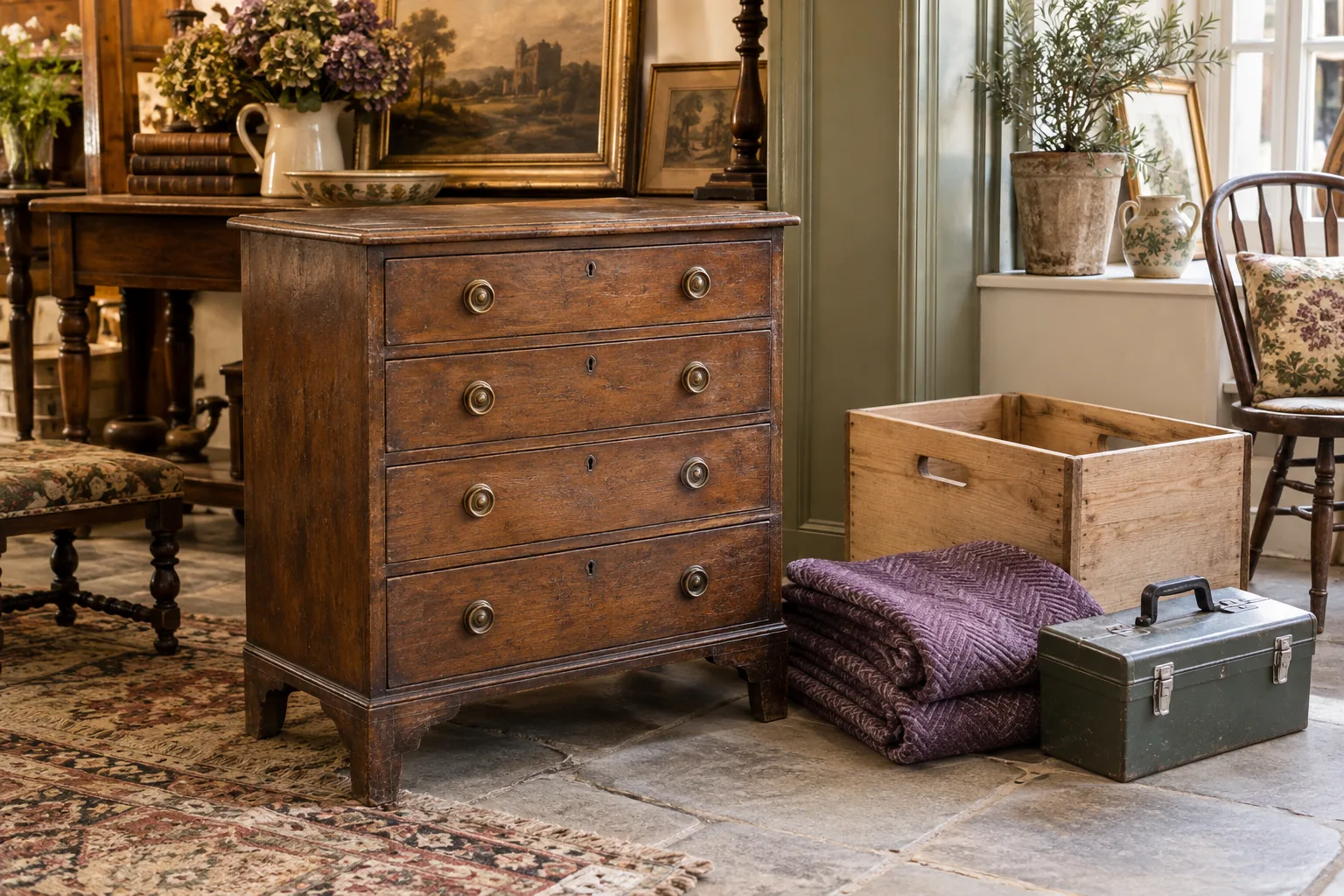
For instance, imagine two cabinets with similar useful storage. One can be delivered in its assessed present condition; the other needs collection and a door repair whose scope is still unknown. Write those differences beside the asking prices. The second may eventually be the better choice, but it is not yet a directly comparable ready-to-use option. Obtaining the missing assessment is the next decision, before deciding which cabinet to buy.