Begin with the full outline
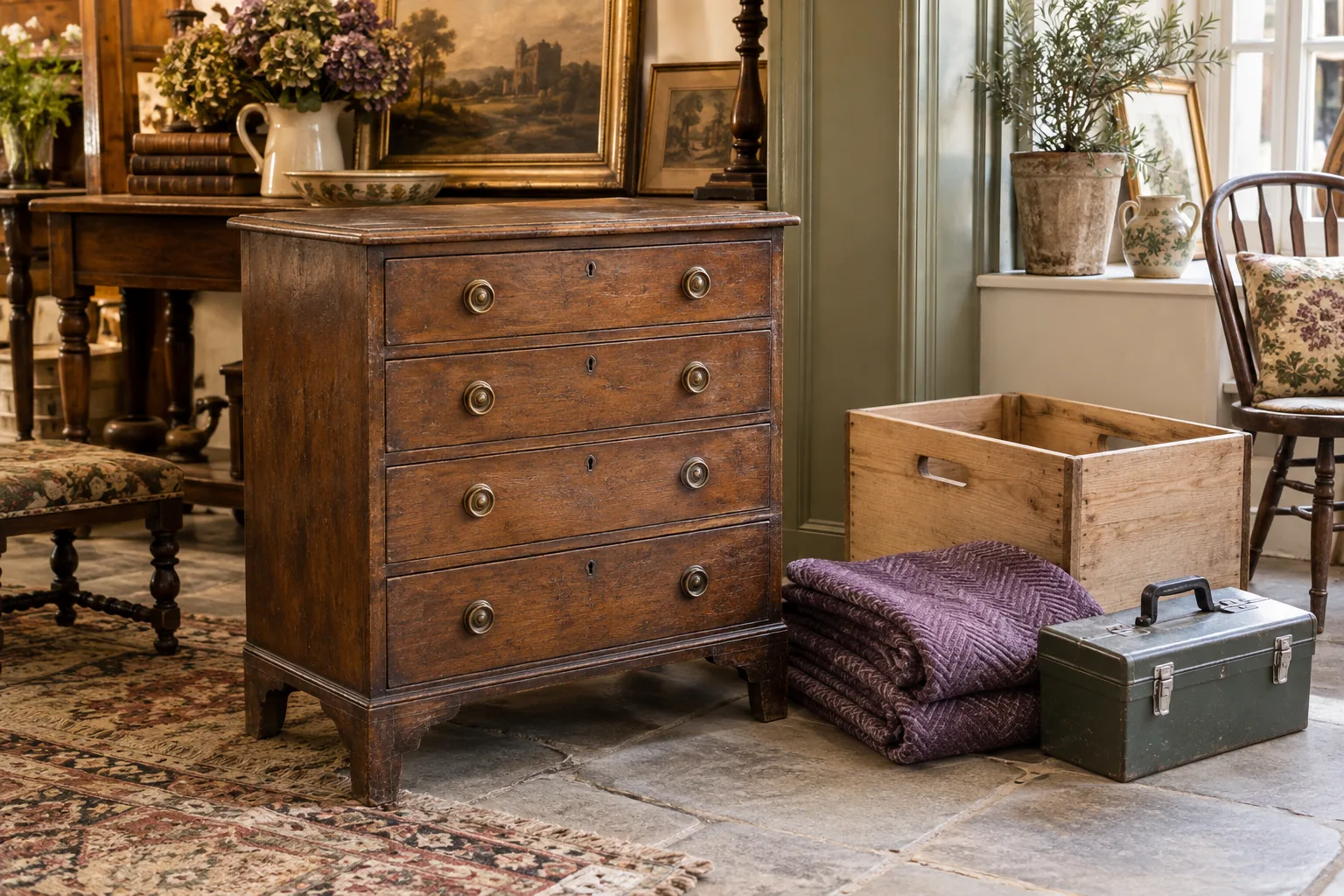
A piece of furniture has more than one useful set of dimensions. Its widest top may project beyond the body, its handles may extend into a route and its feet may spread farther than expected. Ask for the overall dimensions and identify which parts establish them. A measurement of the cabinet body alone may not describe the space the piece actually occupies.
Measure the intended position at the relevant heights. Skirting, a radiator, a window ledge or a projecting socket can prevent furniture from sitting where a floor-level measurement suggests. Note these details on a simple sketch. This article concerns the final placement in the room; the route into the property is a separate practical check that also needs to be resolved before buying.
Add the space used by movement
Drawers and doors need room to open, while chairs require space when people sit and stand. Consider the piece in its working state rather than only its closed display position. A chest can fit a recess yet be awkward if an open drawer blocks the bedroom door or the route beside the bed.
Think about the sequence of actions as well. Can you stand in front of the cupboard while its door is open? Can another person pass behind a dining chair in use? Do you need to move a table each time you reach a window? These questions turn a simple dimension check into a more realistic assessment of whether the furniture will support daily life.
Check the useful surface and interior
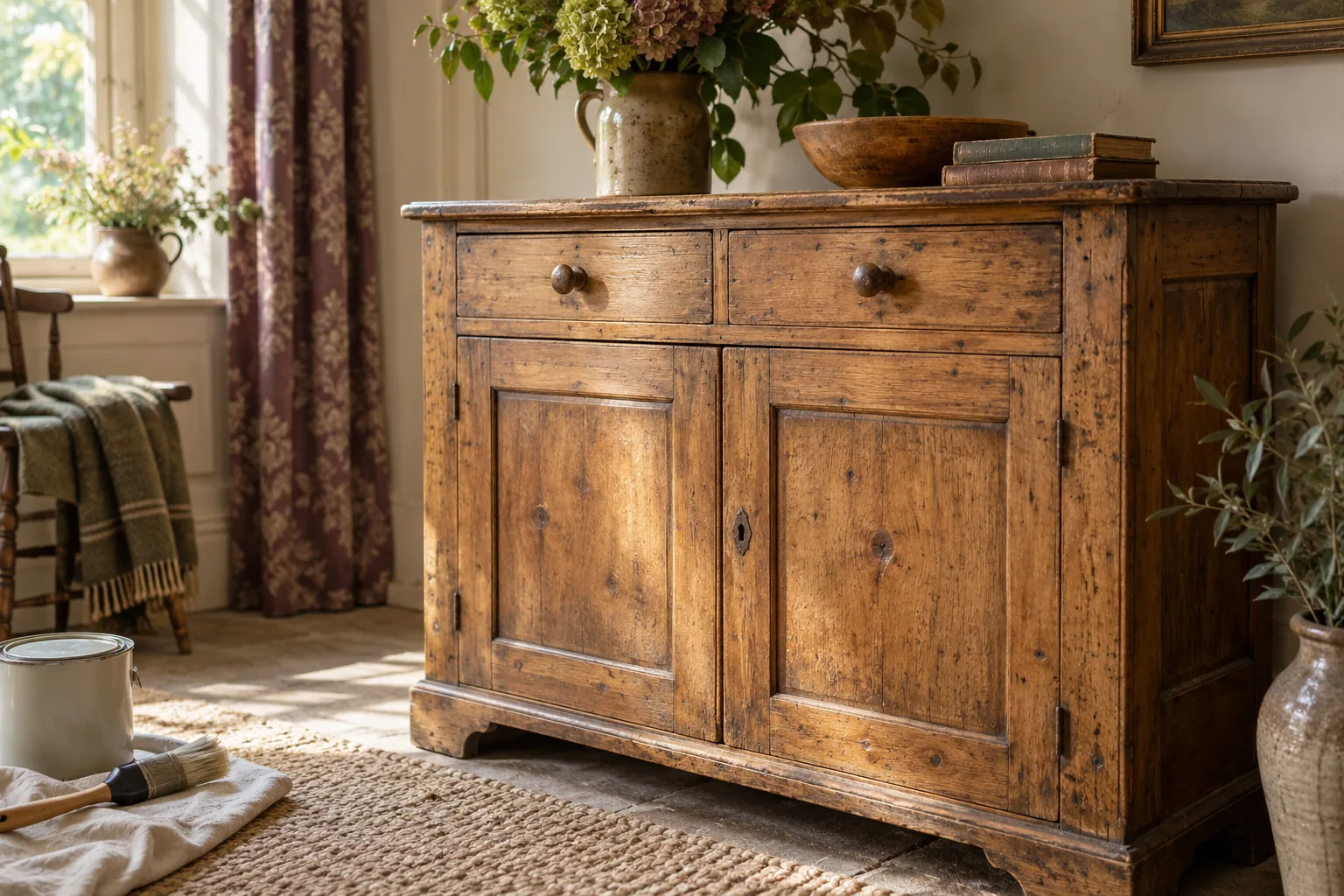
Overall size does not tell you how much usable storage or working space the piece offers. A cabinet may have thick sides, a central divider or shallow shelves; a table may have a shape that reduces the area available for the task. Ask for internal dimensions where they matter.
Use the belongings themselves as a reference. Measure the files, table linen or equipment you expect to store rather than assuming that a large-looking piece will accommodate them. For a bedside surface, consider what must fit comfortably on top. A piece that occupies the correct amount of floor can still fail the practical brief if its useful spaces have the wrong proportions.
Make the footprint visible
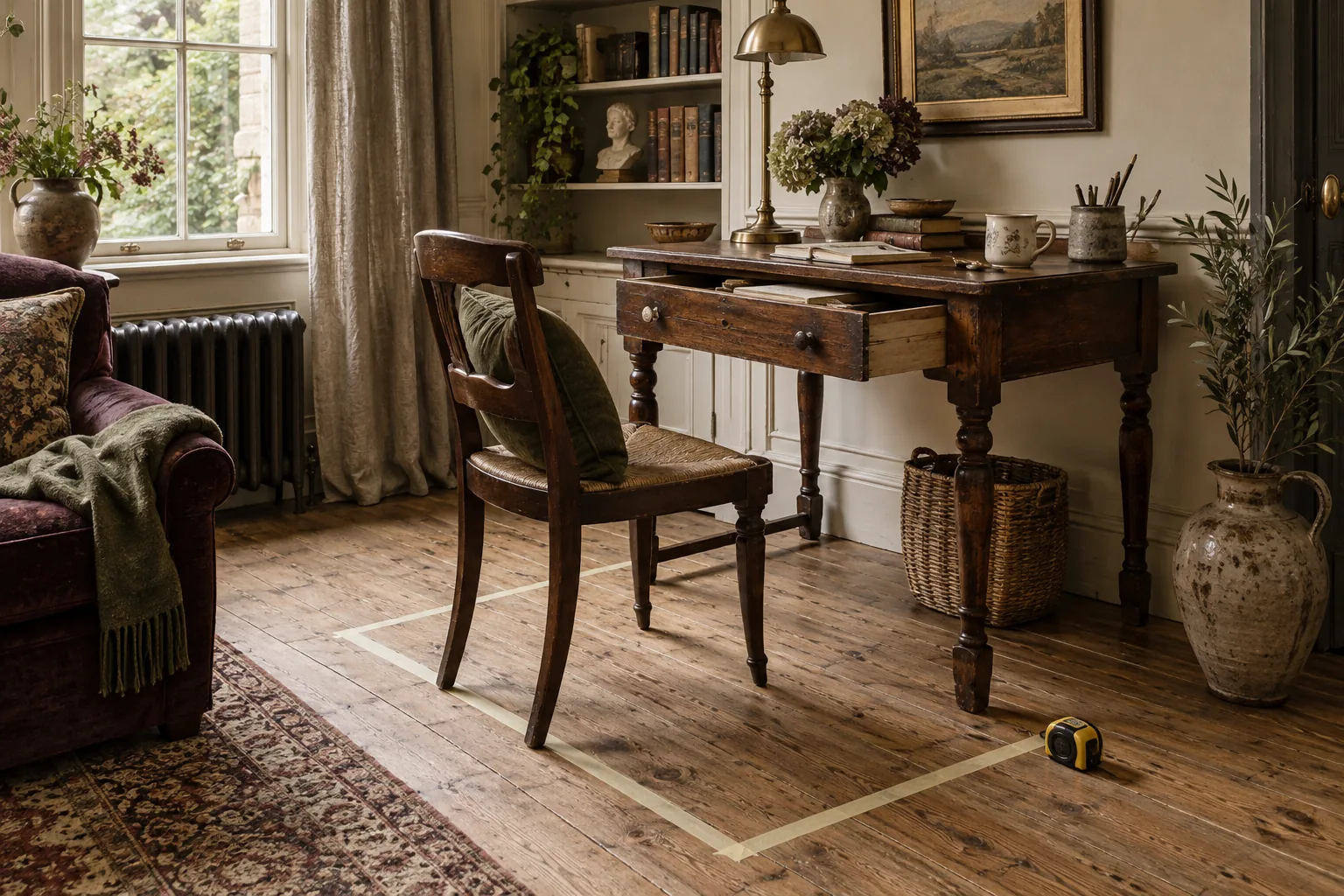
A simple paper outline or another floor-safe temporary marking method can help you judge the proposed position. Keep any trial arrangement free of trip hazards and avoid materials that could damage the floor. Walk through the room and look from the main seats, paying attention to how the new footprint relates to existing furniture.
Height also changes the impression. A tall cabinet can interrupt a sightline or make a nearby piece seem small even when its footprint is modest. Use a sketch or a careful visual comparison rather than building an unstable mock-up. The aim is to understand the scale within the room, not to recreate the object in a way that creates another practical problem.
Keep a little tolerance
If a piece appears to fit with almost no room to spare, verify both the furniture and the space carefully. Older buildings and furniture may not present perfectly regular lines, and a small projection can matter in a tight position. Do not base a purchase on an optimistic rounding of measurements.
Write down the final dimensions and the remaining questions before contacting the seller again. A clear request for the maximum depth, including handles, is easier to answer than a general concern about whether it will fit. Once those questions are resolved, judge the room as a whole. Furniture fits well when it has both enough space to stand and enough surrounding room to be useful.