Start with a name you can recognise
A purchase record does not need to be an elaborate catalogue. Begin with a simple name that identifies the object in your home: the small oak-toned chest in the bedroom or the blue decorative bowl on the sitting-room shelf. Avoid giving it a maker or precise date unless that information is supported. A useful record should be easy to recognise without making the description more certain than the evidence.
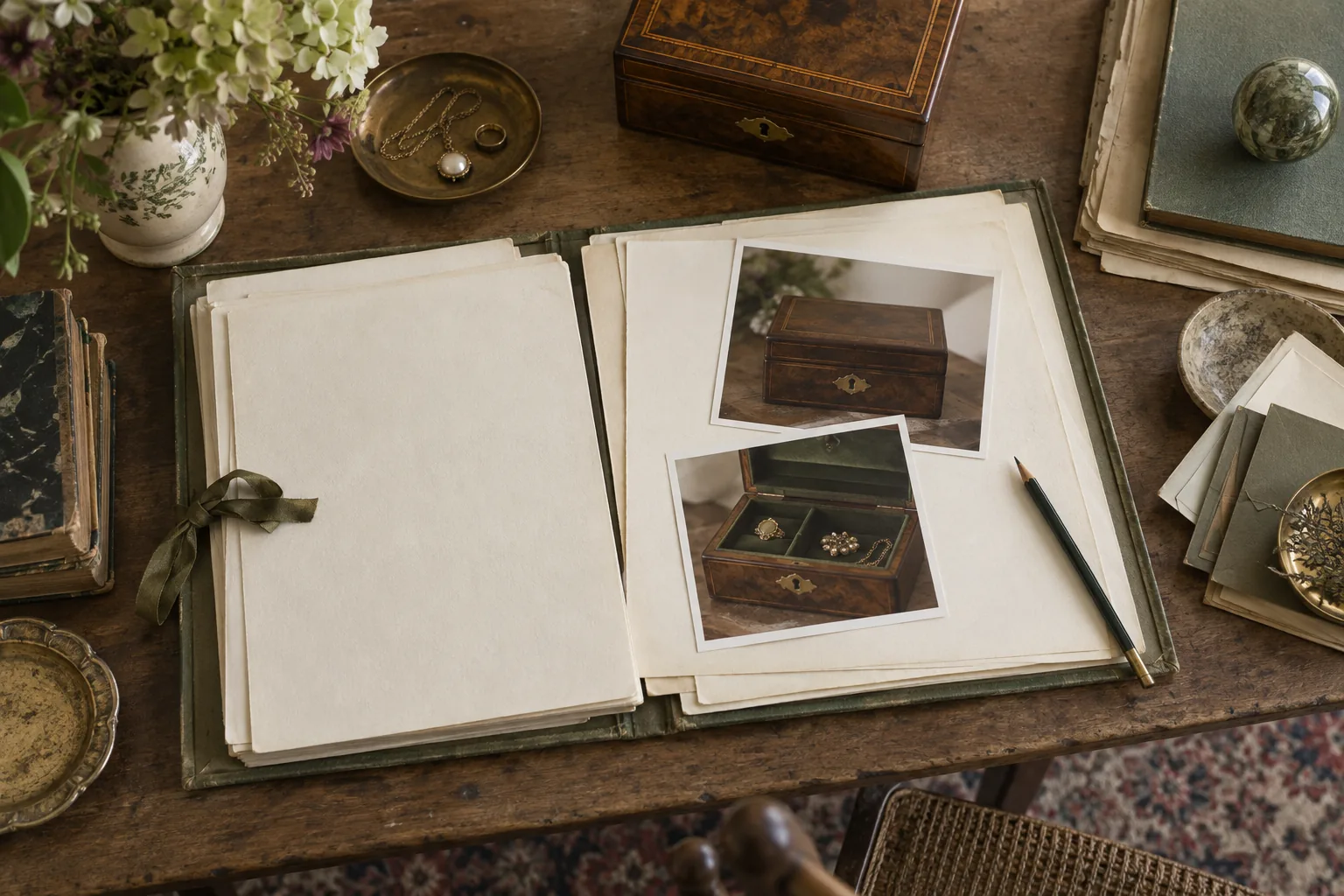
Create one folder or entry for the item and use a consistent date format. Add a clear overall photograph so you can identify it quickly later. This small structure prevents receipts, condition images and correspondence from becoming separate fragments whose connection is obvious only while the purchase is still fresh in your memory.
Save what was actually offered
Keep the original listing, photographs and relevant seller correspondence where possible. Record the seller's details, purchase date and item reference. Include the exact wording of important claims and qualifications rather than rewriting them as a smoother story. A phrase such as believed to be is part of the information.
Save your receipt and the breakdown of relevant purchase and transport costs. Keep payment details securely and avoid storing unnecessary sensitive information in a folder you might later share. If the item came with documents, note where the originals are stored. A digital copy can help you find the information without repeatedly handling vulnerable paper.
Record the condition on arrival
Take a few useful photographs showing the whole object and any significant existing marks, repairs or missing components. Add a short factual note with the date. You do not need to photograph every square centimetre; concentrate on details that identify the piece or may matter when its condition is assessed later.
List separate components such as keys, shelves or fittings. Note any limitations in what you could inspect, rather than implying a complete assessment. For specialist questions, retain the professional's actual report. Your personal observations are valuable, but they should remain distinguishable from an expert examination and from statements supplied by the seller.
Add history without inventing continuity
Write down the known ownership or background information and identify its source. A family account, a dated document and your own interpretation should appear as different kinds of evidence. If there is a gap, leave it visible. A short, accurate history is more useful than a detailed narrative assembled from plausible guesses.
For example, a record might say that the seller acquired the piece from a named sale, while earlier ownership is unknown. It need not imply that the sale location was the object's original home. Keeping these distinctions clear is especially helpful if you later ask a specialist about the piece or pass it to someone who would otherwise inherit only a confident but unsupported story.
Keep a dated care and work note
When appropriate professional work is carried out, add the invoice, treatment description and any care guidance provided. Record changes in condition or location that may be relevant. If a part is replaced, note what happened to the original and where it is stored if retained.
Do not turn this into a demanding diary for every ordinary object. A few dated entries are enough to preserve useful information. The record should help future decisions about care and assessment, not encourage unnecessary intervention. If you do not know which material or finish is present, keep that uncertainty clear rather than selecting a confident label simply to complete a field in the document.
Make the record easy to keep and pass on
Use a storage system you already understand and keep an appropriate backup. Store physical documents safely, without attaching labels or adhesives to an object in a way that could damage it. A separate inventory number in your records may be sufficient for linking the information to photographs.
Review the entry when the object moves, receives work or leaves your ownership. Share relevant history and care information while removing private payment or contact details that do not need to travel with it. The best purchase record is modest and durable: clear enough to answer ordinary questions, honest about uncertainty and organised enough that its useful details remain available long after the original listing has vanished.