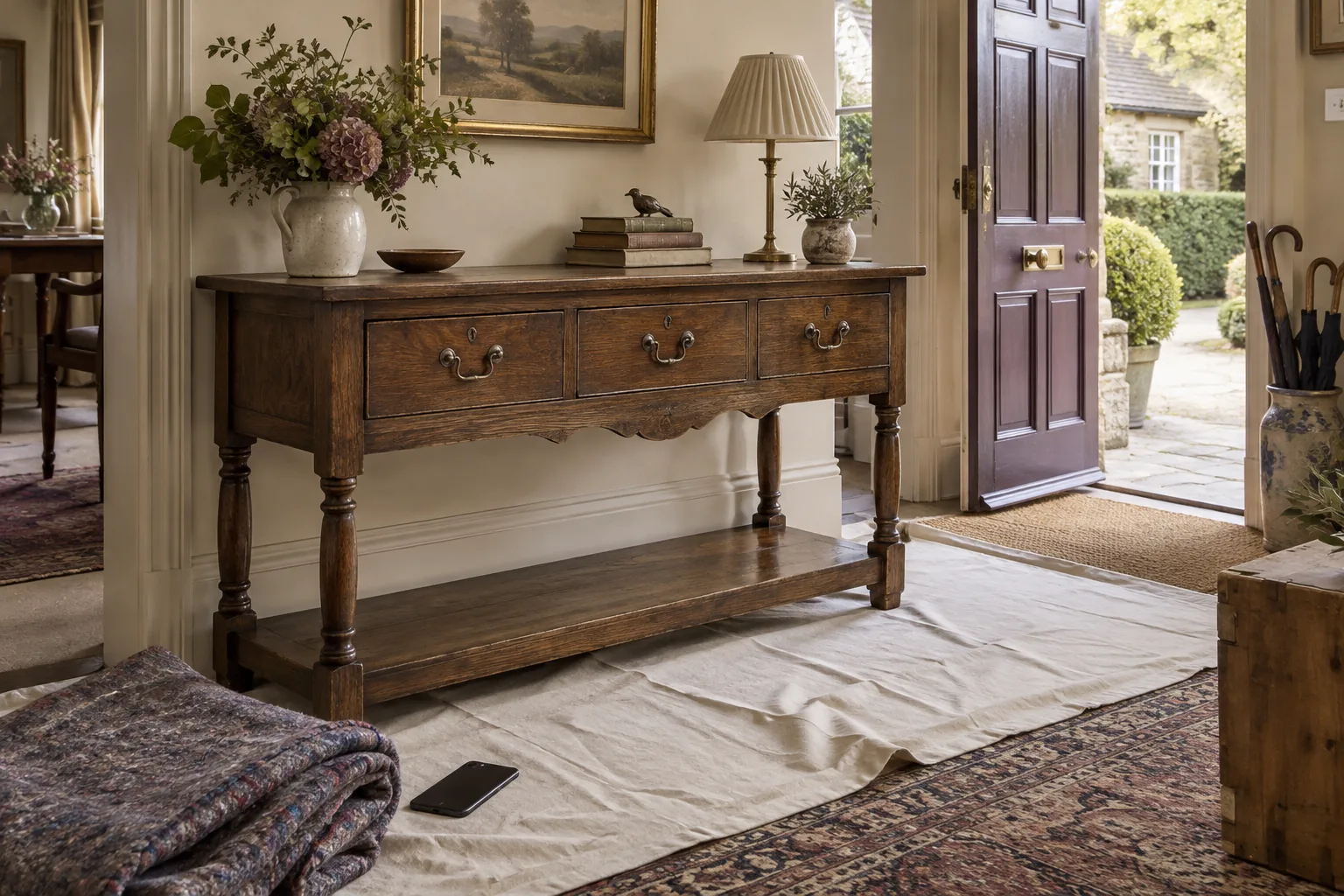
Know what has to be moved
Collection planning begins with the actual object: its dimensions, weight where known, fragility and any parts that need particular handling. A photograph can make a substantial piece look deceptively manageable. Ask what is known and avoid relying on a guess when it affects the people or equipment required.
Do not assume the seller will dismantle furniture, provide packing or help lift it unless that has been agreed. Some objects should not be taken apart without appropriate knowledge, and a convenient-looking handle or projecting detail may not be a safe lifting point. Where the item warrants specialist handling, arrange a suitable professional service rather than turning the collection into an improvised test of strength.
Agree access and availability
Confirm the collection address, available dates and the person who will hand over the item. Ask about relevant access conditions at the collection point, including stairs, parking restrictions or limited loading space. Give the collector accurate information rather than hoping any difficulty can be solved on arrival.
Check the seller's deadline and any stated conditions for delayed collection. If you are using a third party, establish how they identify themselves and what evidence of payment or authorisation the seller requires. These details are particularly important when the seller and collector have not spoken directly. A shared, concise written plan reduces the chance of someone arriving at the wrong place or being unable to release the item.
Make packing responsibilities explicit
Ask who will prepare and pack the object, what materials or services are included and who is responsible for any separate components. Do not let the word collection conceal an assumption that another person will arrive with everything required. Fragile or valuable pieces may need specialist packing appropriate to their materials.
Record removable shelves, keys, fittings and other included parts so they travel with the main item. Avoid loose hardware being placed somewhere that could scratch a surface or become lost. If the seller proposes disassembly, understand what that involves and whether suitable expertise is needed for safe reassembly. The easiest transport configuration is not always the best treatment for an older object.
Give the collector useful written information
Provide the item reference, seller's contact details, collection window and any agreed handling requirements. Include clear photographs if they help identify the piece, especially when several similar objects are stored together. Make sure the collector knows the destination arrangements as well as the collection point.
Confirm the service scope and relevant terms with the carrier directly. Do they provide packing, handling assistance or only transport? What information do they need about condition and value? Ask questions before booking rather than assuming a service name covers every part of the journey. Keep the answers with your purchase records so you can refer to the actual agreement if plans need to change.
Build in a condition check
Arrange for the item and included parts to be checked at handover where practical. Useful photographs show the object clearly before it is packed or loaded, without delaying the process unnecessarily. If something differs from the agreed description, contact the seller promptly and clarify it before the move continues where possible.
At the destination, allow enough time and clear space for an orderly handover. Do not schedule the delivery as though a heavy cabinet were an ordinary parcel that can be left anywhere. A considered collection plan protects more than the object: it gives everyone involved a realistic understanding of the task and leaves you ready to receive the purchase rather than trying to solve the final stages while it waits outside.