Understand the setting before looking closely
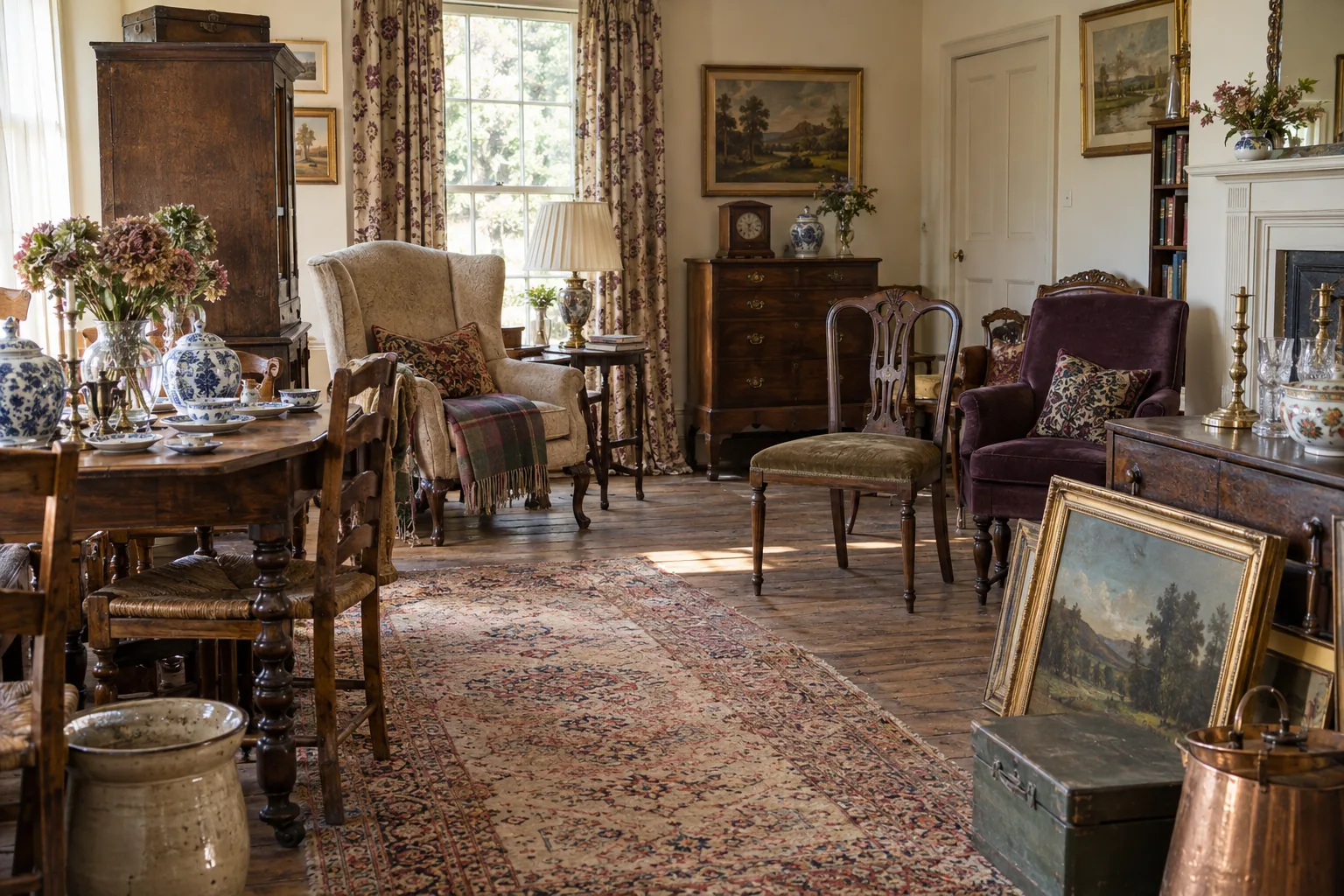
A sale described as a house clearance or estate mixture can involve very different arrangements. Establish who is selling, what is available and how the sale is being conducted. Follow the organiser's rules about access, handling, photography and payment rather than assuming the setting works like a shop or market.
Be respectful of personal belongings and private information that may still be present. Do not photograph documents or other sensitive material simply because it is visible among objects for sale. If you are unsure whether something is included, ask. Clear boundaries make the visit more comfortable and help you focus on the actual purchase opportunities rather than the surrounding circumstances of the household.
Choose a small number of categories
A mixed room can overwhelm attention. Decide which kinds of objects you are equipped to assess and which you are merely enjoying as a visitor. You might look carefully at furniture dimensions while leaving unfamiliar specialist categories alone. The presence of many possibilities does not create an obligation to understand or acquire them.
Keep your practical brief available. A useful small table can be overlooked while attention is drawn to a dramatic cabinet you have nowhere to put. If something outside your brief appeals, treat it as a separate decision with its own questions. Do not let the volume of objects make ordinary checks seem too slow or unnecessary.
Ask what belongs to each sale unit
Objects may be offered individually, as a shelf group or as a larger lot. Confirm exactly what is included and whether any visible accessories are excluded. A lamp standing on a table, for example, may be a separate item rather than part of the same purchase. Avoid relying on assumptions formed from the display.
If a group includes items you do not want, consider the practical consequences before buying it for one attractive piece. Everything included will need collection, storage and an appropriate future. Ask whether the seller is willing to separate the group, accepting that the answer may be no. A large quantity can create work that outweighs the appeal of its most interesting object.
Assess condition where you can actually see it
Crowded settings can hide the backs, bases and interiors that matter to a buying decision. Ask for appropriate access or assistance rather than moving heavy or fragile pieces yourself. If essential areas cannot be inspected safely, acknowledge the limit and decide whether you can accept it.
A room's general appearance does not establish the condition of each object. Inspect the specific item, ask about known repairs and avoid treating a shared location as proof of a shared history. Objects may have arrived at different times or been stored under different conditions. The story of the house can be interesting without answering the practical questions about the thing you are considering taking home.
Resolve collection before the room changes
Confirm the collection window, access and what help or packing is actually available. In a busy clearance, the surroundings may change as other pieces leave, so a plan based on the initial display may not remain accurate. Give any collector clear identification details and the organiser's contact information.
Keep a record of the item, agreed price and relevant condition details. If you decide against a piece, let it go without feeling that the unusual setting makes it an unrepeatable opportunity you must seize. The useful result is an object you understand and can accommodate. A room full of possibilities still deserves the same deliberate judgement as a single carefully photographed listing.