Choose what it will reflect
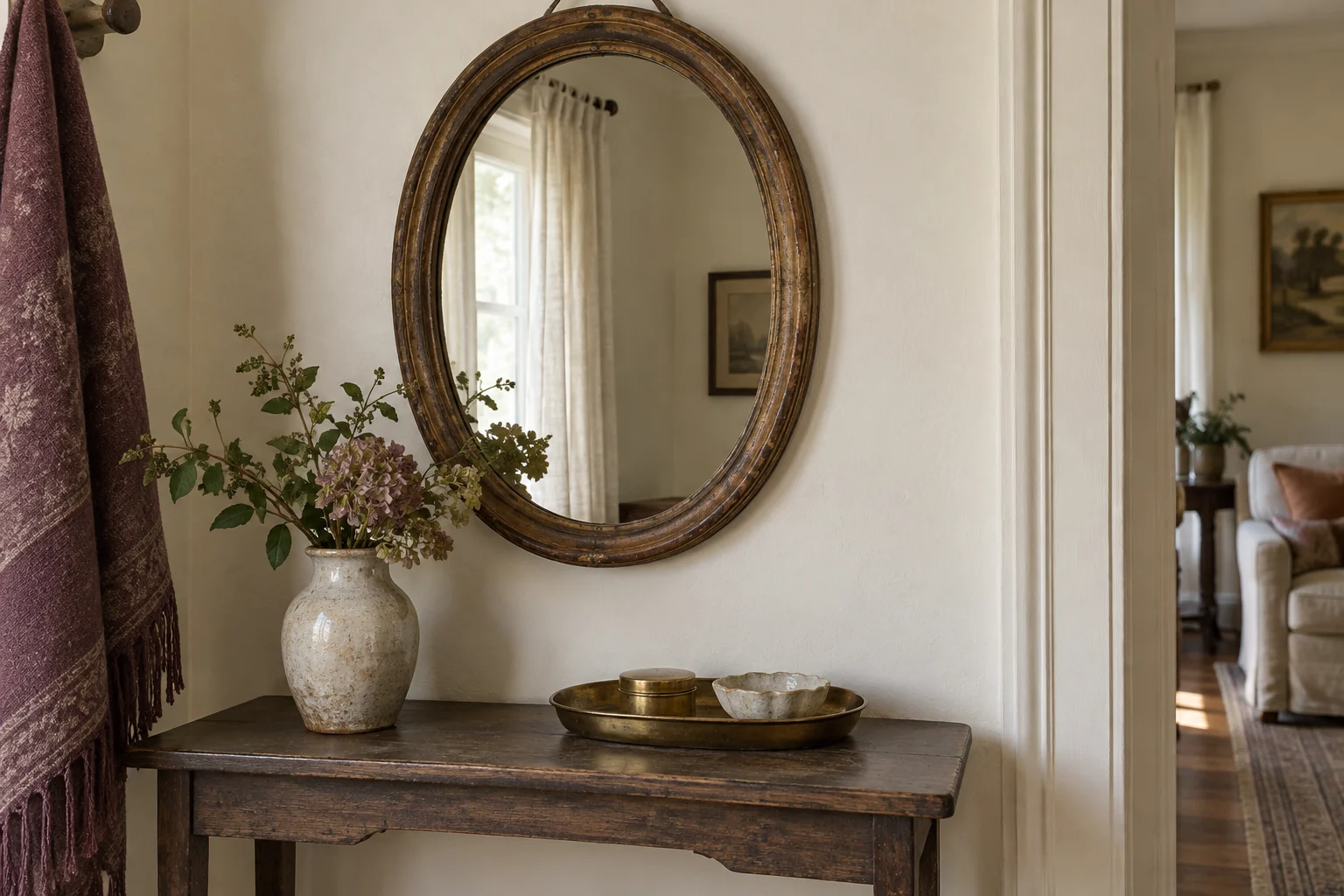
A mirror is never only its frame. It borrows whatever stands opposite: a window, a doorway, a pile of washing or the blank side of a wardrobe. Before looking for an old one, stand in the proposed position and take a photograph facing out into the room. That view is part of what you are buying space for.
In a narrow corner, a small mirror might catch a sliver of daylight and make the wall feel less closed. Above a desk, it could reflect constant movement and become distracting. Think about the view from your usual chair as well as from the doorway. A pleasing reflection at standing height may be quite different when you sit down.
Separate atmosphere from useful visibility
Some people enjoy the softened appearance of an old mirror with visible surface deterioration. Others want a clear everyday reflection. Decide which job matters before buying. A decorative mirror does not have to perform as a dressing mirror, but a beautiful frame will not compensate if the glass frustrates you every morning.
Ask for photographs that show the whole reflective surface in ordinary light. Dark spots, scratches and distortion can be difficult to judge in a styled image. Describe what you see rather than assuming it establishes age. If condition is uncertain or the glass is damaged, seek specialist advice instead of planning an improvised repair or removal of the backing.
Check the complete object
Look at the frame's corners, projecting decoration and reverse. Ask about loose components, repairs and the condition of existing fittings. An old hook or wire should not be treated as proof that the mirror is ready to hang safely. Its weight and the wall construction must be considered together.
For a substantial or fragile mirror, arrange appropriate professional fitting. Decide on this cost before purchase. A bargain becomes less appealing if it can only stand in a precarious position while you postpone installation. Leaning is not automatically a secure alternative, especially where children, pets or routine household movement could disturb the object.
Make the shape do something
An oval mirror can soften a wall filled with square doorways and rectangular furniture. A small rectangular mirror may bring order to a loose collection of pictures. Neither needs to match the nearest frame exactly. Compare the shapes from a distance and see whether they complement each other or merely repeat.
One mirror can be more effective than several. If you want a group, start with paper templates and include the reflections in your thinking. A cluster that looks balanced as outlines may become visually restless once every piece reflects a different lamp or doorway. Leave some plain wall so the composition has a place to settle.
Choose a location you can maintain
A mirror tucked tightly behind ornaments can become awkward to inspect and care for. Leave access around the frame and avoid a place where water splashes or hands regularly touch a fragile surface. Follow advice appropriate to the actual materials rather than treating every frame and reflective layer alike.
Keep the seller's description and photographs of the reverse with your records. If a professional replaces fittings or carries out work, retain that information too. The pleasure of a small old mirror can be very simple: it catches a useful view and provides a shape the room was missing. Its success does not depend on claiming a grand age or an elaborate provenance.