Choose beyond the shine
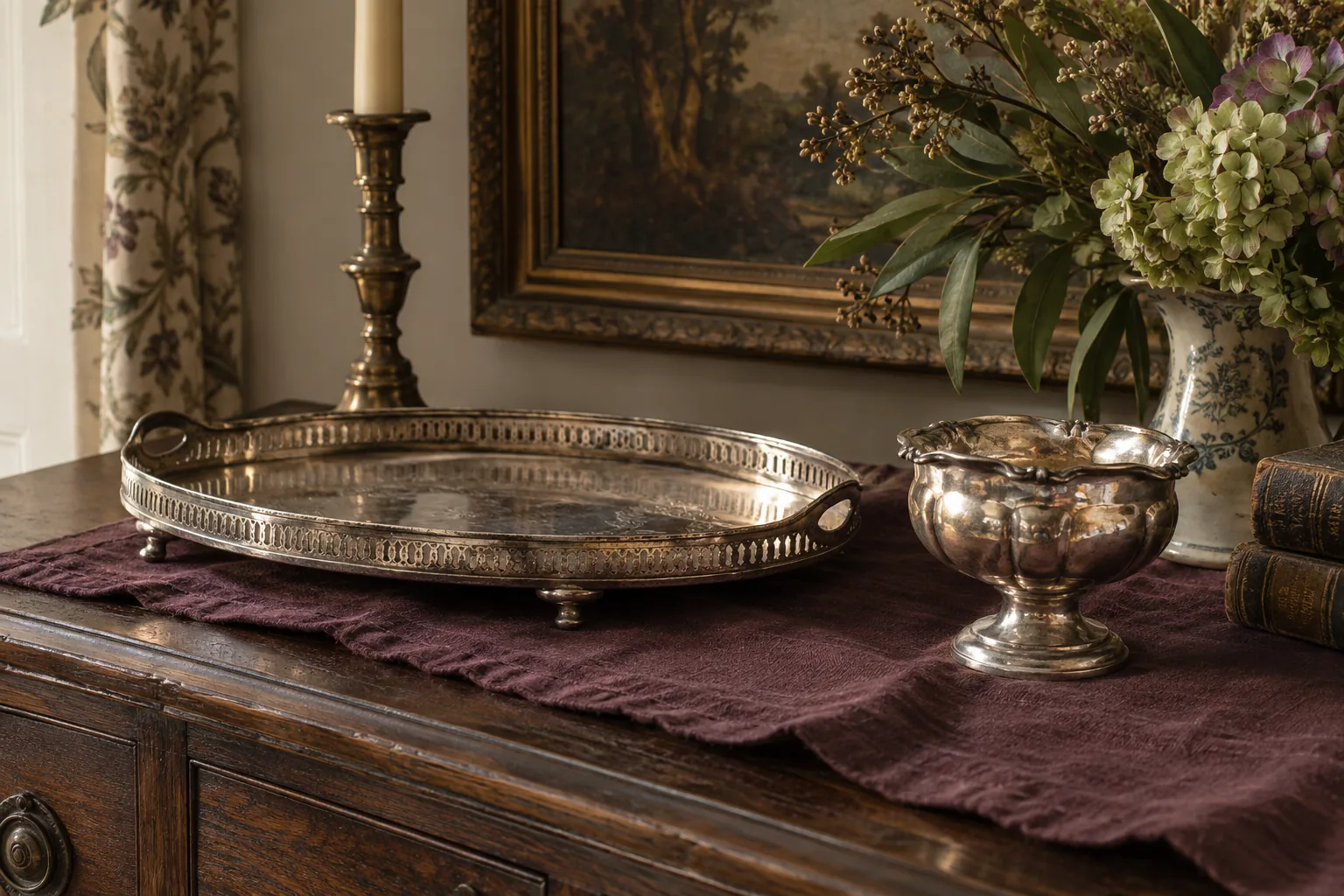
A silver-plated object can bring a cool note to a room full of warm materials. Its appeal might be a wide handle, a crisp scalloped edge or the way a dark interior sets off a reflective rim. Those qualities remain worth considering even when the piece has little financial significance.
Look at the outline before wondering how bright it could become. A beautifully shaped jug may work as an empty display piece; an ordinary tray may remain ordinary after hours of effort. Buying for the form you see is more reliable than buying for an imagined reveal beneath every dark patch. Ask the seller for clear photographs in neutral light.
Distinguish tarnish from missing plate
A worn area is not necessarily something that will polish away. Silver plate is a surface layer, and another metal may show where that layer has been lost. Ask the seller to describe wear at raised details, handles and edges. Close photographs are particularly valuable in these areas.
The Canadian Conservation Institute explains that cleaning tarnished silver removes some silver and that polishing can damage or remove plating. This is a reason to be restrained, not a demand that every dark object remain untouched. If the finish matters to the purchase, obtain suitable advice before assuming a household method will return it to a uniform appearance.
Read marks with appropriate caution
Photograph any stamps or lettering clearly and record them exactly. A mark may help identify a maker or construction, but do not let an uncertain interpretation become a claim that the piece is solid silver. Ask what the seller means by terms in the listing and request evidence where a description affects the price.
For a decorative purchase, you may not need a complete history. It is reasonable to buy an accurately described silver-plated dish because its shallow shape suits a shelf. Keep that preference separate from investment language or promises of rarity. If you are considering a substantial purchase, an independent specialist assessment is more useful than a hurried comparison with an online image.
Use it where reflections help
Silver-coloured surfaces can brighten a dark shelf, but they also reflect clutter. Try the object away from a busy stack of paperwork or a brightly coloured screen. A simple background may let the outline emerge much more clearly. View it from a seated position as well as while standing.
One piece can be sufficient. A small handled vessel beside a plain ceramic bowl offers contrast without creating the impression of a formal tea service. If you own several related pieces, rotate them rather than fitting them all onto the same tray. Crowding can turn interesting separate forms into a mass of highlights and tiny shadows.
Give an uncertain object a clear role
Decorative use avoids making assumptions about food contact, residues or old repairs. Do not turn an unidentified plated vessel into a regular serving dish merely because its shape suggests that history. An empty object can still be useful visually, and a suitable modern container can perform the practical job beside it.
Record the purchase with photographs of the front, underside, marks and worn areas. Consider the ongoing care before bringing home a large group. A single well-chosen piece whose present condition you enjoy may be more satisfying than a box of potential projects. Its place in your home can depend on proportion and contrast rather than on an exhausting pursuit of perfect shine.