The word print covers a lot
A listing that calls something a print has not told you very much. It might refer to an artwork made through a printmaking process, a later reproduction of a painting, a page from a publication or a recent decorative image. Ask what the seller means before drawing conclusions from the word.
The V&A's introduction to print explains several processes, including relief printing and intaglio. Learning a little about how images are made can sharpen your questions, but it does not make a photograph sufficient for authentication. A visible border, signature or textured paper may be useful evidence without settling the object's identity, date or status on its own.
Ask about the physical thing
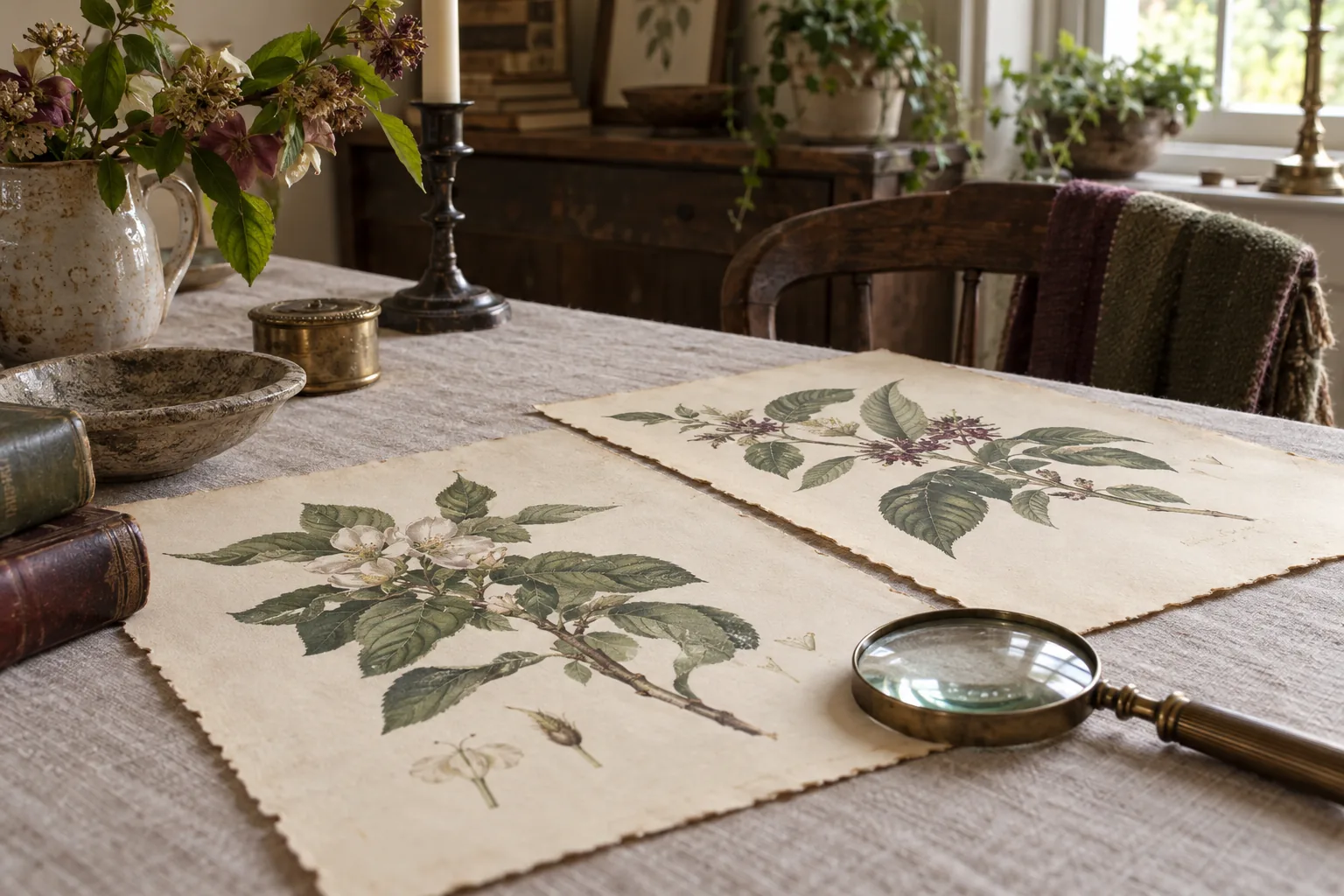
Request the sheet dimensions as well as the visible image size. Find out whether the paper is loose, mounted or already framed, and whether the seller has examined the reverse. Ask for photographs of inscriptions, margins, labels and condition issues. These details help you understand what is included in the purchase.
Do not remove a work from its frame or peel back a mount casually to satisfy curiosity. A framer or paper conservator may be needed, particularly if the piece is fragile or significant. If it cannot be examined before purchase, treat that as a limit on what you know. Price and expectations should reflect uncertainty rather than an optimistic guess.
Be precise about signatures and editions
Ask whether a signature appears to be applied separately or reproduced as part of the image, and what evidence supports the answer. Edition numbers and pencil marks also need context. They are not a shortcut to a valuation or a guarantee of authenticity. Save the seller's exact wording instead of translating a cautious description into a stronger claim.
For a significant purchase, seek independent expertise relevant to the artist or technique. If you are buying an inexpensive decorative image, you may simply want a clear, honest description and a picture you enjoy. There is no embarrassment in choosing a reproduction knowingly. The problem is paying for an unsupported story, not enjoying a widely available image.
Look at the image as you will live with it
View the picture at something close to its intended size. An image that is compelling on a phone can be too busy for a small wall or too quiet for a large room. Consider the dominant shapes and colours before planning the frame. A narrow strip of wall may suit a strong vertical composition better than a sprawling landscape.
Avoid buying purely because the colours match a cushion. That match can change, while the subject remains in front of you. Ask whether the image holds your interest after a few minutes. A modest print of a place, plant or ordinary domestic scene can become a favourite when its subject means something to you.
Compare descriptions before comparing prices
Imagine three listings showing much the same landscape. One describes a recent reproduction and gives the printer and paper size. Another calls its example an old print but supplies no further information. A third identifies a particular printing technique and provides supporting publication details. Their images may look similar on a screen, yet the descriptions offer very different levels of knowledge.
Write down what each seller is actually offering, including condition and whether a frame is included. Do not fill gaps in the second listing with information from the third simply because the images match. The physical sheets may differ in date, process, size and history. A price comparison becomes meaningful only after those differences are understood.
Decide which qualities matter for your purchase. If you want the landscape as a decorative image, clarity, colour and presentation may be your priorities. If the printing process or a particular edition matters, you need evidence suited to that claim. Those two interests can coexist, but one should not be used to imply the other.
Save the listing before it disappears, including the photographs and exact attribution. This is especially useful if a seller uses qualified wording. A description such as attributed to is not equivalent to an unqualified maker's name, and your own record should retain the distinction. Clear language protects the history of the object as well as your understanding of the purchase.
Include presentation in the budget
Allow for suitable mounting and framing rather than spending everything on the sheet itself. Damaged paper, old adhesive and unfamiliar backing materials may need professional assessment. Ask a framer about a reversible approach appropriate to the object and choose a display position with care.
Keep the purchase description, photographs and any supporting documentation together. If you later learn more, add it as a dated note rather than erasing the earlier uncertainty. Good collecting habits leave room for revised information. Whether the result is an original print, a later impression or a straightforward reproduction, you should know what you were told and why you decided to bring it home.