Let the handle make its case
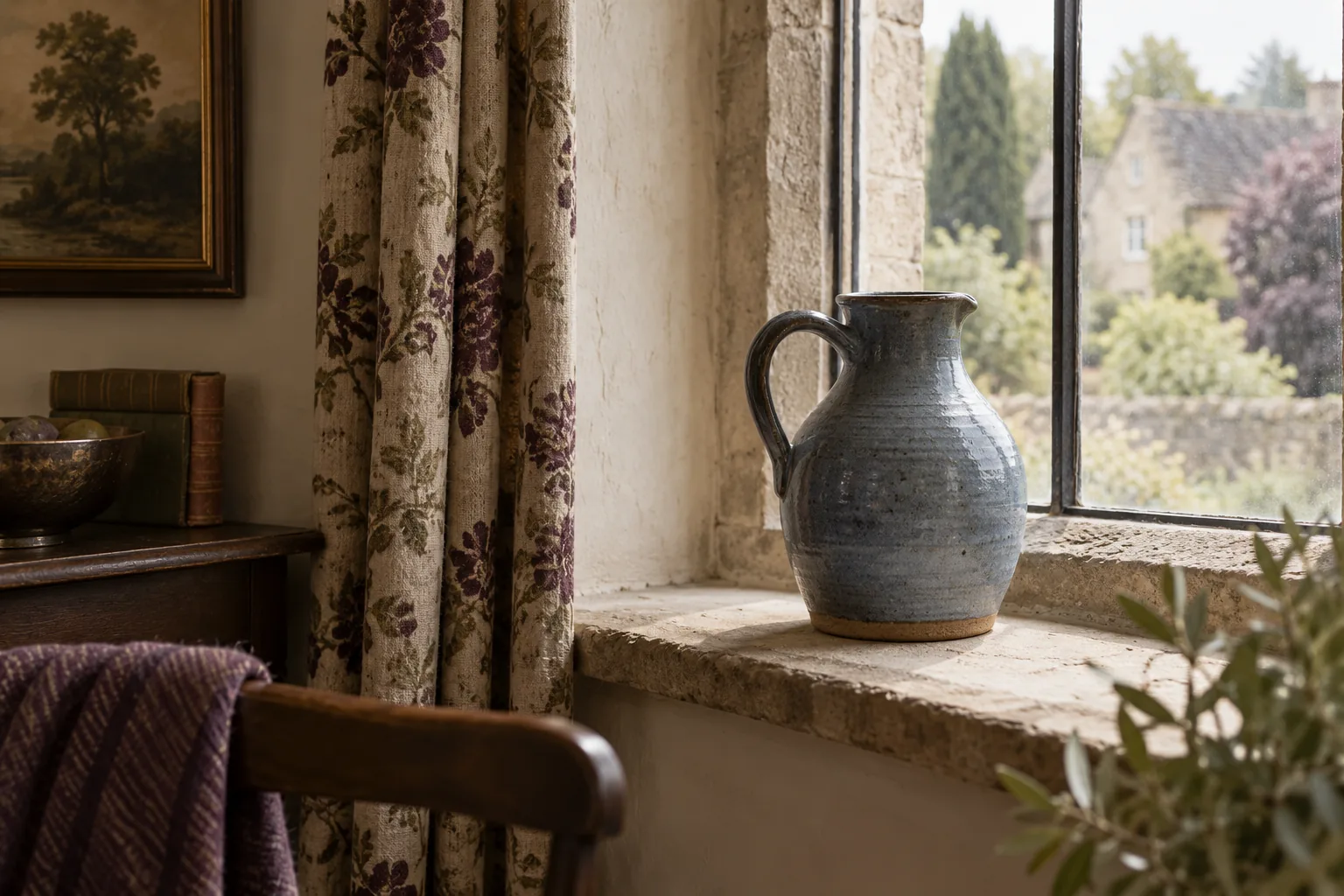
A jug is already a small composition. The body provides weight, the spout gives it direction and the handle opens a pocket of space beside it. Filling every jug with stems can hide precisely the features that made it appealing. Try leaving your favourite empty for a while and turning it so its profile is easy to see.
Compare two positions: handle facing out, then handle turned towards the wall. One may feel surprisingly more balanced. A painted scene could dictate the angle, but a plain jug gives you freedom to choose the outline. Stand where you normally enter the room rather than judging everything from directly in front of the shelf.
Choose a place with enough depth
A jug takes more room than its central body suggests. Measure from the spout to the outer edge of the handle when considering a purchase. On a narrow ledge, that measurement matters more than the diameter of the foot. A handle hanging beyond the shelf invites an accidental knock.
Allow enough space for both hands when moving it. Handles can be vulnerable, particularly when old repairs are present, so the body should carry the weight. A low sideboard or a sturdy cabinet shelf is often more practical than a high ledge that forces you to reach over other things. The best position should suit ordinary household movement as well as a photograph.
Mix jugs through one connection
A group of unrelated jugs can work if one quality connects them. You might choose pale glazes, emphatic handles or a progression from short to tall. Three different patterns at the same size can feel noisy; varying the scale gives the eye somewhere to settle.
Do not feel obliged to arrange a large jug between two smaller ones. An off-centre group often has more life, particularly if the spouts point in slightly different directions. Keep the spacing intentional. Two objects almost touching can look accidental, while a clear gap lets both outlines remain legible. Take one away if the handles begin to overlap into a tangle.
Decide whether it will hold anything
A decorative purchase and a vessel intended for regular use require different questions. If you want to serve drinks, condition, materials and suitability for food contact need reliable confirmation. Appearance or age alone cannot supply it. A jug with an uncertain history can remain a decorative object without disappointing anyone.
For flowers, do not assume a glaze guarantees a sound watertight container. Ask about leaks, restoration and prior use, and consider whether the arrangement could sit beside the jug in a suitable modern vessel instead. There is no need to put water into a doubtful piece merely because flowers and jugs are a familiar pairing.
Enjoy the unremarkable example
The most useful jug in a room may be a plain one. It can interrupt a crowded run of book spines or provide a soft shape beside a square picture frame. Choosing it for this role frees you from searching for an elaborate pattern, a matching basin or a prestigious name.
When buying, compare the asking price with your enjoyment of the object as it is. Include chips, staining and missing companions in that assessment rather than imagining them away. Keep the description and a photograph of the base with your records. A modest jug, accurately described and comfortably placed, often gives more pleasure than a grander one that never quite finds a home.