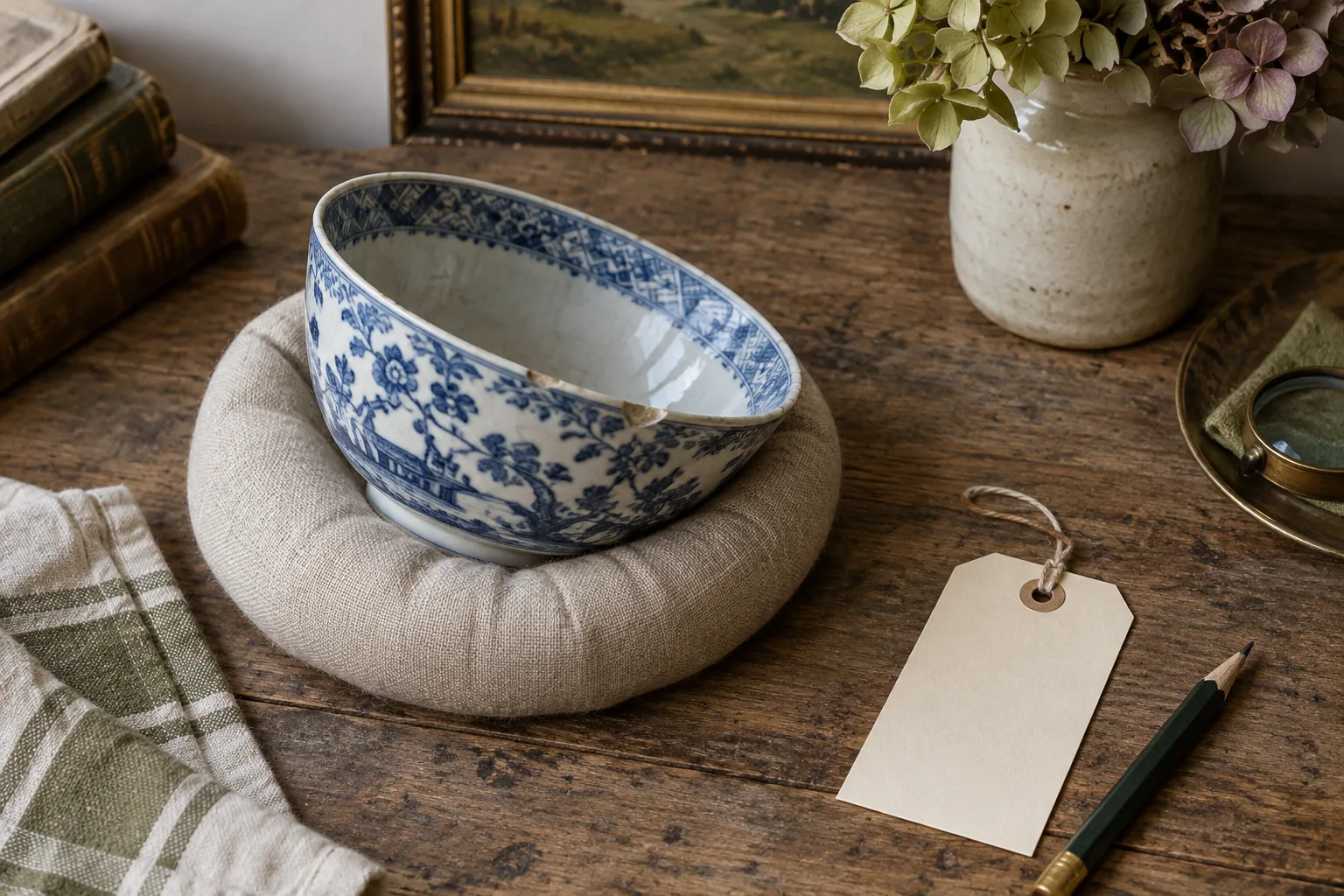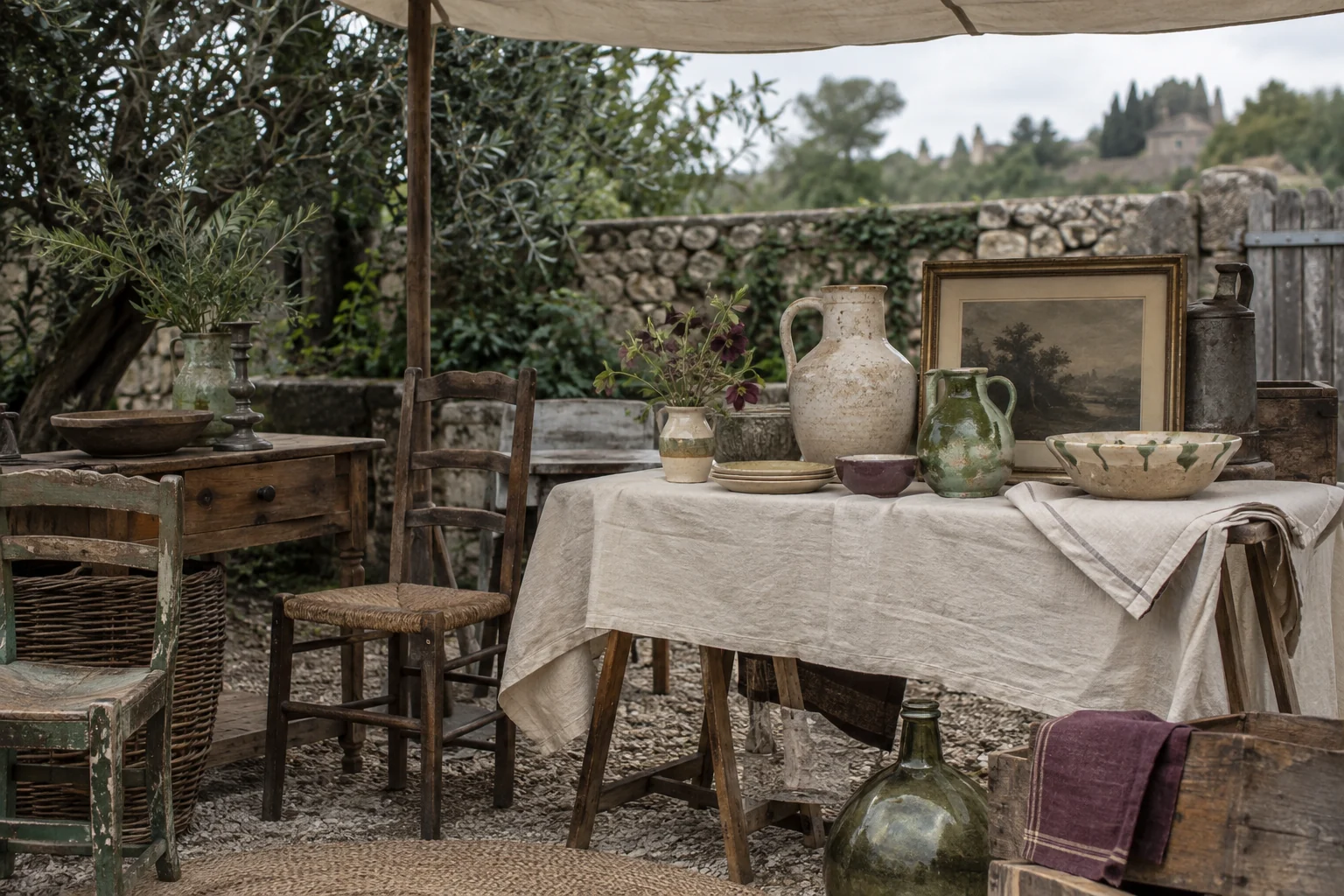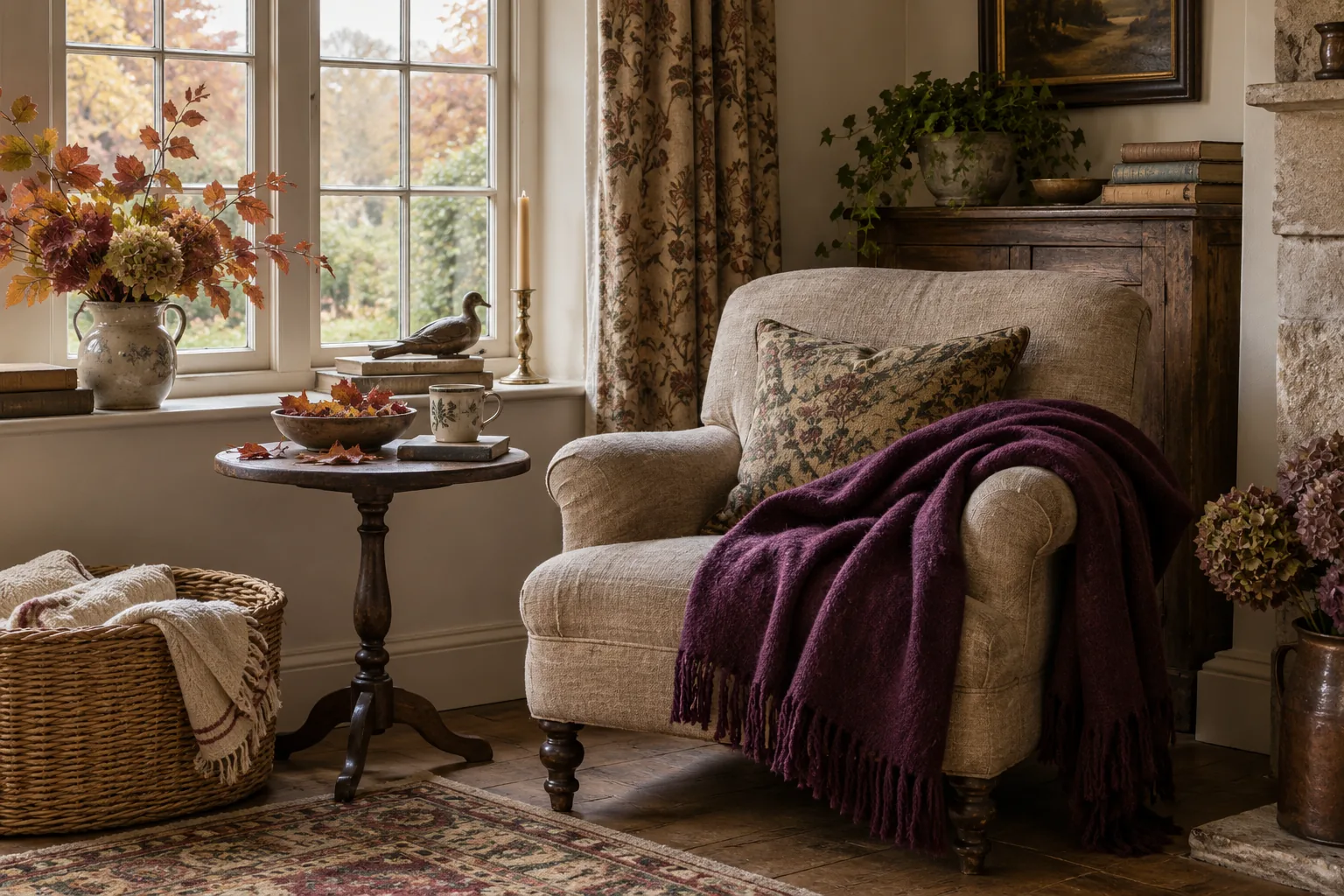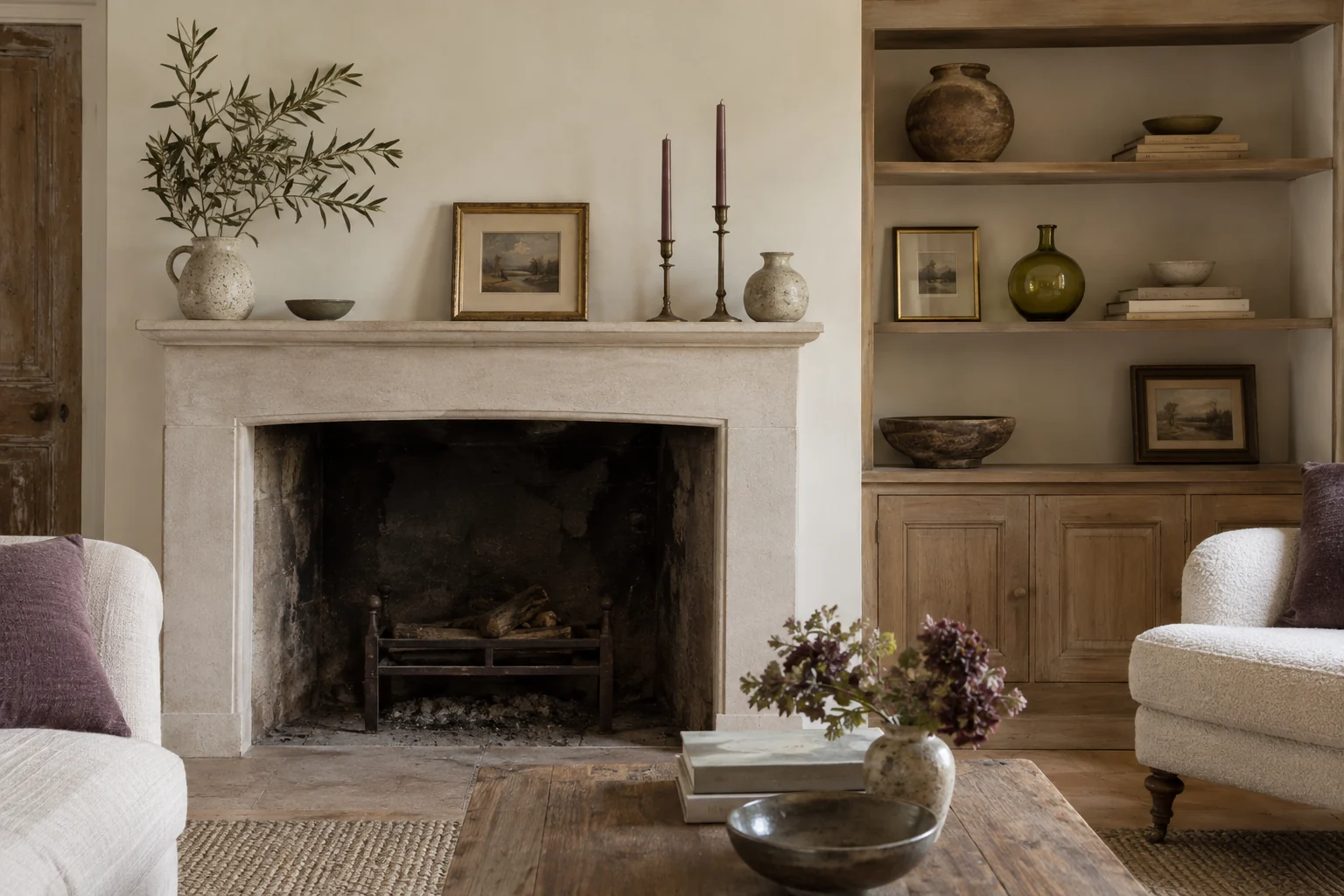
Start with the awkward trio
Imagine a small wooden box, a blue glass bottle and a pale ceramic bird. They have no obvious shared period or purpose, yet each is something you like. A convincing arrangement does not require inventing a historical relationship between them. It needs a visual reason for the eye to move from one to the next.
Set them on a clear surface and look at their heights. If the bottle is tall, the box is low and the bird sits somewhere between, you already have a useful rhythm. Try the box slightly forward, leaving the bird's outline unobstructed. The arrangement may work before you introduce a tray, a stack of books or any additional object.
This is an exercise in looking, not a demand to keep every favourite together. Sometimes the bird belongs elsewhere. That does not mean it was a poor purchase or that the collection lacks coherence. Objects can share a home without sharing a shelf.
Choose the connection you want to emphasise
Colour is one possible link. A small blue detail in a picture behind the objects could relate to the glass, while the wooden box echoes furniture nearby. Shape offers another: the bird's rounded body might repeat the bottle's shoulder. Pick the relationship that feels strongest and give it room to register.
Do not add a new object merely to explain the first three. A fourth colour or texture can make the problem harder. Try a simpler background, different spacing or a new angle first. If a connection requires a long spoken explanation, it may not be doing much visual work.
View the group from where you actually spend time. At close range, tiny details seem important; from across the room, the objects become patches of colour and silhouette. A composition that works at both distances usually has a clear overall shape and one or two details that reward a nearer look.
Use empty space as part of the arrangement
Spacing can make unrelated things feel deliberate. A narrow gap suggests a close relationship; a larger interval lets an object stand on its own. Avoid leaving every gap identical by habit. Equal spacing may suit a formal collection, but it can make a small mixed group feel like a row of products.
Keep outlines readable and bases fully supported. If one object partly hides another, make sure that overlap improves the view rather than concealing the best feature. Do not force height with a fragile stack. A stable, uncluttered arrangement is easier to maintain and more comfortable to live around.
Remove any practical clutter temporarily while assessing the display, then put back what the room actually needs. A collection on a hallway table must coexist with daily life. If the composition only works when nobody sets down a letter, choose another surface or reduce its footprint.
Give the group time
Leave the arrangement alone for a few days. Notice which object draws your eye and which one seems stranded. A quick photograph is useful, but your experience of the room matters more than the photograph's neatness. Move one thing at a time so you can tell what improved.
There is no need to resolve every difference. A mixed group can retain a little oddness; that may be what makes it yours. The aim is to show each object generously, with enough relationship to make the whole feel considered and enough independence to keep it from looking like a matching set.