Begin with the person, not the discovery
Finding an unusual object can make it tempting to decide afterwards who should receive it. A better starting point is the recipient's home and habits. Do they enjoy decorative objects, read old books, collect a particular colour or prefer clear surfaces? A gift should recognise those preferences rather than recruit them into your own hobby.
Think about scale. A small dish or modest framed image is usually easier to accommodate than a large mirror or fragile sculpture. Even a small object can impose a particular style, however. Notice what the person already chooses and look for a connection without assuming they want another example of everything they own.
If the object would require a major place in their room, discuss the idea beforehand. Surprise is not always the most thoughtful part of a gift. A shared visit to choose something can be more enjoyable than presenting a bulky purchase that creates an immediate problem of where to put it.
Choose condition they can live with
Your tolerance for chips, fading or loose parts may differ from theirs. Assess the object as it stands and avoid treating a repair as a bonus activity. A gift that needs specialist attention brings a cost and a decision along with it. Unless that project has been explicitly welcomed, choose something ready for its intended role.
Keep decorative use distinct from practical use. A beautiful old cup with uncertain materials or repairs should not arrive with instructions to make it the recipient's everyday mug. An unidentified metal dish need not become a serving bowl. Describe the role honestly and choose a suitable contemporary alternative if reliable function is the main point.
Do not hide imperfections under wrapping or a romantic explanation of age. Mention important condition issues plainly, especially when they affect handling. A thoughtful recipient can appreciate an object with wear; discovering an undisclosed problem later feels different from receiving something accurately described.
Include a short, honest note
Write down what the object is, where you found it and why you thought of the person. Add maker or date information only when you have reliable support, and preserve any uncertainty in the wording. A note about the particular blue matching their favourite room may be more meaningful than an invented story about previous owners.
Keep useful documentation with the gift, or offer to pass it on separately if it contains a price you prefer not to display. Include relevant care or professional advice without overwhelming the person with a manual. If special handling is essential, that may be a sign to reconsider whether this is a comfortable gift.
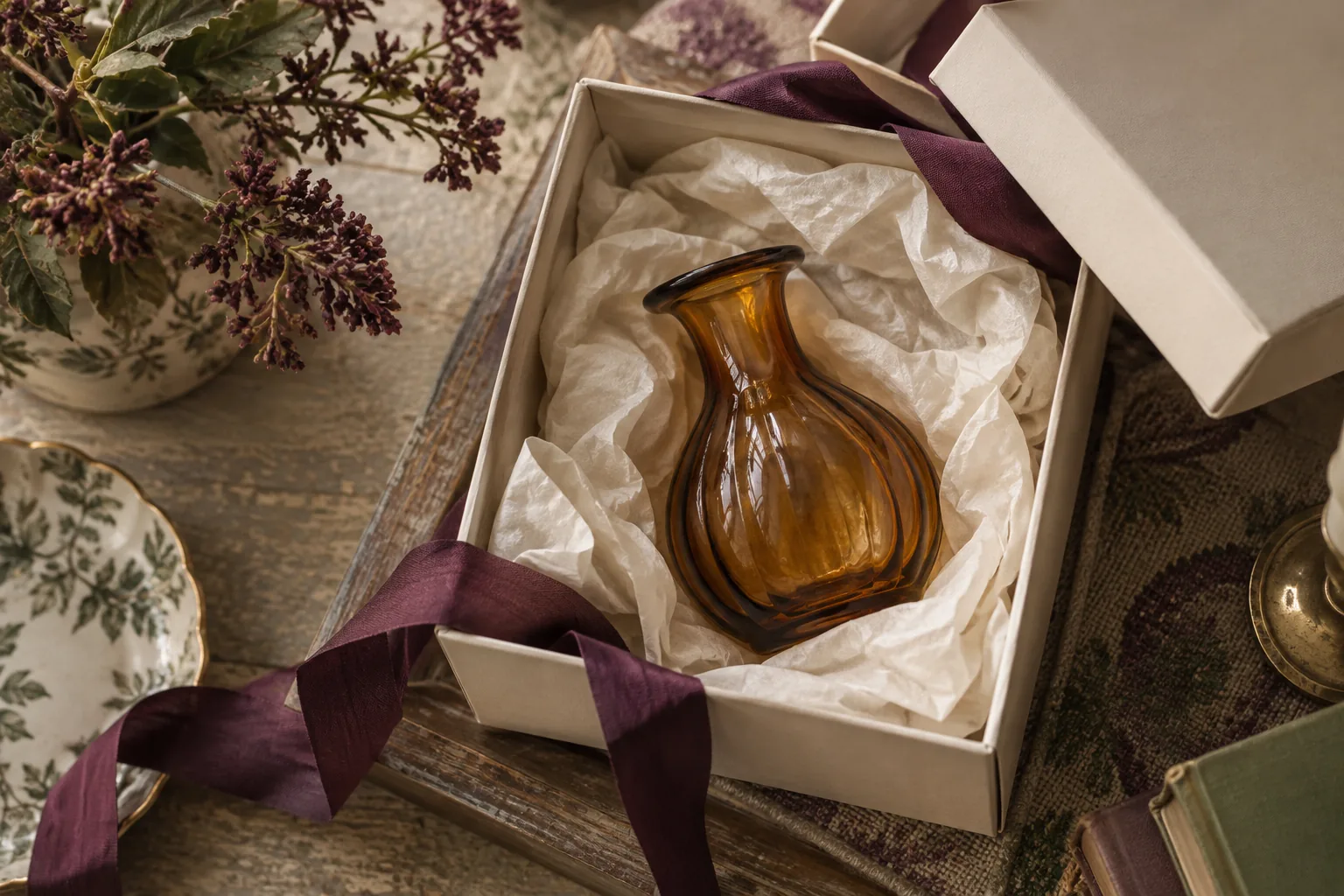
A photograph taken before wrapping provides a record of condition and helps if transport causes a problem. Pack the object according to its materials and vulnerabilities, protecting projecting parts and preventing movement. For valuable, heavy or particularly fragile objects, arrange suitable professional packing and delivery rather than trusting decorative gift wrap to do the job.
Leave the recipient free to choose
Do not require the object to be displayed in a particular place or expect regular proof that it is being used. A gift becomes theirs. If you know they prefer exchanging unsuitable things, discuss that possibility and retain any relevant purchase information.
A vintage gift succeeds when its particular qualities meet a real interest: a familiar place on a postcard, a shape they repeatedly admire, or a book on a subject they love. The object's age is only part of that connection. Choose something manageable, describe it truthfully and let the personal reason for giving it carry the rest.