Give yourself a manageable question
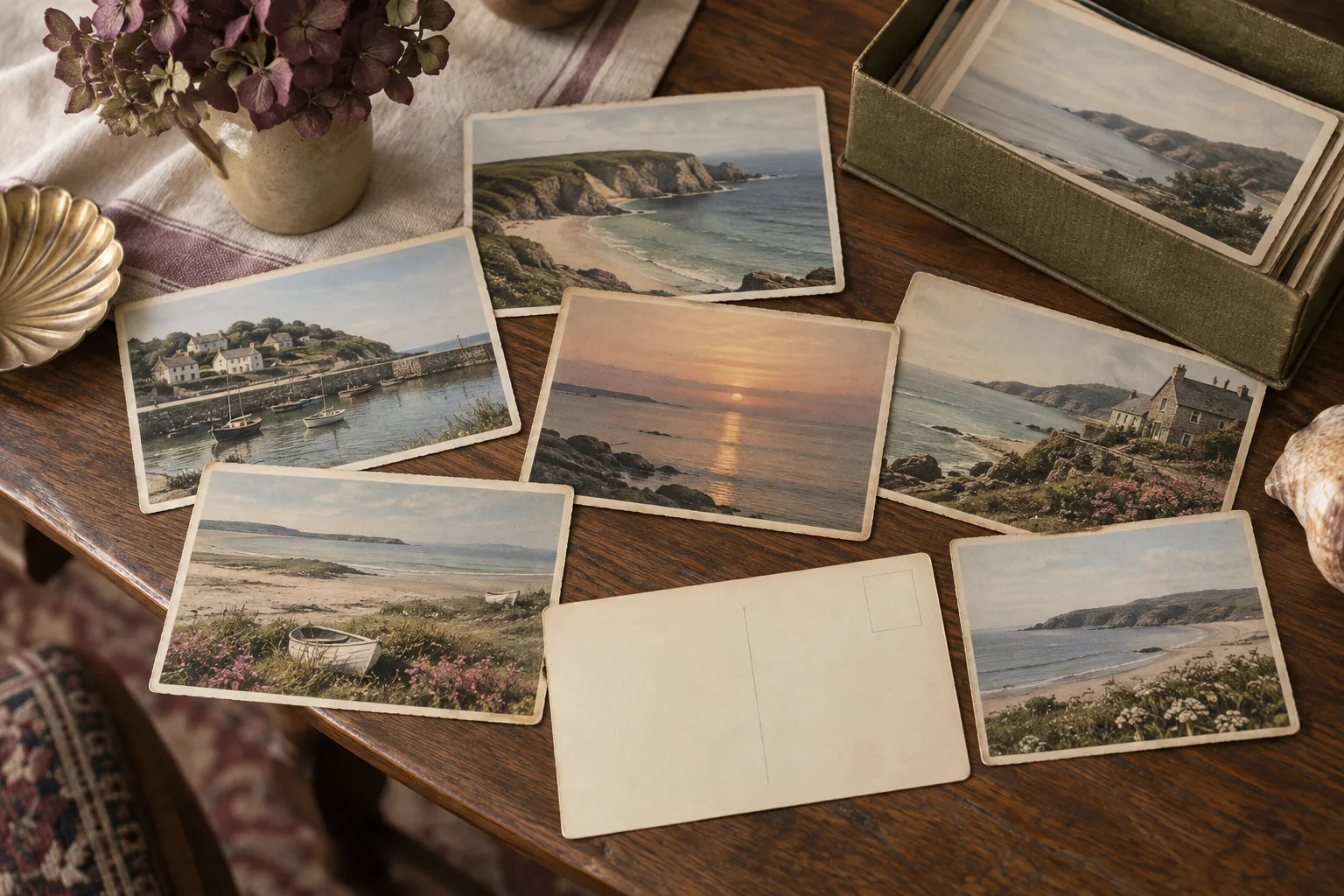
Postcards are easy to buy one at a time and surprisingly easy to accumulate without direction. A useful starting point is a question: how has one high street changed, how was a seaside town presented, or which views of a familiar park keep recurring? A small focus makes each new card easier to assess.
You do not have to pursue completeness. Three contrasting views of the same station may be more interesting than a hundred unrelated cards bought because they were cheap. Decide what catches your attention: the architecture, lettering, people, colour or written message. Your collection can grow from that interest without becoming a test of how many examples you own.
Look at both sides before buying
Ask for a clear front and back photograph. The message, address panel, publisher details and postmark may all add context, while also revealing damage or earlier mounting. A card's posting date does not necessarily establish when its photograph was taken or when that edition was printed.
Keep uncertain dates uncertain. Record a visible postmark separately from an estimated image date and save the seller's wording. If a handwritten message is difficult to read, transcribe only what you can make out, using a note for missing words. Guessing a name or location confidently can send later research in the wrong direction.
Notice condition without demanding perfection
A bent corner may matter little to you if the image is clear and the message interesting. A crease through the central subject may be more distracting. Ask about trimming, adhesive residue and anything attached to the reverse. Decide which issues you accept before the excitement of finding a familiar place takes over.
Do not peel cards from old albums or remove stuck material casually. Paper and photographic surfaces can be damaged by well-intentioned interventions. If a card is significant or fragile, seek appropriate advice. It is often better to keep a documented imperfect object than to attempt a cosmetic improvement that removes information or creates a new problem.
Make the collection easy to revisit
Store cards in suitable enclosures from a preservation supplier, chosen for the actual materials, and arrange them so you can see both sides without repeated handling. The Library of Congress provides separate guidance for paper and photographs; postcards can involve different processes, so one storage assumption should not cover everything.
Use a simple numbering system in your digital notes and on the enclosure, rather than writing directly on the card. Record subject, visible text, seller, date acquired and condition. Photograph both sides. A searchable folder lets you compare details without spreading the entire collection across a table every time you want to check a shop sign.
Display a selection, not the archive
Choose a few cards for a suitable frame or other protective display and keep the rest stored. A small group organised around one street or colour can be more legible than an enormous grid. Consider displaying reproductions of especially fragile or meaningful cards while retaining the originals appropriately.
If sharing a card online, think about whether a message contains sensitive information about people who could still be affected by its publication. You can discuss the image without reproducing every address or intimate line. Collecting becomes more thoughtful when the card is treated as an object with several layers of meaning, rather than simply a small decorative rectangle.