Notice the spaces between
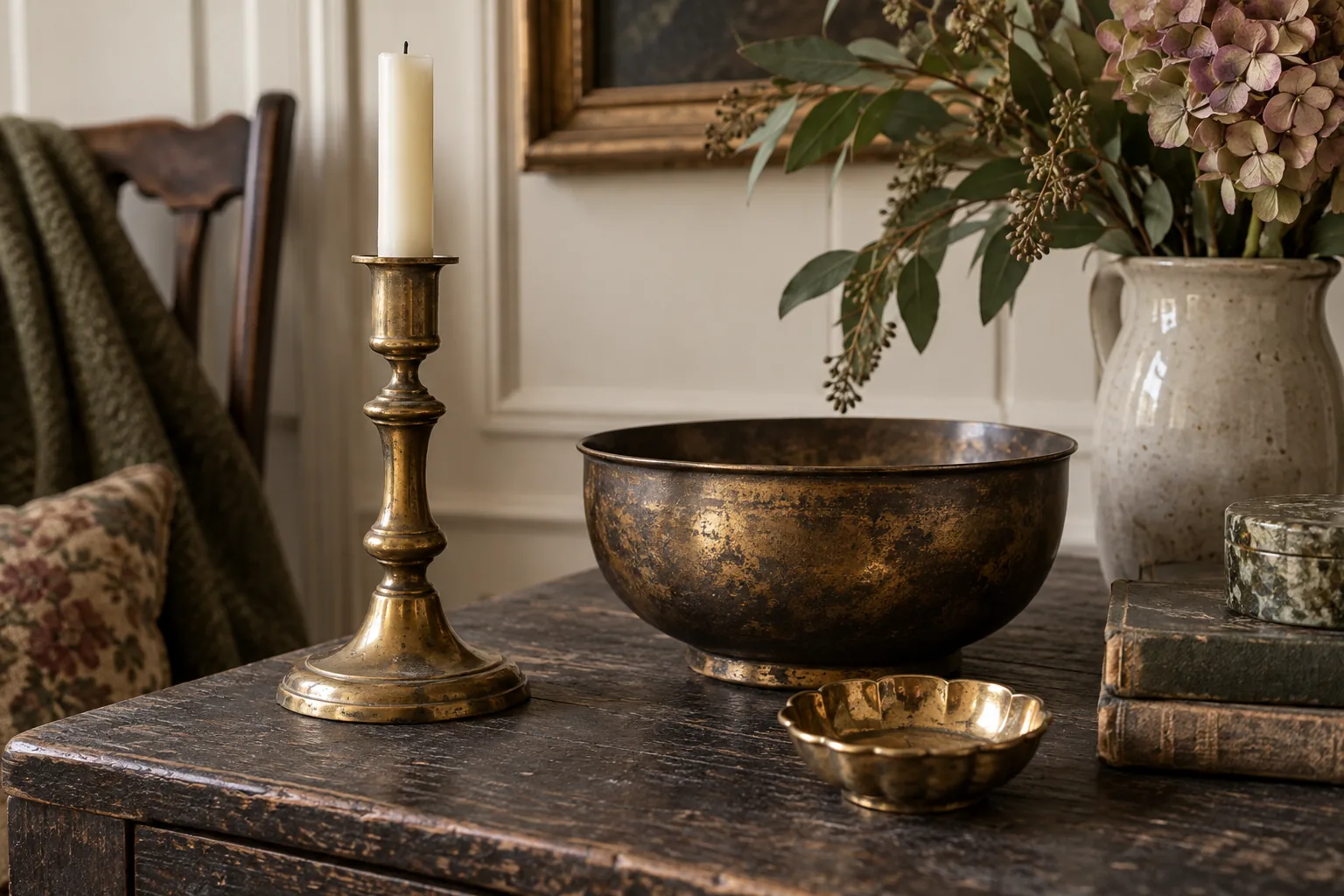
Candlesticks are often bought as props for candles, but their bases, stems and cups can make compelling forms on their own. Set one against a plain wall and look at the spaces around it. A narrow stem gives the base visual weight; a broad upper cup can make the whole piece feel architectural.
Try an empty candlestick before deciding what belongs inside it. Leaving the cup visible may be the most interesting choice, particularly when its outline is unusual. This approach also keeps the purchase focused on the object itself rather than a photograph of a beautifully set table that your room does not resemble.
Check whether it stands properly
A candlestick can look straight from the front and lean noticeably from the side. Ask for photographs from more than one angle and a view of the underside. Loose joints, distorted bases and missing components deserve a clear description. Place the piece on a level surface with permission when viewing in person.
Do not twist fittings or dismantle parts simply to investigate. A previous repair may be holding more than it appears to, and decorative components are not necessarily removable. If a piece is unstable, consider whether you really want the cost and uncertainty of specialist assessment. A lower asking price does not make an awkward object easier to place safely.
Use pairs without insisting on symmetry
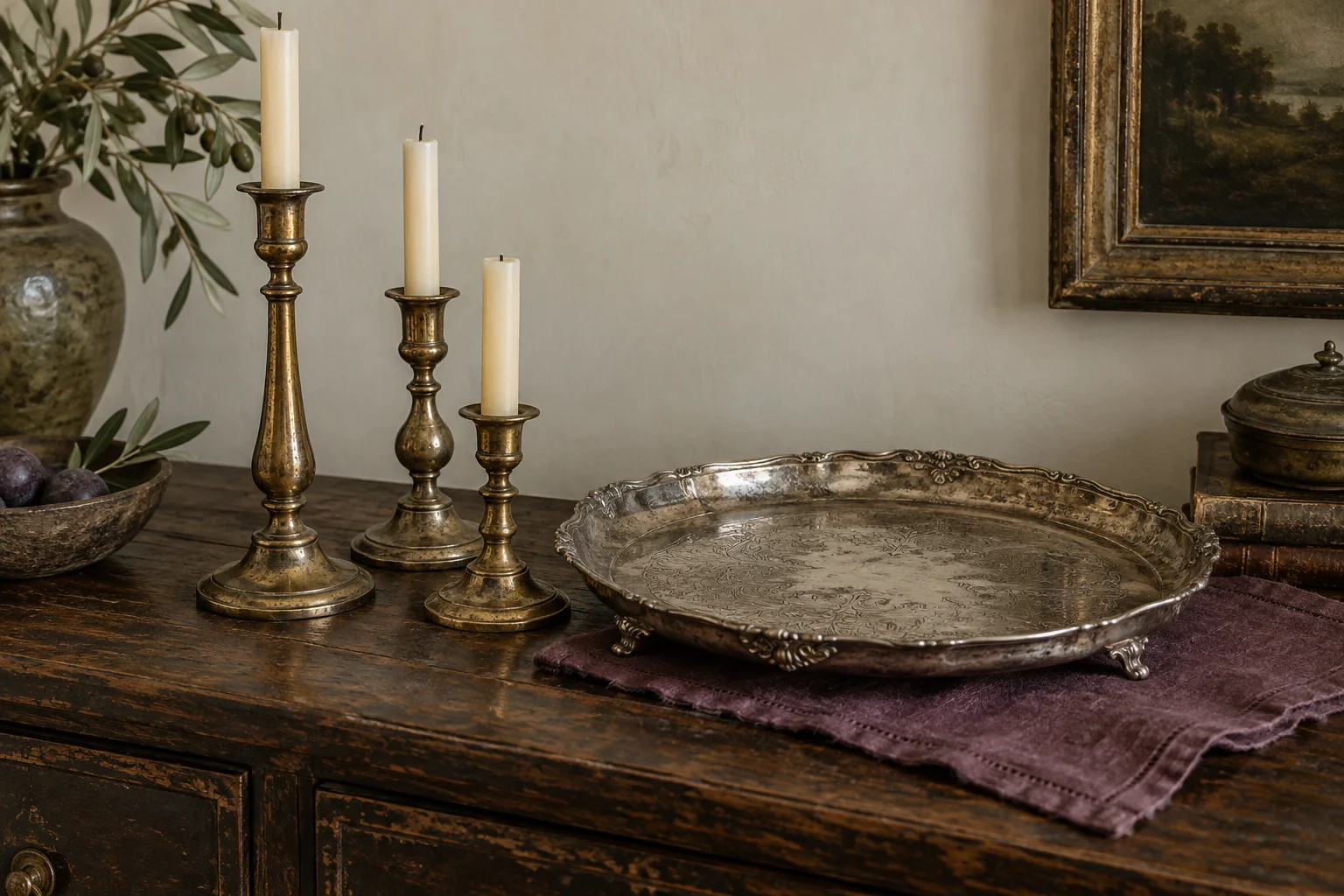
A matching pair can frame a picture or define the ends of a mantel. That is useful when the surrounding room feels loose and varied. But placing both pieces side by side can also emphasise subtle differences in wear and shape. Try each arrangement before deciding which is more convincing.
Unmatched candlesticks need another connection. Similar height, a shared metal tone or repeated curves can provide it. Avoid making every detail different at once unless you want a deliberately busy effect. Two or three clear shapes will often be more legible than a crowd of small stems that merge into a line from across the room.
Let the finish stay part of the decision
Look at the actual surface rather than buying an imagined polished version. A dark finish may suit your room precisely because it does not flash under the lights. Ask what the material and finish are believed to be, and whether any coating or repair is known. Colour alone cannot reliably identify the metal.
Do not begin with a general metal polish. Different surfaces, coatings and composite parts need different treatment, and unnecessary polishing can change the appearance you liked. The Canadian Conservation Institute's metal-care guidance is a useful reference when deciding whether professional advice is appropriate. Choosing a piece you enjoy in its present state keeps restoration promises out of the buying decision.
Build a quiet arrangement
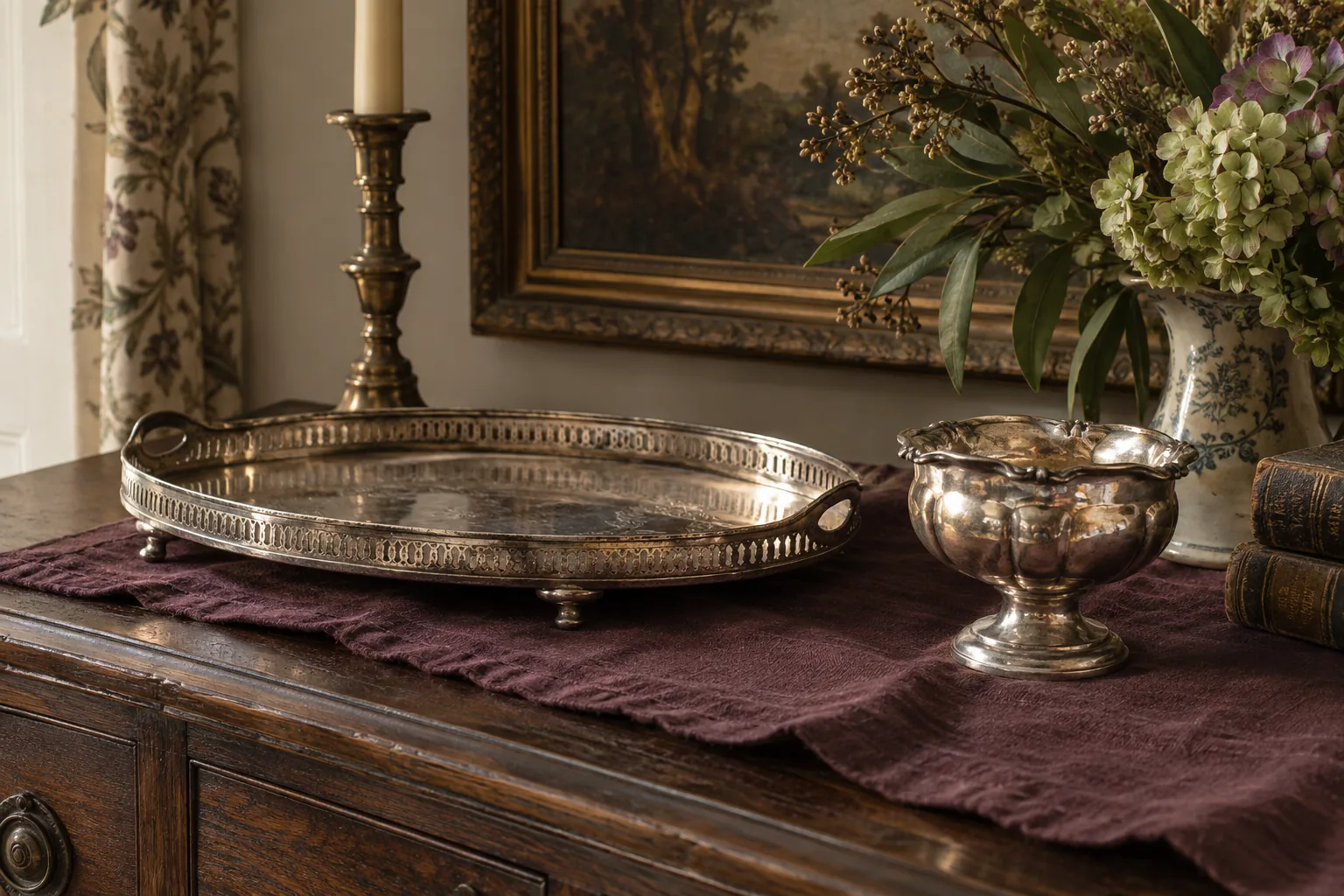
An empty candlestick beside a shallow bowl creates a useful change in height without adding much visual bulk. On a narrow mantel, one candlestick and one larger picture might be enough. Keep the base fully supported and clear of passing hands, curtains and frequently moved objects.
This is a decorative arrangement, not an assessment of an antique's suitability for a live flame. If you want working candleholders, choose products with appropriate current safety information and follow their instructions. Your old candlesticks can remain sculptural companions. Take a photograph of the grouping after removing one piece; the simpler version may reveal the silhouette that attracted you in the first place.