Measure the space that matters
A frame's outer dimensions describe its presence on the wall, but they do not tell you what picture it will hold. Ask for the internal opening and the rebate dimensions, as well as depth. The visible opening may be smaller than the space into which the artwork and mounting materials must fit.
If you already have a picture in mind, take its measurements with you. Allow for suitable mounting rather than assuming the paper should be trimmed to fit an attractive frame. A framer can explain what is possible. Buying the frame first can work, but it turns the next stage into a search for a compatible picture instead of a straightforward finishing job.
Inspect the corners and decoration
Look for loose joints, missing ornament and flaking surfaces. A frame can appear solid in a front-facing photograph while being weak at the back. Request a full rear view and close-ups of all four corners. Ask whether the glazing, backing and hanging fittings are included and whether any of them are damaged.
Do not mistake every uneven patch for desirable age. Decide which imperfections you enjoy and which will distract you once the frame is on your wall. A chipped corner may barely register in a busy room; a missing section at eye level may become the only thing you see. Consider the object in its current state rather than budgeting mentally for an unspecified quick repair.
Let the picture remain the centre
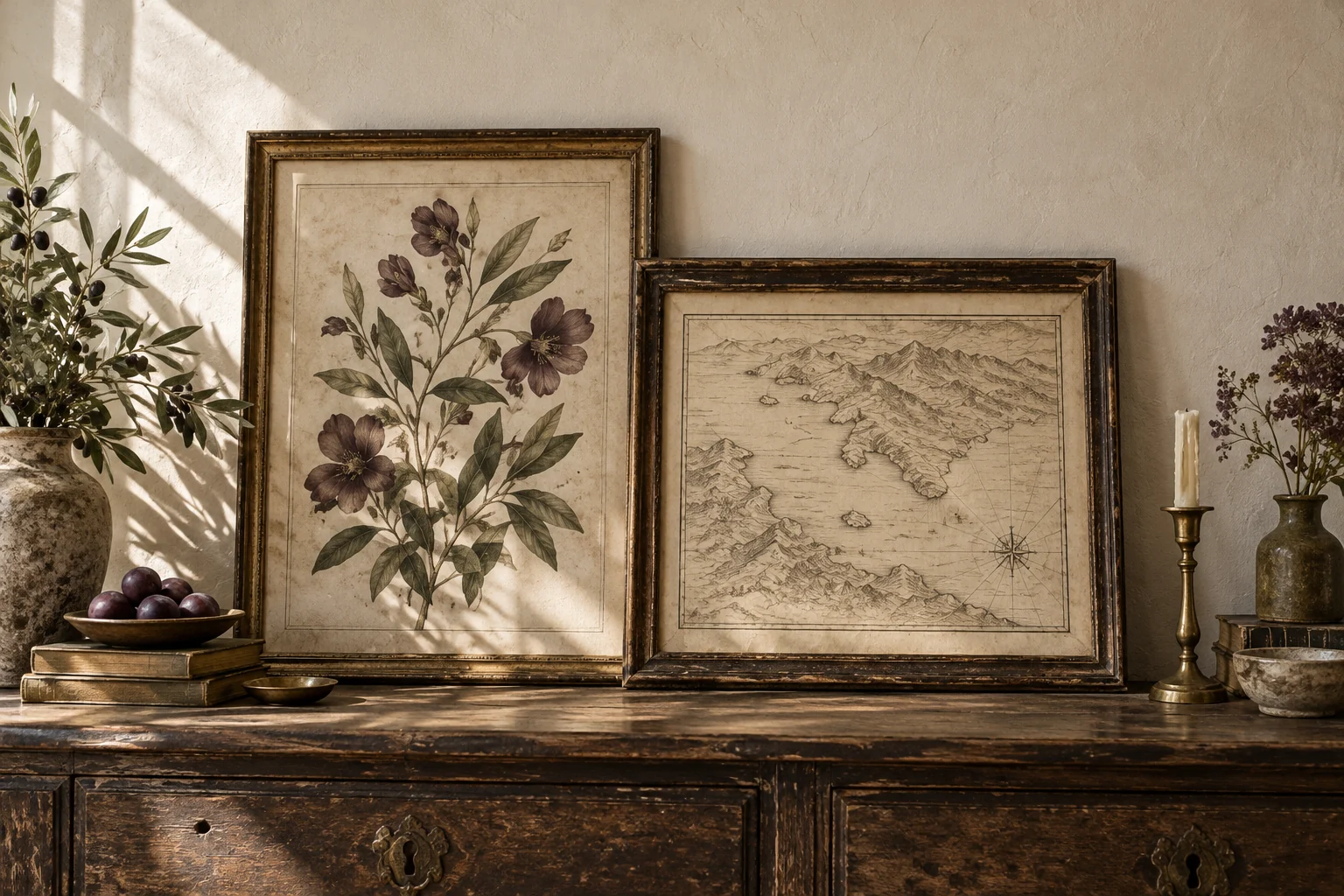
An ornate frame does not need an equally elaborate image. A simple drawing can look generous within a richly worked surround, provided the proportions feel right. Conversely, a heavily detailed print may benefit from a quieter frame that gives the eye somewhere to rest.
Try placing a photograph of the picture beside a photograph of the frame, or ask a framer to help you compare them in person. Pay attention to scale rather than matching colours exactly. A wide moulding can overwhelm a tiny image, while a very thin frame may seem hesitant around a large, visually strong piece. These are judgments to make by looking, not fixed rules.
Budget for the work behind the image
An inexpensive frame may still need new glazing, mounting, backing and secure hanging fittings. Ask for an estimate before treating it as a bargain. Suitable conservation mounting is especially important for valuable or sentimental works on paper. Existing materials should not be assumed appropriate merely because the picture has survived in them so far.
The Library of Congress provides guidance on preservation and framing, including the effects of display conditions. A competent framer can help translate those considerations into a practical solution for your object. Explain what the picture is, what you know about it and where it will hang. That information is more useful than simply requesting an old-fashioned appearance.
Allow the mount to solve a proportion problem
A frame slightly larger than the image may be a better candidate than one that fits with no room to spare. A suitable mount can give a small drawing space within a broader surround and keep the image from looking squeezed. Discuss the complete package with a framer before buying: the artwork, mount, glazing and frame must work together.
Compare a wide pale mount with a narrower one using paper mock-ups or the framer's samples. The broader border might make a delicate image feel more important, but it can also detach a small picture from an assertive frame. Look from across the room as well as close up.
Do not let an attractive old frame force every decision. If the image loses its character inside it, reserve that frame for something else. A harmonious result is worth more than proving that two independently appealing purchases can be made to fit together.
Consider an empty frame carefully
An empty decorative frame can work as an object in its own right, but give it a clear purpose in the arrangement. Its opening should frame something visually worthwhile, even if that is only a calm patch of wall. Several empty frames crowded together can look more like unfinished projects than a deliberate collection.
Keep the frame secure and appropriately supported, especially if it is heavy or fragile. Save any useful labels or documented history when a professional refits it. The successful result is not just an attractive border: it is a frame that suits its picture, respects the materials and sits comfortably in the room without demanding constant explanation.