The view is already doing something
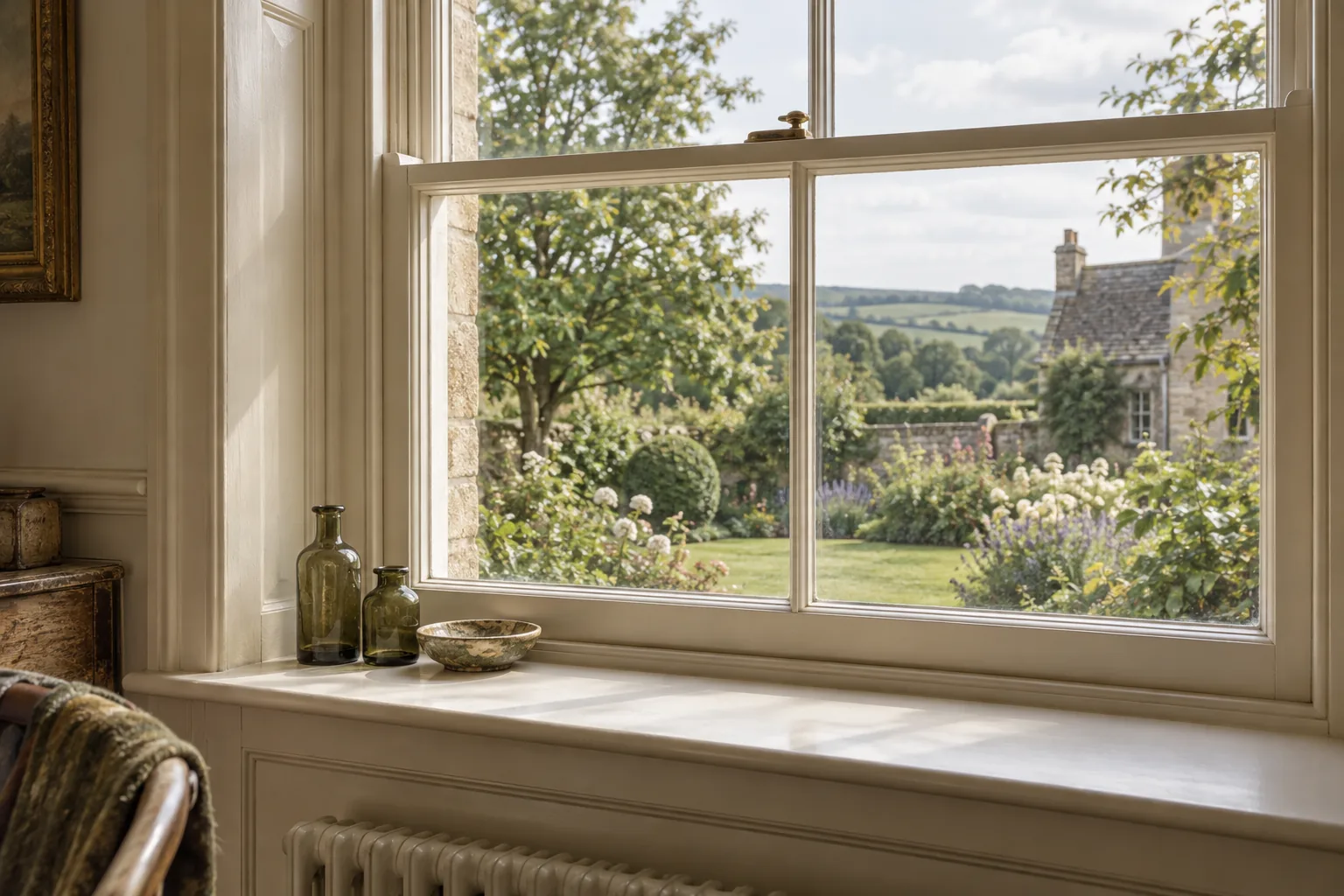
Before putting anything on a window ledge, look at what is beyond it. A garden, neighbouring brickwork or even a changing patch of sky contributes colour and movement to the room. The ledge does not always need a full arrangement in front of that view. Sometimes a single object at one end is enough to make the opening feel considered.
Stand back as well as looking close up. Objects that seem small when held can block a surprising amount of daylight at eye level. Work with the proportions of the whole window, including its frame and curtains, rather than treating the horizontal surface as a shelf that must be filled.
Understand the conditions
Window ledges can be demanding places for older belongings. Strong sunlight may affect colours and finishes, while condensation can leave surfaces damp. Notice these conditions over several days before placing anything vulnerable there. Paper, delicate textiles and treasured photographs generally deserve a more protected position elsewhere.
Keep the window's operation, ventilation openings and any required escape route clear. An arrangement that must be dismantled whenever you open the window is likely to become a nuisance. If moisture regularly collects, address the underlying issue and leave the ledge easy to inspect. Decoration should not hide a damp patch or make routine cleaning more difficult.
Choose shapes that keep their outline
Against daylight, the silhouette of an object can matter more than its surface detail. A simple vase, a modest bowl or an interestingly shaped pot may read clearly where a cluster of tiny ornaments becomes visually muddled. Try the arrangement at different times, when the background changes from bright to dark.
Limit the number of competing heights. One taller form with a lower companion often feels calmer than a row of objects rising and falling at random. Leave visible gaps so the window remains a window. Avoid unstable pieces or anything likely to be knocked by a curtain, a pet or a hand reaching for the latch.
Think about both sides of the glass
A windowsill display may be visible from outside as well as from the room. Consider whether the backs of frames or unfinished surfaces look awkward from that direction, and whether you are comfortable with the objects being on view. There is no obligation to make the arrangement a public display.
If you include plants, choose their position according to their needs and contain water carefully rather than placing a damp pot directly on a vulnerable surface. Keep practical growing requirements separate from the appeal of a decorative container. A plant that struggles in the available light will not make the composition more convincing merely because its pot suits the room.
Try less than you first planned
Put two or three possible objects nearby, then place only one on the ledge. Live with that for a day before deciding whether it needs company. This is an unusually effective place to practise restraint because the light and view are always changing around the object.
Make the final arrangement quick to move for cleaning and window use. If a piece begins to fade, stain or collect moisture underneath, relocate it promptly. A clear ledge is also a valid result. The purpose of the exercise is to make the room feel better, and sometimes the most attractive thing a window can offer is an uninterrupted view and a little more daylight.