Treat the route as the main feature
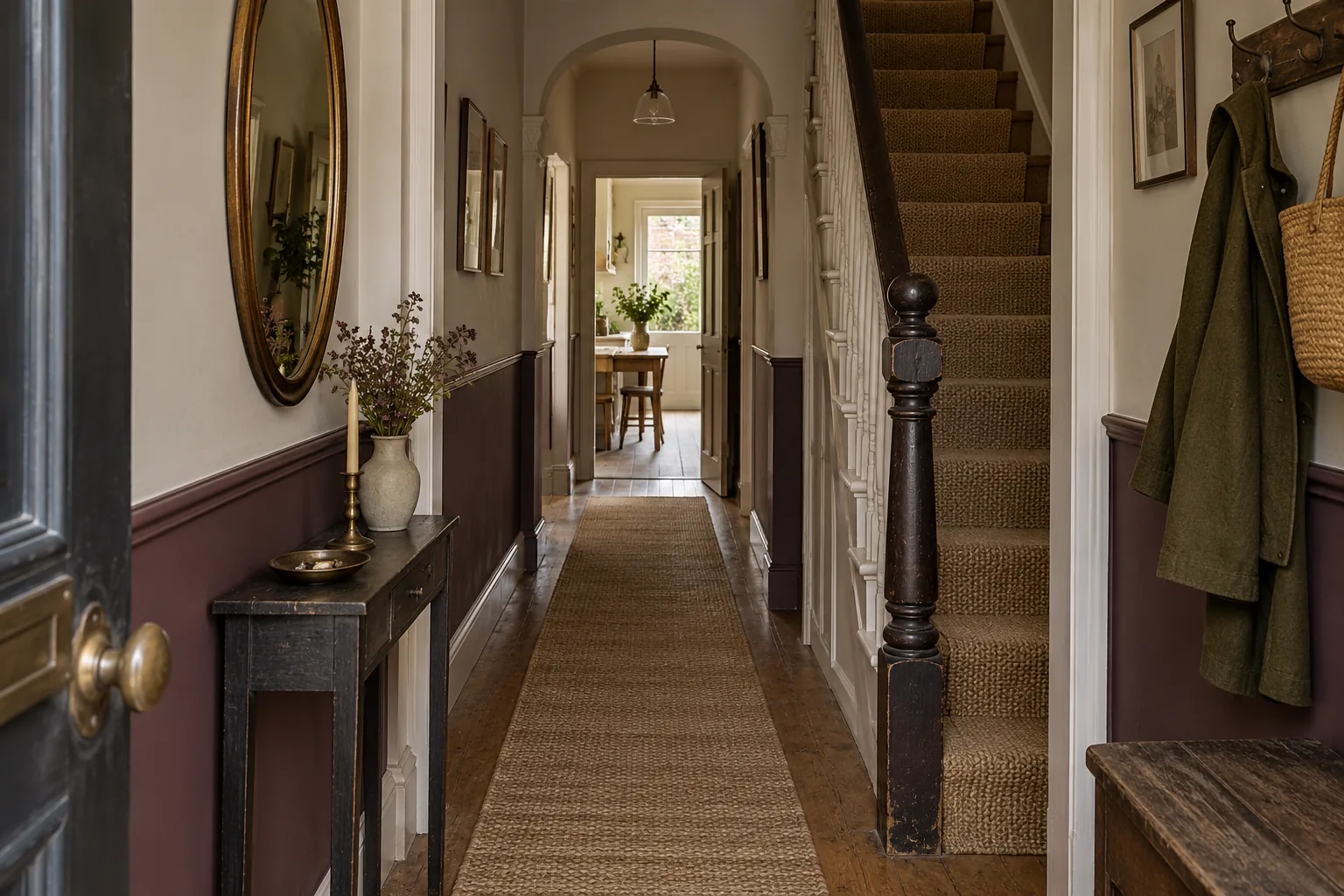
A hallway is often decorated as though it were a tiny sitting room, then expected to cope with coats, shopping bags and people arriving at once. In a narrow entrance, start by protecting the route through it. Open every door, carry a bulky bag along the passage and notice where you naturally stop to take off shoes. These are the spaces that need to stay clear. A vintage piece deserves its place only if the hallway continues to work comfortably when it is occupied, rather than standing empty.
Think shallow, but check the details
The depth of a hall table matters more than its width. A long, shallow piece may sit more comfortably against the wall than a short cabinet that projects into the passage. Include handles, feet and any overhanging top when assessing its footprint. You also need room to open drawers without blocking another door. If no furniture fits sensibly, let the walls carry the decorative interest. A hallway does not become unfinished simply because it lacks the console table that often appears in pictures of larger entrances.
Give the eye somewhere to land
One clear point of interest can make a narrow hall feel intentional. It might be a framed print at the far end, a small arrangement on an existing ledge or a distinctive colour on the wall facing the entrance. Choose something you can appreciate while passing, rather than a dense display that needs close inspection. Consider the view from adjoining rooms as well. A quiet composition seen through an open doorway can connect the hallway to the house without repeating the same decorative objects in every space.
Use a mirror for its shape as well as its reflection
A vintage mirror brings a frame, a material and a reflected view into the hallway. Before settling on a position, look at what it will show. Reflecting a bright room or a simple wall is a different effect from multiplying a busy coat area. An ornate frame can be enough decoration on its own, especially where the passage is already lined with doors. Choose an appropriate mounting method for the mirror and wall, following professional or manufacturer guidance where needed; its decorative value never removes the need for secure installation.
Keep the everyday landing place modest
Keys, letters and sunglasses tend to gather wherever there is a flat surface. Give them a small, obvious destination rather than hoping a decorative display will discourage them. A shallow dish can hold keys, while a single tray contains the items that need to leave the house tomorrow. Avoid filling the entire surface with styling objects before daily life has used it. If paper accumulates, the answer may be a better routine elsewhere, not a larger hall table that makes the walkway harder to use.
Finish at walking pace
Stand at the entrance, then walk through towards the next room. Look for projections at shoulder and hip level, visually crowded patches and objects that might be knocked by a swinging bag. Remove one decorative item if the composition feels busy; narrow spaces amplify small changes. Texture from timber, a woven basket or a softly aged frame can supply warmth without a large number of things. A good hallway offers a welcome and a clear way forward. It need not tell the whole story of the house in its first few metres.