Try staying in the room yourself
A guest room often gathers attractive furniture that no longer fits elsewhere. The result may look generous while offering nowhere to put a bag or charge a phone. Spend a little time using the room as a visitor would. Sit on the bed, reach for the bedside surface and work out where clothes would go. You will quickly notice which charming pieces help and which merely occupy space. Begin with these practical observations, then let the room's character emerge from a small number of older objects that earn their position.
Leave furniture partly empty
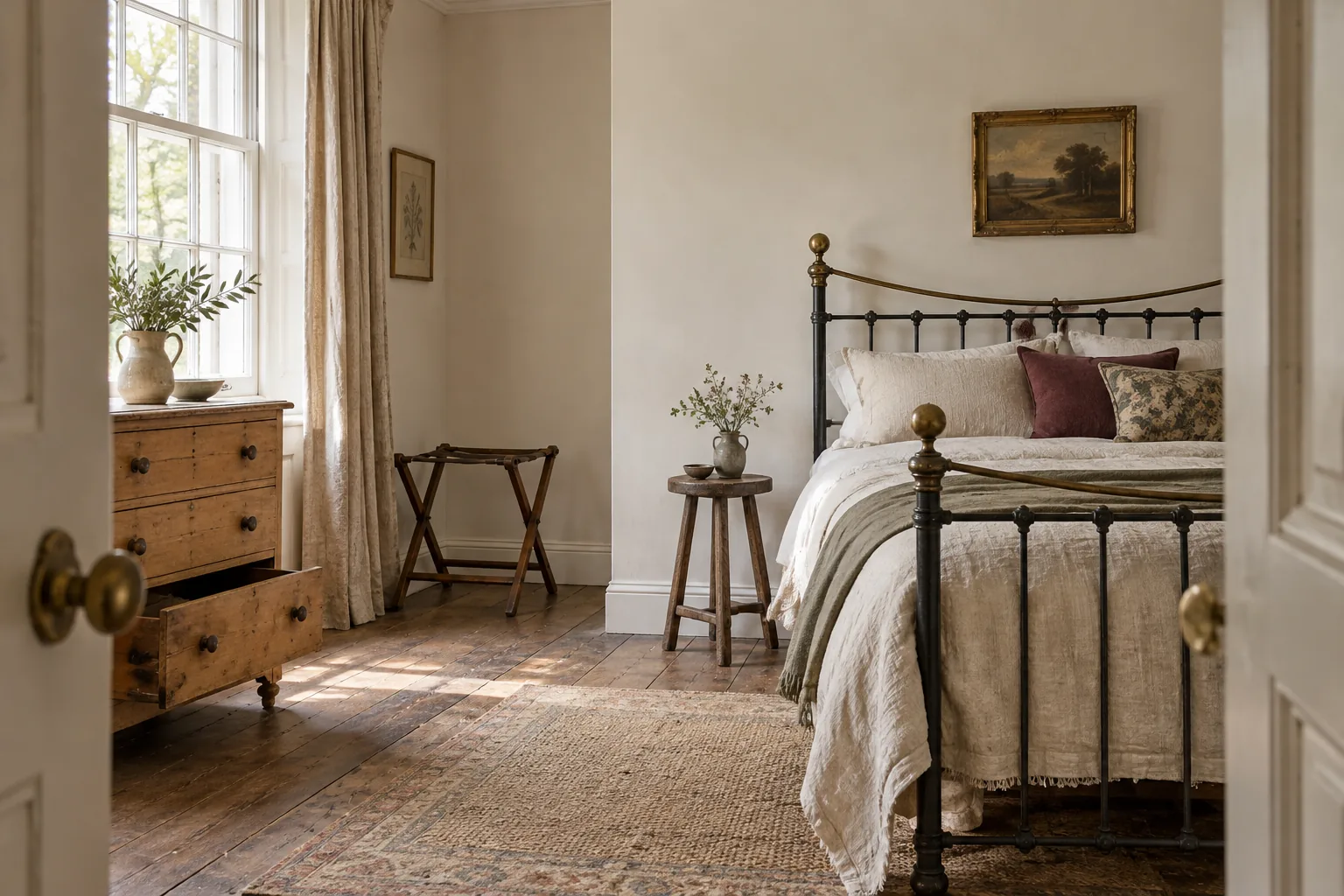
An old chest is useful guest-room furniture only if at least some of its storage is available. Clear a drawer or two and make the arrangement obvious without requiring visitors to ask permission. Leave a section of hanging space where possible, with a few usable hangers. A chair can hold a bag or clothes, provided it is not buried beneath decorative cushions. Empty space is a form of hospitality. It tells someone that the room has been prepared for their arrival rather than temporarily lent from a household storage system.
Keep the bedside arrangement straightforward
Beside the bed, a stable surface matters more than a perfectly matching pair of tables. Make room for a glass, a phone and a book without surrounding them with breakable decorations. A lamp should be straightforward to operate, with any electrical equipment in safe condition and suitable for use. If the room has more than one guest, consider access from both sides of the bed. The most pleasing bedside styling often consists of very little: a useful light, one small picture or object, and enough clear surface for someone else's possessions.
Use textiles to connect unrelated pieces
Guest rooms frequently contain furniture from several stages of a household's life. Bedding, curtains and a rug can help those pieces sit together without pretending they belong to a matching set. Take one quiet colour from an existing picture or fabric and repeat it loosely. Choose comfortable, washable textiles where they will be used directly, keeping delicate vintage cloths for less demanding decorative roles. A folded throw adds an option for warmth as well as visual interest. Avoid so many layers that guests cannot tell which are intended to be used.
Offer interest without an obstacle course
A few books, a framed print and an appealing ceramic can make the room feel personal. Place them where they do not compete with luggage or the route to the door. Very valuable or sentimental objects may be better kept elsewhere, both for their protection and to spare visitors the worry of living around them. Check the room in lower light, when a projecting table corner or loose rug edge is easier to miss. The decorative arrangement should remain easy to navigate for someone who does not know the room by habit.
Let guests change the arrangement a little
A welcoming room can tolerate a chair being moved or a book being placed on the chest. Avoid a display so elaborate that using the space feels like disturbing an exhibit. Set out the essentials clearly and leave the rest flexible. Before each visit, check that drawers open, surfaces are clean and the room has not gradually refilled with household overflow. Its vintage character can remain quietly in the background. The best sign of a successful guest room is that someone can settle in, find what they need and make themselves comfortable without a guided tour.