Meaning does not depend on constant visibility
Inherited and sentimental objects can bring warmth to a room, but they can also arrive with a sense of obligation. You may feel that putting something away means failing to value it. A more useful distinction is between caring for an object and displaying it. Both can be thoughtful choices, and neither requires every meaningful possession to remain visible at once.
Gather a small group and notice which pieces you enjoy seeing in daily life. Perhaps one bowl recalls a person more strongly than a whole set, or a single photograph says more than a crowded shelf of frames. Begin with those clear responses. You are deciding how the objects belong in your current home, not attempting to measure the importance of the people or memories associated with them.
Give each displayed piece an appropriate place
A meaningful object deserves a location suited to its material and condition. Keep vulnerable paper, textiles and finishes away from unsuitable light, moisture and heat. Fragile items need stable support and protection from busy routes. If you are uncertain about caring for a valuable or delicate piece, seek appropriate specialist advice rather than experimenting to make it fit a display.
Choose a position where you can appreciate the object without making it dominate the room. A small frame beside a reading chair may feel more personal than a formal arrangement in a rarely used space. Practical surroundings can be quiet: a few books, a clear surface or one related colour elsewhere in the room. The object does not need a decorative entourage to explain that it matters.
Allow old belongings to meet new ones
Sentimental pieces do not have to remain grouped exactly as they were in another home. An inherited ceramic can sit beside contemporary books, or an older table can support the routines of a different household. These new relationships allow the object to continue participating in life rather than becoming part of a preserved scene.
Be cautious with alterations, especially when age, value or materials are uncertain. You can change an object's setting without changing the object itself. Moving a chair, simplifying nearby colours or giving a piece more space may be enough to help it feel at home. If it still does not suit the room, that is useful information, not a judgement on the memory it carries.
Choose a representative piece without losing the rest
An inherited group can be easier to accommodate when you separate the pleasure of seeing it from the responsibility of keeping it together. One cup might recall a familiar kitchen more clearly than the entire service arranged on a shelf. A single photograph could make a stronger connection than several competing frames. Displaying a selection does not require an immediate decision about the remainder.
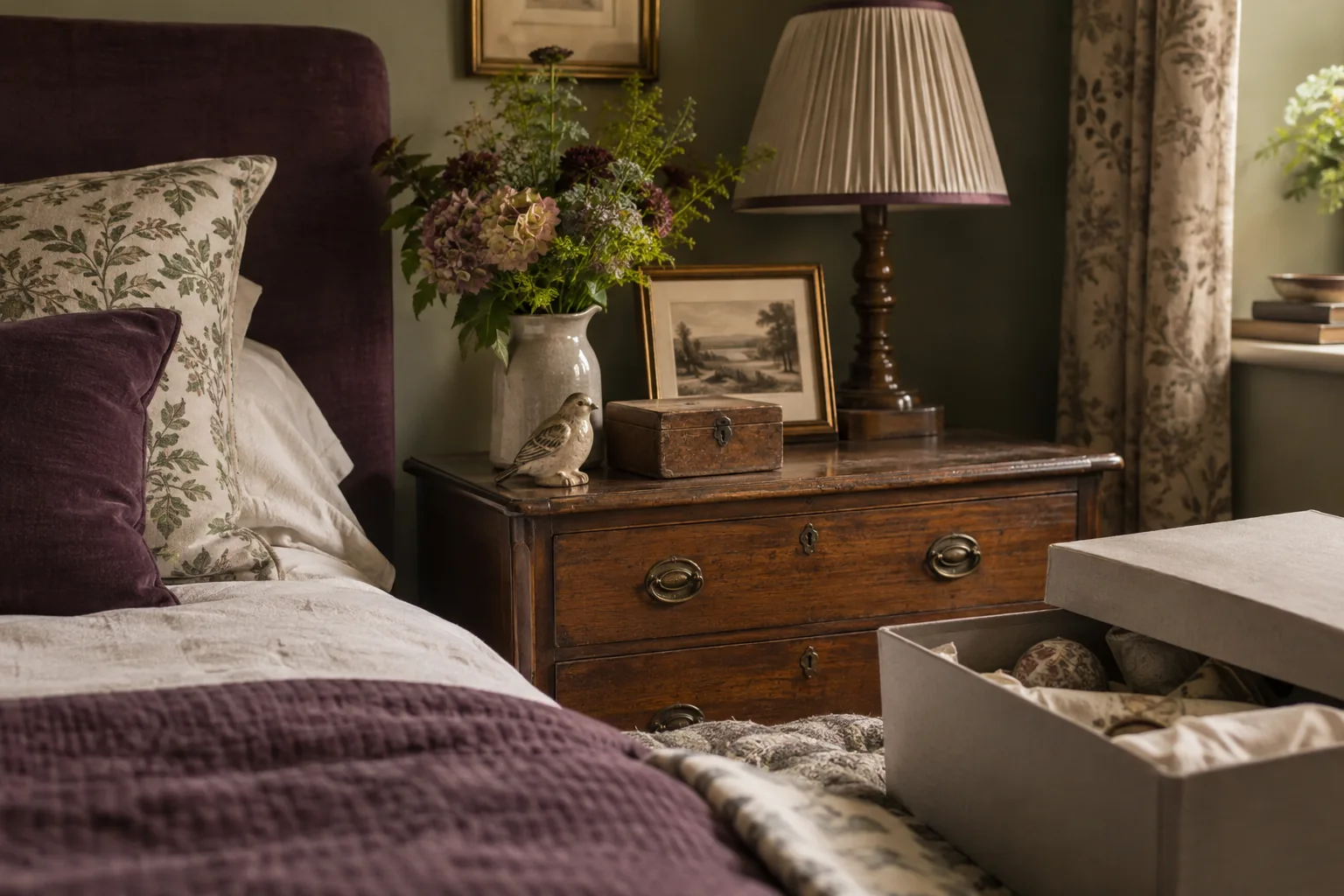
Give the stored pieces a clear, suitable home and record what belongs to the group. That prevents a rotating display from gradually losing its context. If a set has historical, cultural or monetary significance, seek appropriate advice before separating it permanently. Choosing what to display today is different from deciding what should be sold or passed on.
Where several family members have a connection to the objects, ask what they remember before assigning a definitive story. Two recollections may differ without either person intending to mislead. Preserve who supplied each account and avoid resolving uncertainty simply because one version sounds more appealing.
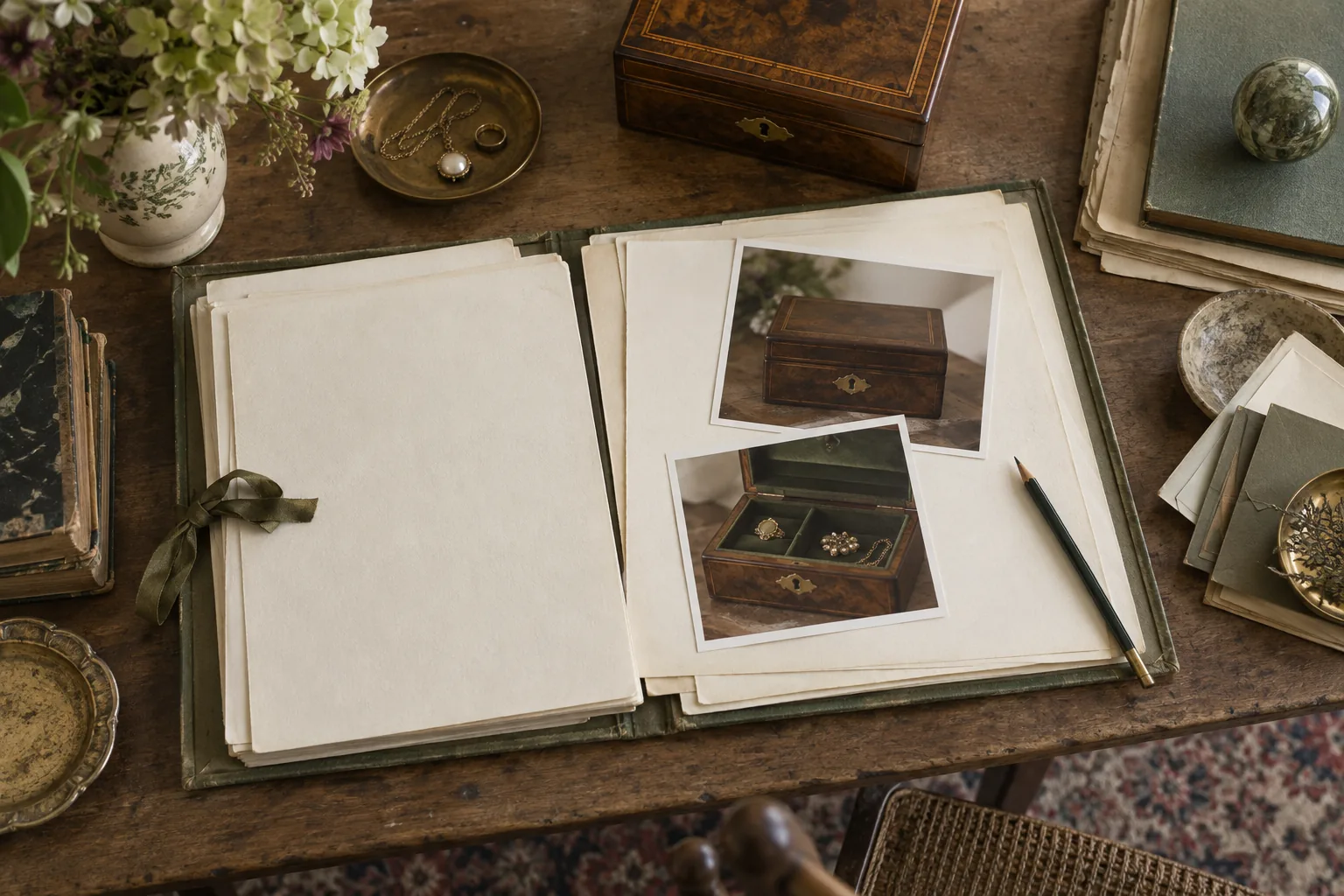
You can also keep a photograph of an earlier arrangement. A cabinet as it stood in a relative's home may hold information about the objects' relationships that would be lost if you photographed each piece alone. Your current room does not have to reproduce that arrangement. Keeping the image allows the earlier setting to remain part of the record while you find a comfortable way to live with the objects now.
Keep the story somewhere safe
A short written note can preserve the details that make an object meaningful: who used it, where it lived or what is known about its history. Separate confirmed information from family recollection and uncertainty. Store the note with your records or safely alongside the object in a manner appropriate to its materials, rather than attaching something that could damage it.
Rotating a few pieces can make them easier to notice and enjoy. Keep the rest stored suitably, reviewing them when you wish rather than according to a strict schedule. Your home can hold memory without becoming a complete inventory of it. A handful of carefully placed objects, chosen because you are glad to see them, often offers a more intimate connection than a crowded display maintained mainly from a sense of duty.