Map the furniture in its working positions
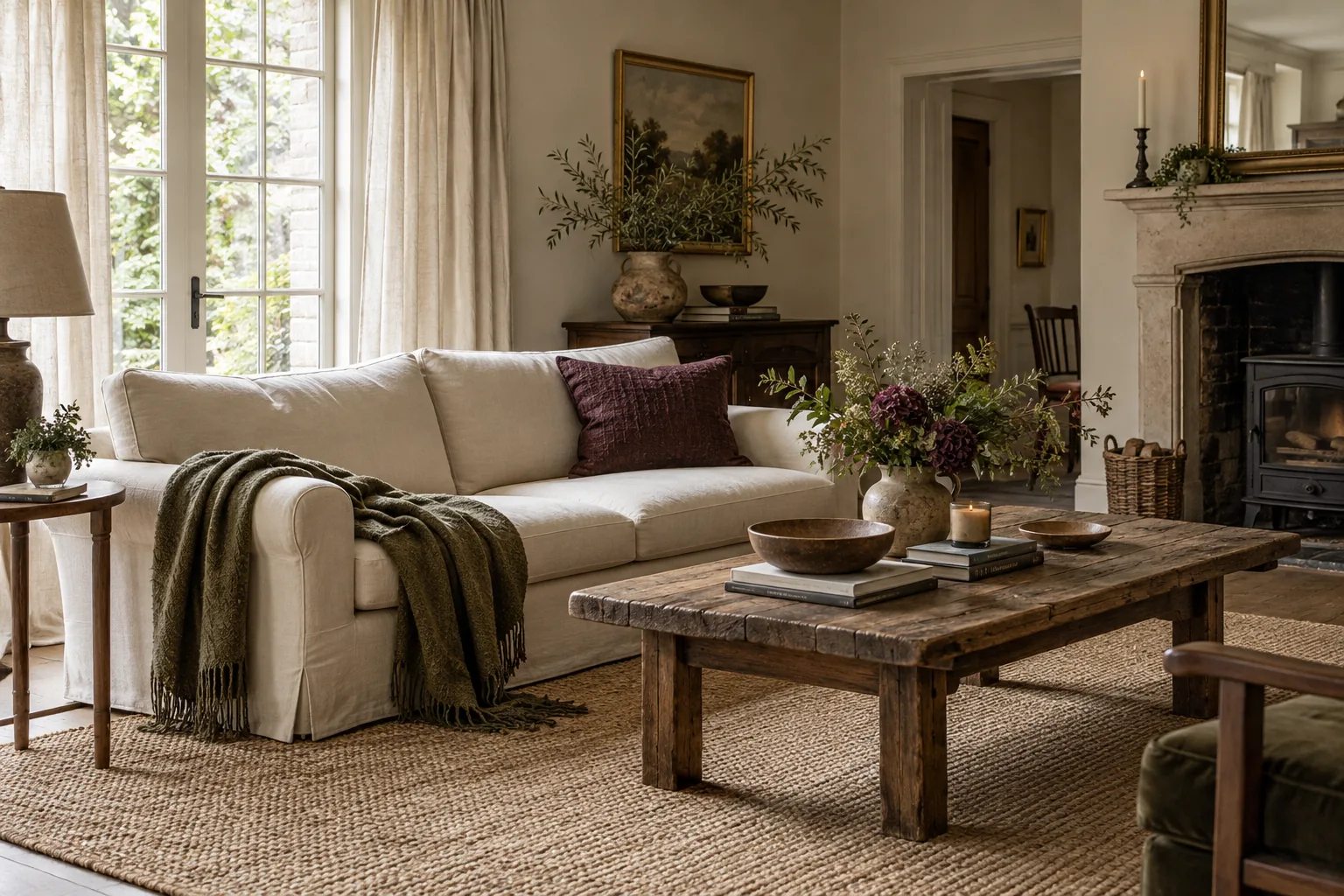
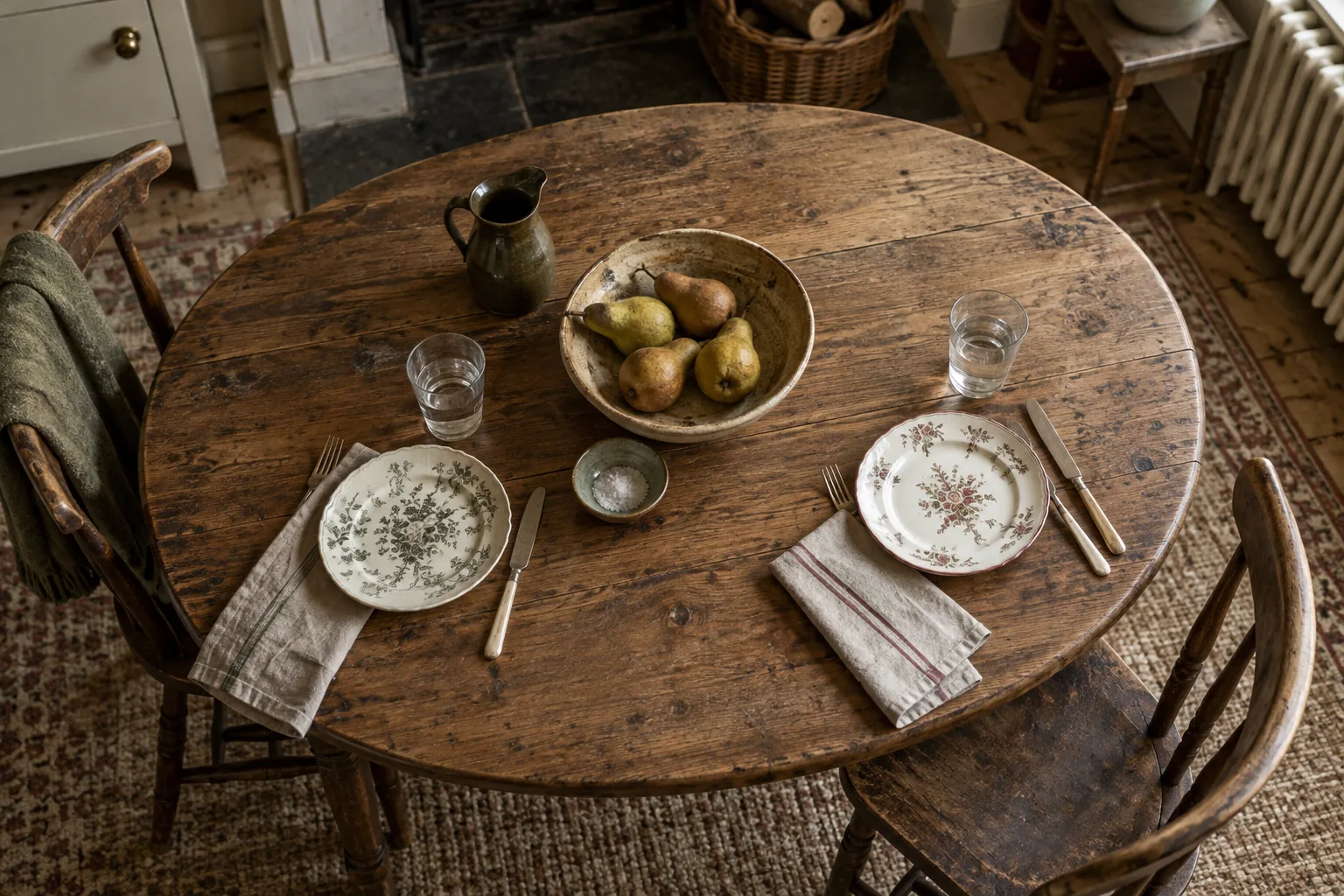
A rug is part of a room's arrangement, not simply a rectangle laid in its centre. Begin by placing the furniture where it is comfortable to use. Pull dining chairs out, move an occasional chair to its usual angle and check the route between doors. Only then consider the area the rug needs to relate to.
You can use paper or a safely removable marking method suitable for the floor to visualise different footprints, keeping the area free of trip hazards. Look at the proposed outline from the doorway and from the seats. A rug that seems generous in an empty patch of floor may appear much smaller once the furniture is in place. The useful question is how it supports the group, rather than whether it fills the room.
Give the edges a clear relationship
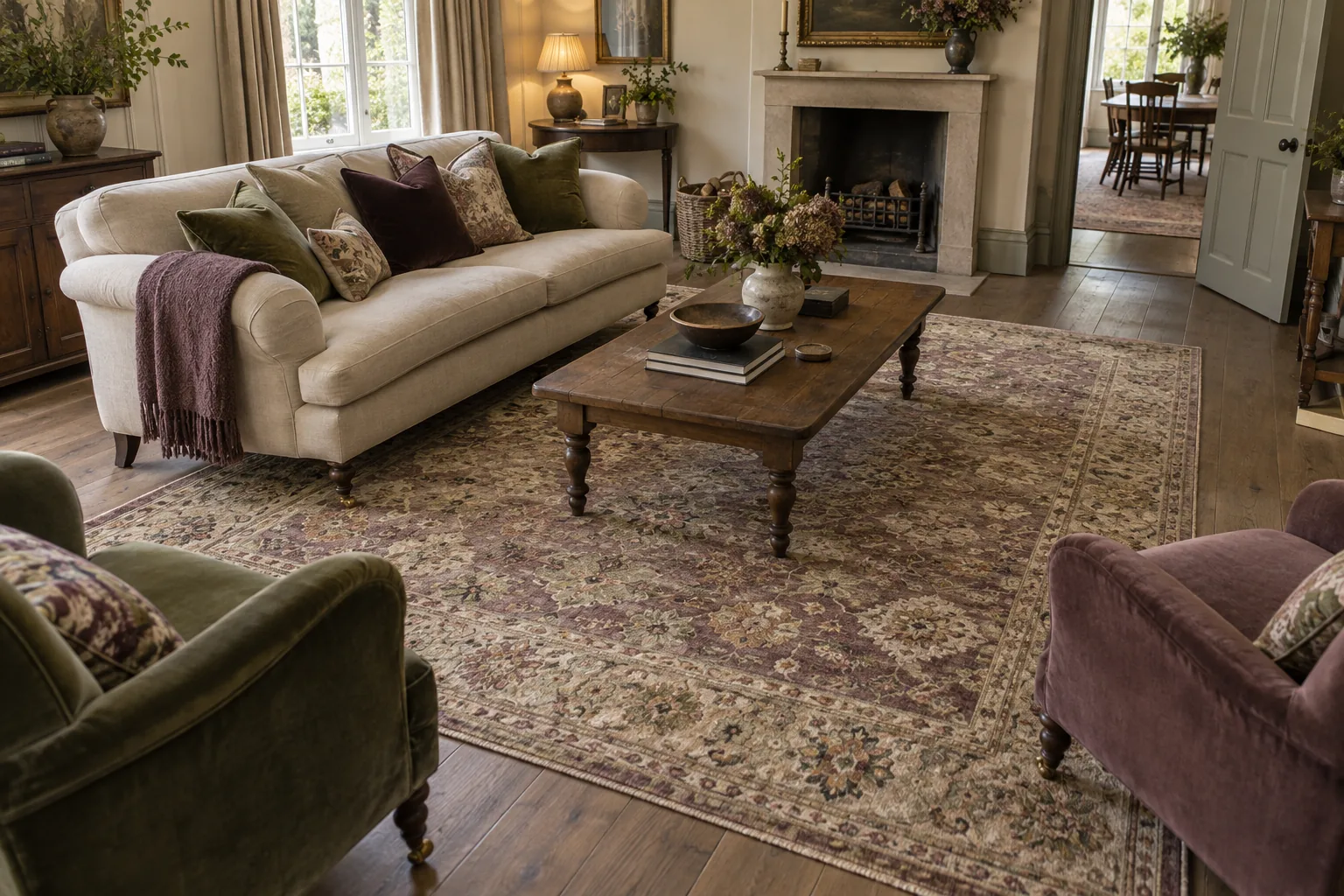
In a sitting area, a rug can gather several pieces into one composition when their relationship to its edges looks intentional. Some arrangements place furniture partly on it, while others keep a smaller rug clear of the surrounding pieces. Neither approach works automatically. Check whether the result looks settled and feels stable under the furniture.
Avoid awkward changes of level that make a chair rock or leave an edge where feet repeatedly catch. Doors should open freely, and busy routes need particular attention. Use appropriate underlay or other suitable measures where required for the rug and floor, following relevant product guidance. The decorative outline should not come at the expense of comfortable movement. A rug that repeatedly shifts out of position is telling you something practical about the arrangement.
Let the pattern have room to be seen
An older rug may have a central motif, a strong border or an evenly repeated pattern. Consider what the furniture will cover. Hiding most of a central design beneath a broad table creates a different effect from leaving it visible between chairs. There is no need to preserve every detail if the overall colour and texture work, but make the decision consciously.
A strong border can emphasise the rug's dimensions, making an undersized piece particularly noticeable. A more continuous pattern may feel less bounded. Look at the rug alongside curtains, upholstery and pictures so the room does not acquire several competing areas of high detail. Plain furniture can give an intricate textile space to be appreciated without requiring the rest of the room to become colourless.
Try the smaller rug elsewhere
A rug you love may simply belong in a different place. Beside a bed, beneath a modest reading group or in another suitable area, its proportions might become more convincing. Avoid forcing it to organise a large seating arrangement solely because it is the rug currently available. Sometimes leaving the main floor clear produces a better room.
If considering layered rugs, assess stability, edges and everyday movement carefully; extra layers can create catching points and uneven surfaces. There is no decorative obligation to make a small rug appear larger through layering. The right result is the arrangement that looks coherent and works underfoot. After a few days of normal use, check where chairs and feet actually land. Their habits are a more useful test than a photograph taken with everything neatly tucked away.