Let comfort remain the reason for the sofa
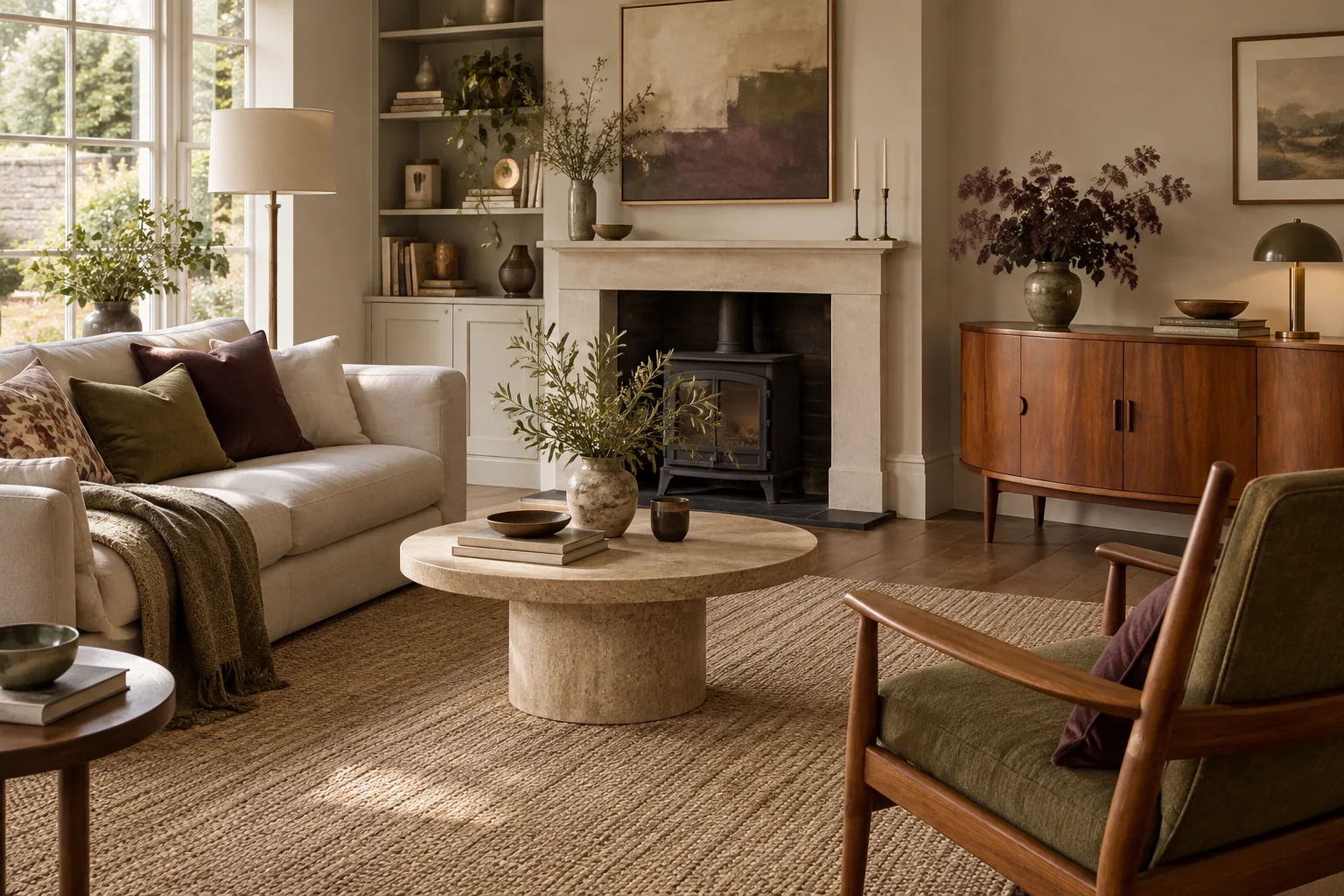
A modern sofa can be the most sensible seat in a room full of older belongings. Its comfort, dimensions and practical upholstery need not apologise for being contemporary. Start by placing it where it supports conversation, viewing or whatever the room is used for most often. Then arrange the older pieces around those activities.
The goal is not to disguise the sofa until it appears antique. A clear contrast can make both old and new more interesting. What matters is that their proportions and materials have some relationship, and that the room feels comfortable to use rather than assembled to satisfy a single period label.
Watch the scale of nearby tables
A deep, low sofa can overwhelm a delicate table that once suited a smaller chair. Check the height and reach of nearby surfaces from a seated position. The table should be easy to use without looking stranded beside the upholstery. An older chest or a broader occasional table may provide a stronger companion than several tiny pieces.
Leave enough circulation space around the group and consider how tables behave when more than one person is seated. A composition can look balanced while providing only one convenient place for a drink. Practical arrangements often look more natural because the furniture has a clear reason to stand where it does.
Choose a bridge between materials
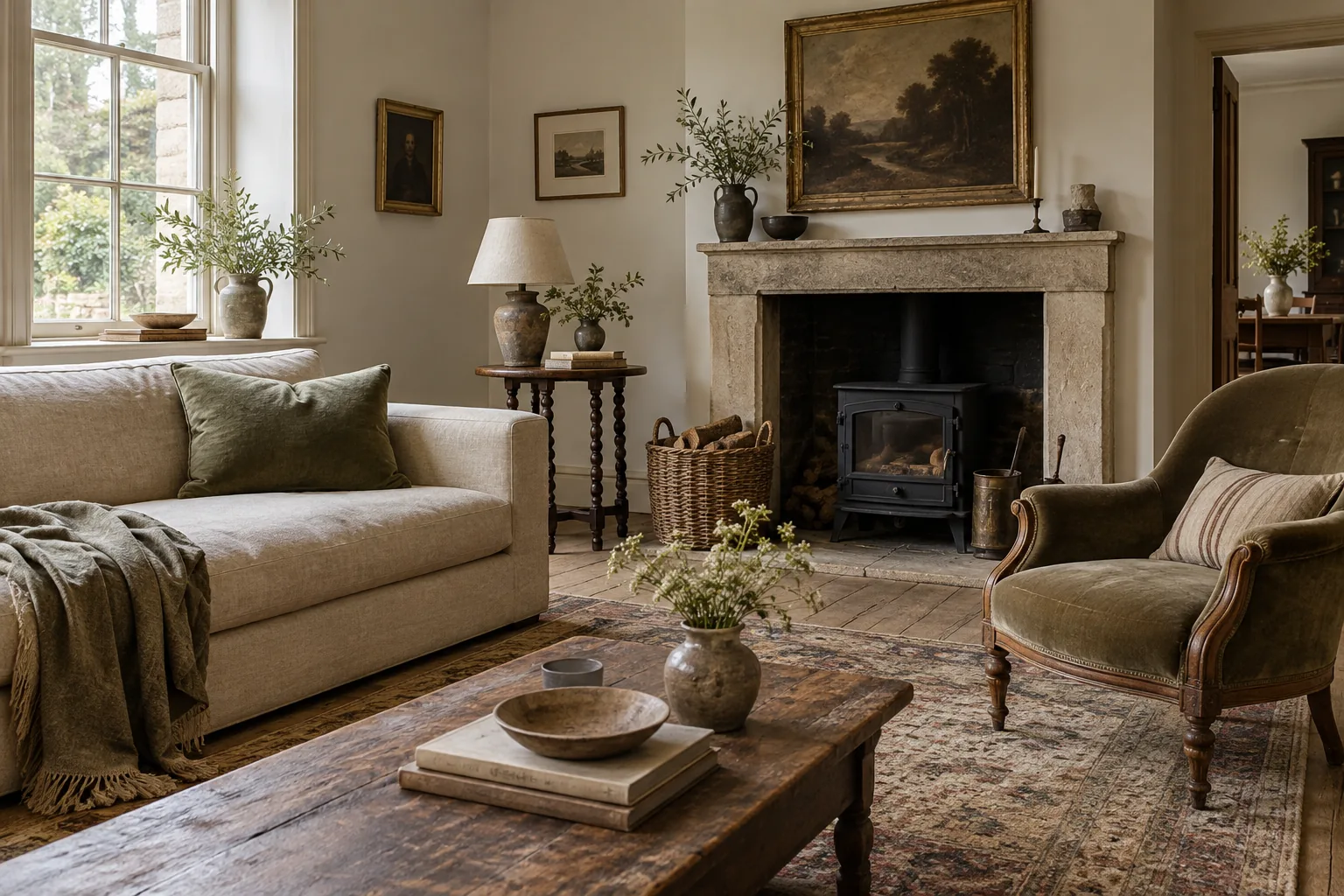
Textiles can connect a contemporary sofa to older timber, metal or ceramics elsewhere in the room. Take a colour from a rug, painting or vintage fabric and repeat it in a modest cushion or throw. One strong connection is often more effective than several unrelated accessories placed across the seat.
Consider texture as well as colour. A softly woven cushion may sit well against smooth upholstery, while a plain throw can quieten an already patterned sofa. Keep the arrangement comfortable and manageable. If every seat must be cleared before anyone sits down, the decorative layers have started to compete with the sofa's main purpose.
Give the older pieces different roles
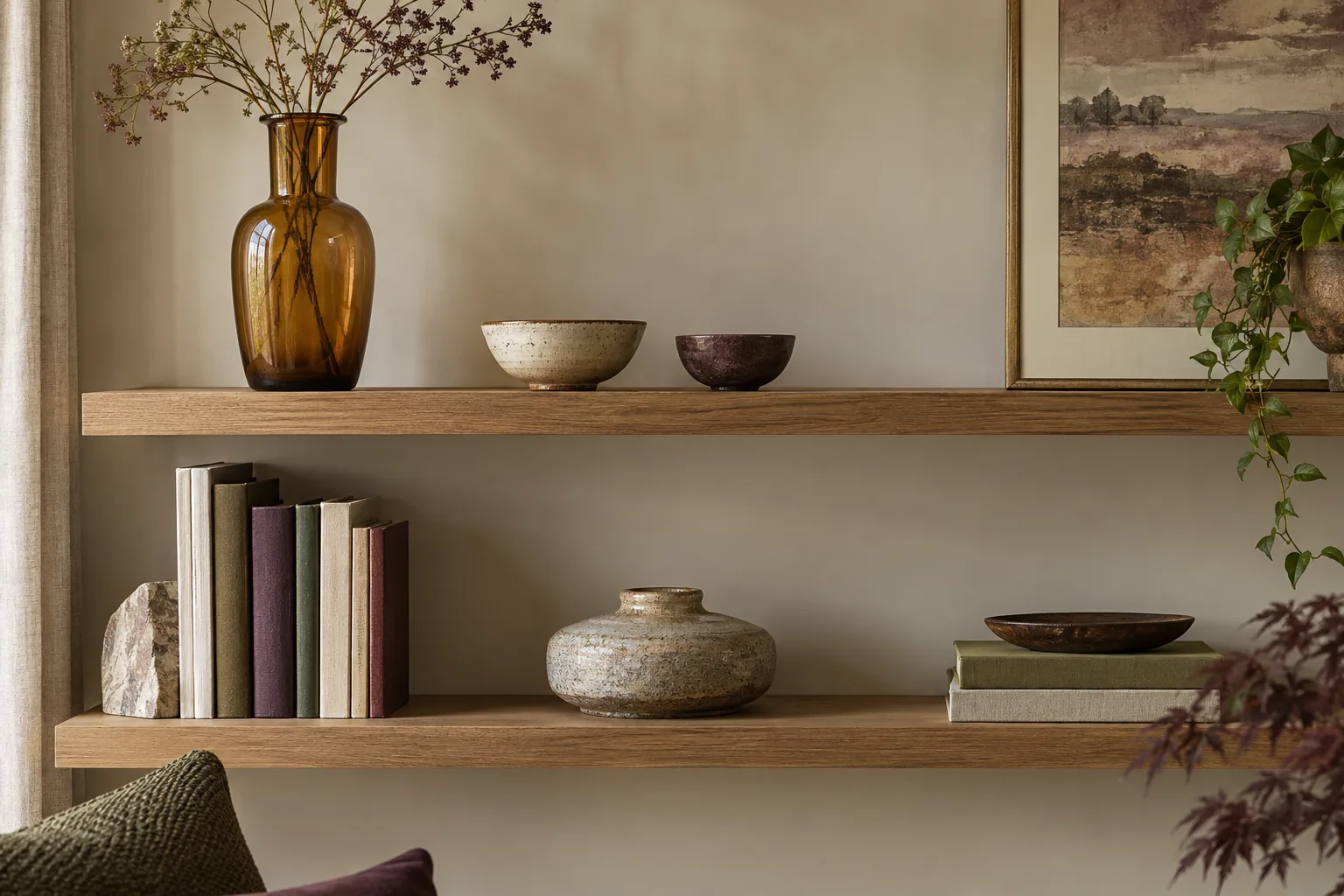
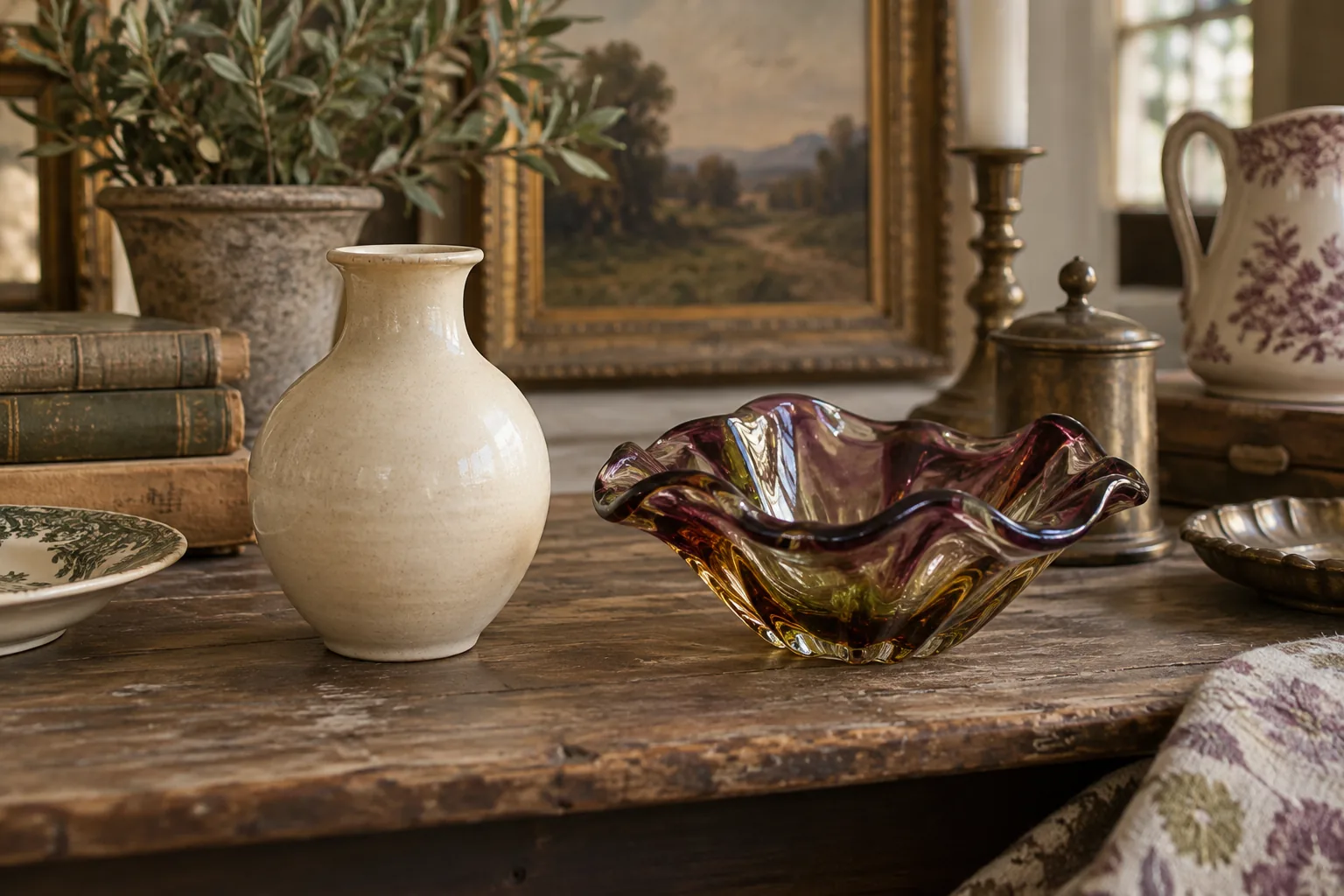
A room can become visually heavy when every vintage item is a substantial dark cabinet. Mix roles and scales instead: perhaps one storage piece, a characterful chair and a few smaller objects. The sofa then belongs to a varied arrangement rather than standing as the only new object among a formal suite.
Look at what happens above sofa height as well. Pictures, curtains and lamps influence the relationship between furniture pieces. A simple artwork or a quieter stretch of wall may make an ornate chair feel more settled nearby. You need not solve every contrast at floor level by adding another table or changing the upholstery.
Avoid decorating by historical permission
You do not need to prove that a sofa and a chest belong to the same era. Instead, ask whether their shapes work together, whether the room has enough breathing space and whether each piece supports daily life. A restrained contemporary sofa can be an excellent backdrop for furniture with more elaborate details.
If the combination feels awkward, try changing position or removing an accessory before replacing a major piece. Often the problem lies in crowding or disconnected colour, not in the age difference. A collected room gains much of its appeal from these mixed origins, provided the arrangement feels thoughtful and its inhabitants have somewhere comfortable to sit.