Decide what the shelf is for
Kitchen shelves become difficult when they are asked to be storage, display and a home for everything that has no other place. Begin by choosing their main job. Shelves near preparation areas may be most useful for everyday items, while a quieter stretch of wall can carry a few purely decorative pieces. Check that the shelves and their fixings are suitable for the intended load. A carefully arranged stack still has weight. Once the practical limits are clear, it is easier to create a display that feels relaxed instead of precarious.
Let everyday objects establish the rhythm
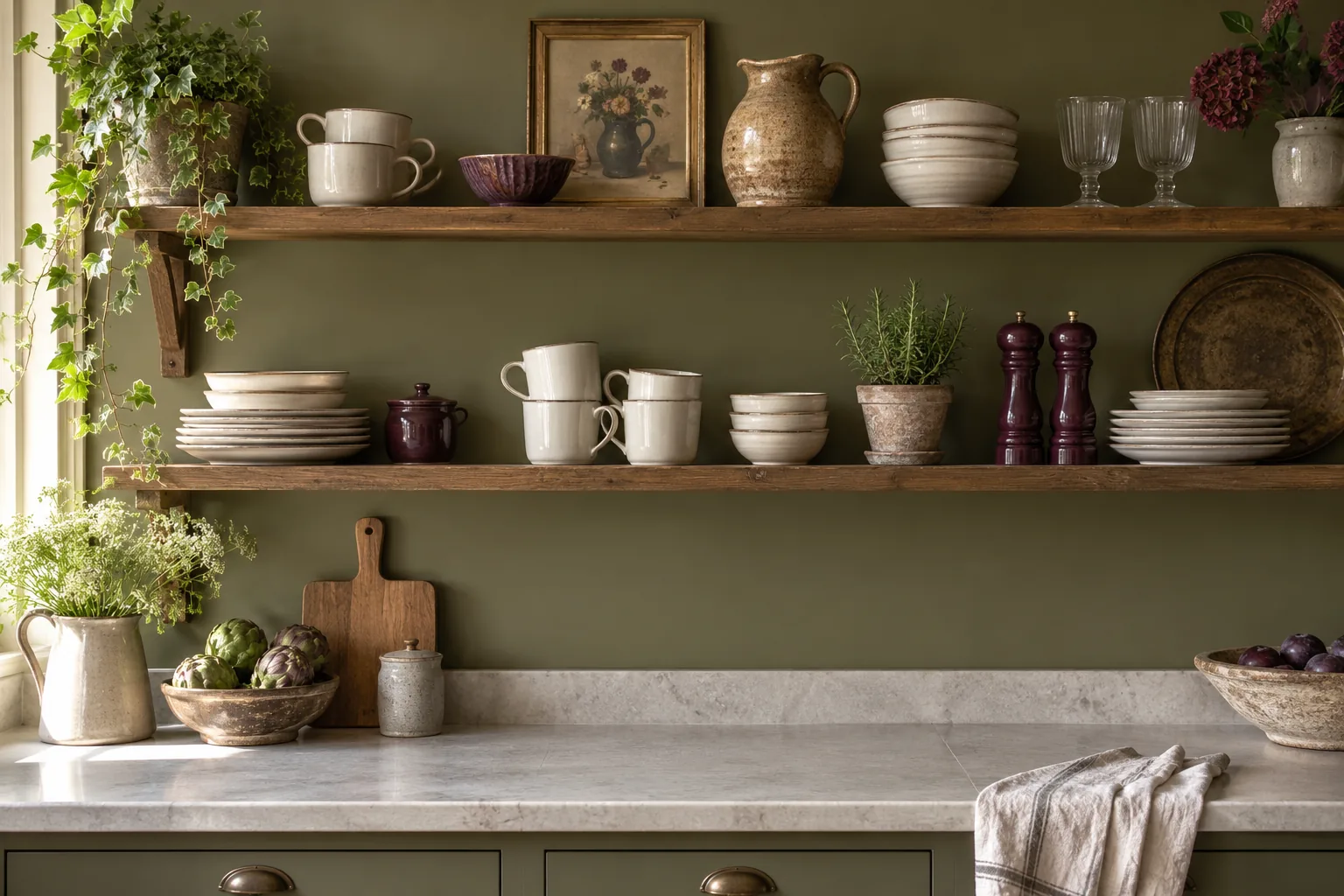
A run of similar mugs or a stack of bowls gives the eye something orderly to read. They need not match exactly: related colours or comparable shapes can provide enough connection. Put the pieces used most often within comfortable reach, avoiding high stacks that have to be dismantled to retrieve one item. Older crockery with uncertain food safety or damaged surfaces is better treated as decoration rather than pressed into service. Keep the distinction clear, particularly when other people use the kitchen and may reasonably assume that an accessible bowl is ready for food.
Interrupt the repetition sparingly
Once the practical items are arranged, add one or two pieces that change the pace. A small framed image, an empty decorative jug or a wooden object may provide a different shape among ceramics. Consider steam, splashes and heat when placing vulnerable materials, and keep decorative objects away from cooking hazards. The display should not require constant moving before you can prepare a meal. If the shelf is shallow, work with that limitation. A single slender object can look more assured than several pieces squeezed forward until their bases nearly reach the edge.
Use the gaps as part of the composition
Open shelving often looks appealing because the gaps make its contents easy to see. Filling every centimetre removes that advantage. Leave some space beside a larger bowl or above a low stack so that each group has an outline. Vary the height between groups rather than making one continuous skyline of tall things. Step back from the kitchen entrance to assess the overall balance. Tiny adjustments made at arm's length can disappear across the room, while one oversized object may dominate far more than it did when you held it in your hands.
Plan for dust and cooking residue
Anything left open in a kitchen becomes part of its cleaning routine. A tightly packed shelf of rarely used objects may be less appealing once each item needs to be lifted and wiped. Keep the arrangement manageable and choose locations away from the worst splashes where possible. Regularly used items tend to reveal whether a layout works: if something is always returned to a different spot, that new position may be more sensible. Let practical feedback shape the styling rather than repeatedly restoring a composition that the kitchen's daily rhythm keeps undoing.
Keep one useful space unassigned
A little spare room on a shelf gives the kitchen flexibility. It might hold a bowl drying after washing or make space for a temporary change in your routine. You do not need to fill it with a decorative purchase simply because it is visible. If the arrangement begins to look crowded, remove the least useful group before reorganising everything. A collected kitchen is convincing when its objects appear to belong to the life being lived there. Clear access and modest breathing space often make that story easier to read than a perfectly packed display.