Plan for the busiest version of the room
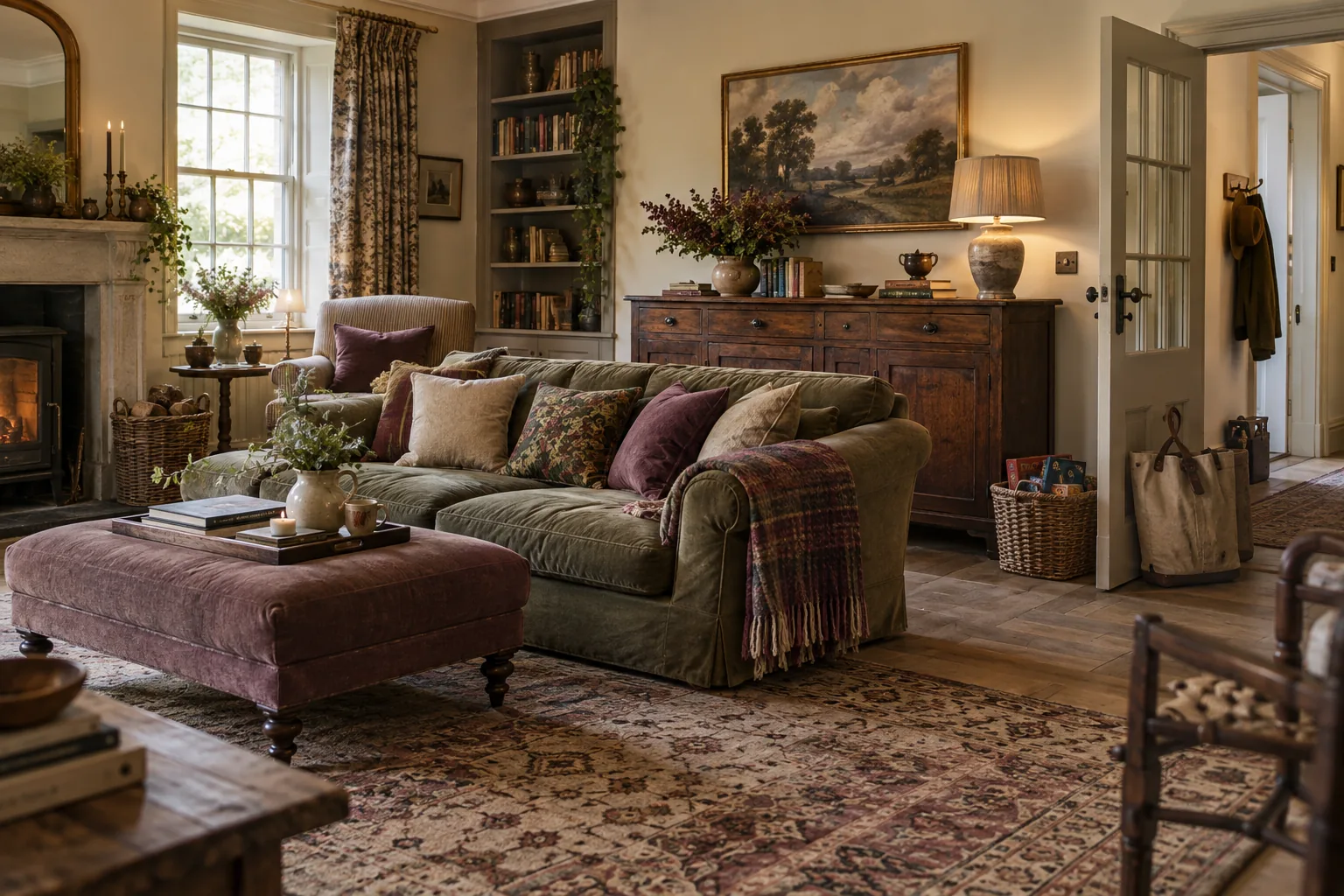
A family room needs to work when several people are using it at once. Picture the busiest ordinary moment: a game on the floor, someone on the sofa and another person passing through with a bag. This gives a more useful guide to furniture placement than the room when it is freshly tidied and empty.
Keep routes clear and consider the reach and behaviour of the people and pets using the space. Older furniture needs appropriate stability and any necessary restraints, while sharp edges, loose parts and uncertain finishes deserve proper attention. Decorative appeal does not establish that an item is suitable for young children. Choose positions and uses that reflect its actual condition and the household's needs, rather than expecting everyone to remember a long list of things not to touch.
Give vulnerable objects a quieter home
A fragile ceramic or sentimental frame may be better appreciated outside the most active area. Placing it high is not always sufficient; consider stability, falling risks and whether the supporting furniture itself is secure. Enclosed, appropriate display storage may suit some objects, while others simply belong in another room.
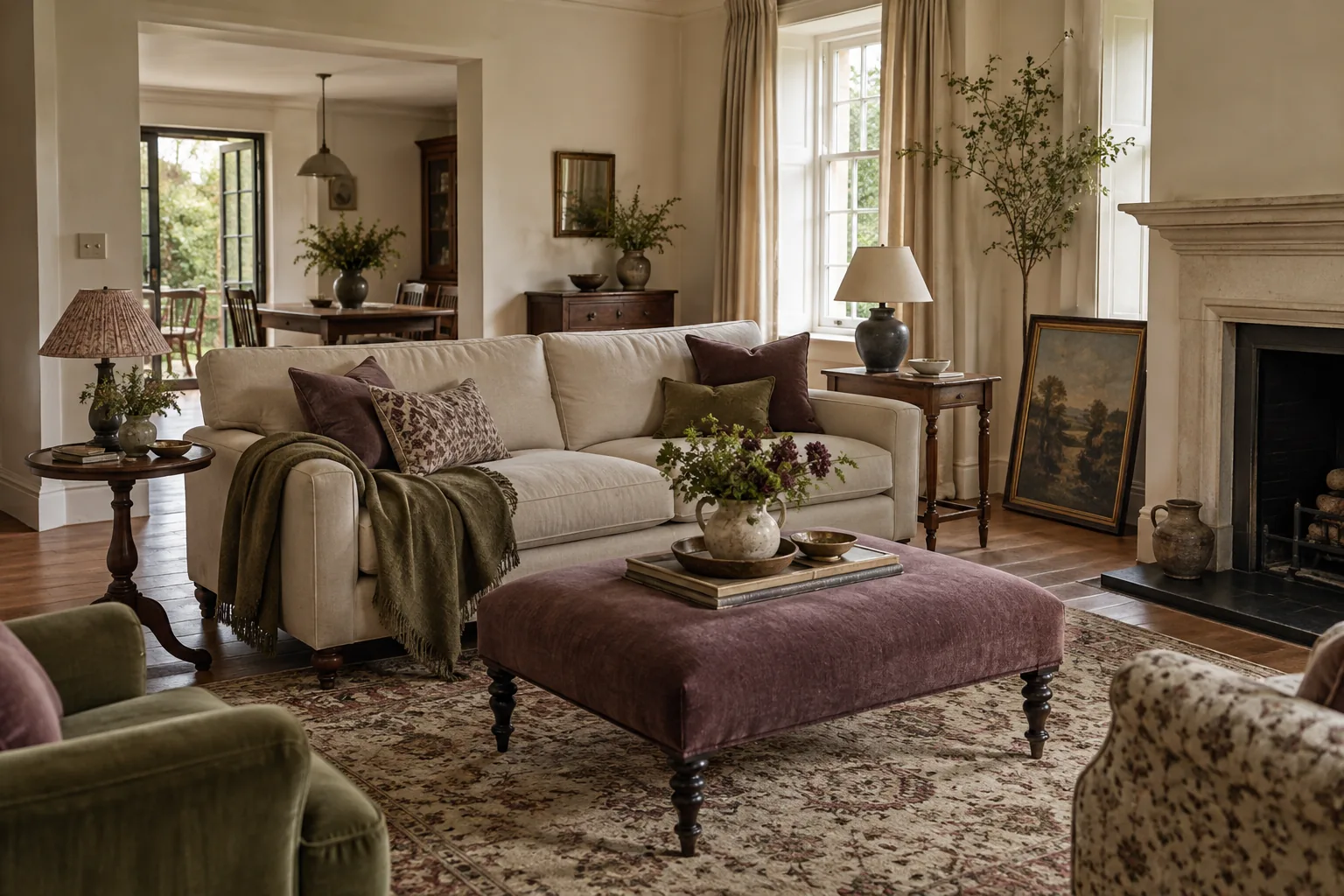
This does not mean the family room must lose its personality. Character can come from the shape of a sound table, the colour of practical textiles or securely displayed art in suitable positions. Fewer vulnerable objects often make the remaining arrangement more relaxed. People can use the room without constantly negotiating around delicate belongings, and the objects kept elsewhere are less likely to become a source of worry or repeated near misses.
Make storage match the clearing-up task
Open baskets, drawers and cupboards are useful only when they suit what needs to go inside. A deep old chest may hold blankets well but be awkward for small pieces that disappear at the bottom. Check mechanisms and suitability carefully, particularly where children may access storage. Do not assume an older trunk or cabinet is safe for every household use.
Keep the clearing-up routine simple enough for the people who will actually do it. One obvious place for games and another for reading material may work better than many finely divided categories. Leave some room spare so storage can absorb the small changes in daily life. Furniture looks more settled when it supports these routines instead of merely hiding an unmanageable accumulation behind an attractive door.
Accept ordinary wear without accepting avoidable damage
A much-used room will not remain photographically perfect, and sound vintage furniture can sit comfortably within that reality. Choose pieces whose condition and finish suit the expected activity, and use appropriate protection where needed. Valuable, delicate or irreplaceable items should not be expected to tolerate unsuitable use merely to create a relaxed appearance.
Arrange textiles so they can be washed or maintained according to their care requirements, and keep surfaces easy to clear. Review the layout as the household changes: a position that worked well one year may become a busy route the next. The room's character should come from familiar, useful belongings and the life around them. Its success is measured by how comfortably that life fits, with the older pieces contributing to it rather than standing apart from it.