Start with enough space to eat
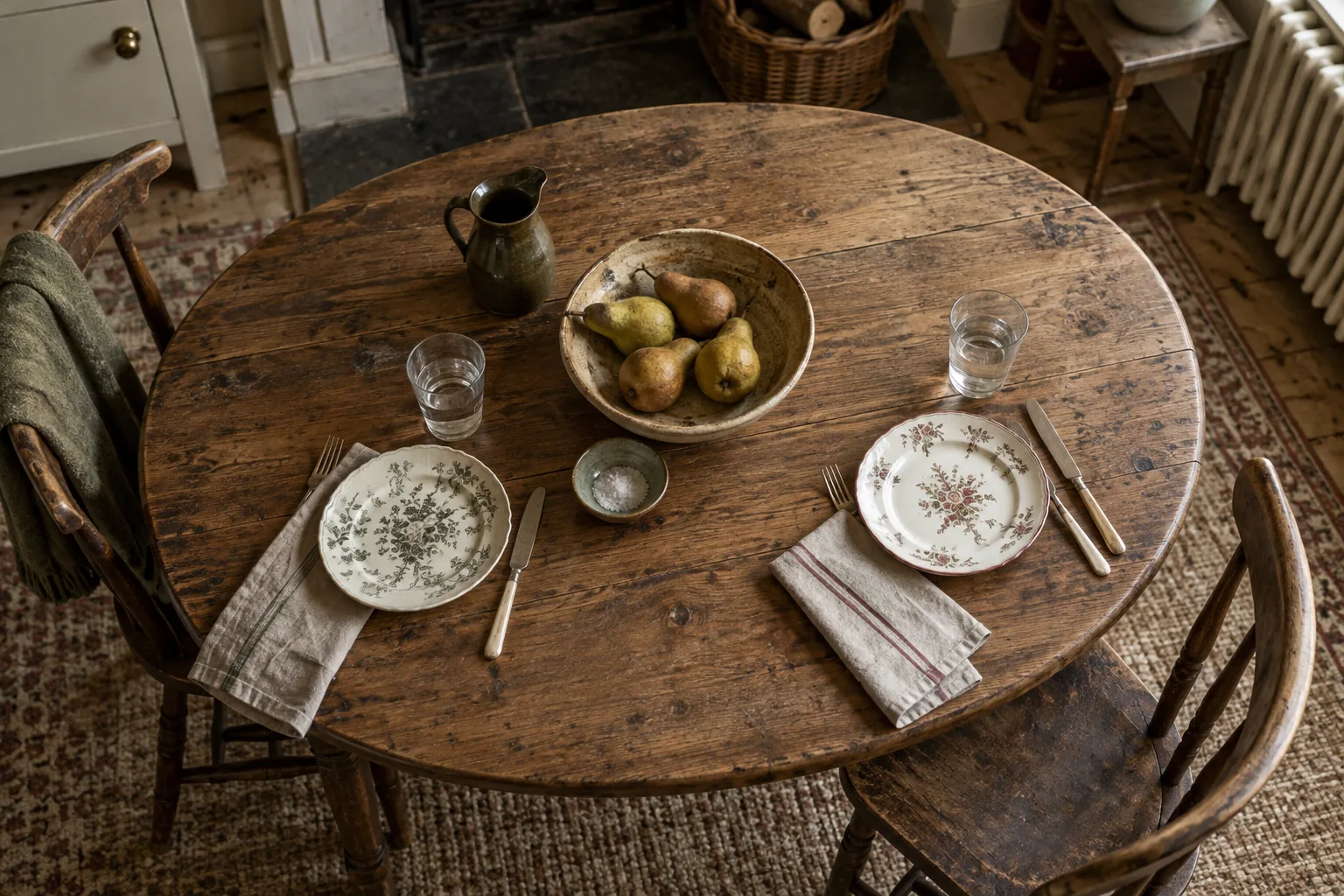
A table setting succeeds when people can reach their food, see one another and put things down comfortably. Place the useful essentials first, leaving space for serving dishes and the movement of hands and elbows. Decorative objects come afterwards, if there is room. On a small table, a single low arrangement may be plenty.
Mixed older pieces can make the setting feel personal, but suitability matters wherever food and drink are involved. Do not assume that decorative vintage ceramics or glassware are safe for serving simply because they look intact. Use pieces with appropriate, reliable suitability for their intended purpose, and keep uncertain or damaged items in a decorative role elsewhere. The table can feel collected without asking every older object to hold supper.
Choose one simple connection
Plates do not need identical patterns to sit comfortably together. A shared background colour, a similar size or a recurring motif can create enough unity. If the crockery is varied, keep the cloth or mats quieter. If the textile is the main feature, plain everyday plates may be the best companions.
Avoid trying to make every component interesting in a different way. Patterned plates, strongly coloured glasses, ornate cutlery and a busy cloth can leave the eye nowhere to rest. Select the element you most enjoy and let the others support it. A table with modest repetitions often feels more generous than one on which each place setting has become a separate decorative project requiring its own explanation.
Keep the centre low and easy to move
A low vase or a small group of suitable objects can give the table focus without interrupting conversation. Test the view from seated height: an arrangement that looks elegant while standing may sit directly between two faces. Keep anything fragile away from the natural route of serving bowls and reaching arms.
If the table doubles as a work or craft surface, make the decorative element easy to remove in one movement. A manageable arrangement is more likely to be used on ordinary evenings than one that requires careful assembly. There is also no need for a centrepiece at every meal. A pleasing cloth, everyday tableware and enough clear space can create an inviting setting on their own, particularly when food arrives in dishes worth looking at.
If you use a table runner, check that plates and glasses sit securely across any changes in texture or thickness. A heavily embroidered section may be lovely to see but awkward beneath a glass, so position the useful items first and adjust the cloth around them.
Let the signs of use belong
Napkins can be folded simply, glasses can differ slightly and the cloth does not need to look untouched once people sit down. A collected table gains charm from the relationship between its parts, not from preventing any sign of occupation. Choose washable textiles for active use and protect delicate pieces in more suitable settings.
After the meal, notice what worked. Perhaps one serving dish was difficult to reach, a decorative object had to be moved or a particular glass felt uncomfortable. These observations help you refine the next setting without starting from scratch. Keep the combinations that make eating together easy. Over time, the table develops its own familiar character through repeated use, with a few older pieces contributing texture and interest around the ordinary pleasure of supper.