Choose the view you want to change
A folding screen can be useful without concealing anything embarrassing. It might give a reading chair a more sheltered corner, interrupt a direct view of a desk or provide a softer background behind a bed. Start with the particular view you want to alter. This is more helpful than buying a decorative screen and searching for an empty wall afterwards.
Stand in the doorway and look across the room. Then sit in the places where you spend time. A screen changes each viewpoint differently, and a position that works from the entrance may block daylight from the sofa. A temporary arrangement of large cardboard panels can help you judge height and width before purchasing.
Think in angles
The overall width of a screen usually describes a dimension that changes when its panels are angled. A screen intended to stand folded cannot be assumed stable when opened into a straight line. Ask the seller to show its normal standing arrangement and explain any known requirements for placement or securing.
Measure the footprint of that arrangement, not just the combined width of the panels. The zigzag may occupy more floor than expected. Keep it out of busy routes and away from doors that could strike it. Where children, pets or other circumstances make tipping a concern, seek an appropriate assessment or choose a different solution.
Inspect both faces
A screen is often seen from behind as well as in front. Ask for photographs of both sides, including the edges, lower corners and hinges. Fabric, paper, painted panels and woven materials each bring different condition questions. A beautiful front should not distract from a weak connection or a damaged reverse that will face the rest of the room.
Check whether panels are aligned and whether hinges allow the intended folding direction. Do not force a screen into a shape it resists. If repairs are needed, consult someone familiar with its materials. Re-covering or repainting may be a more consequential alteration than it first appears, especially when the existing decoration is part of its appeal.
Let it create a useful corner
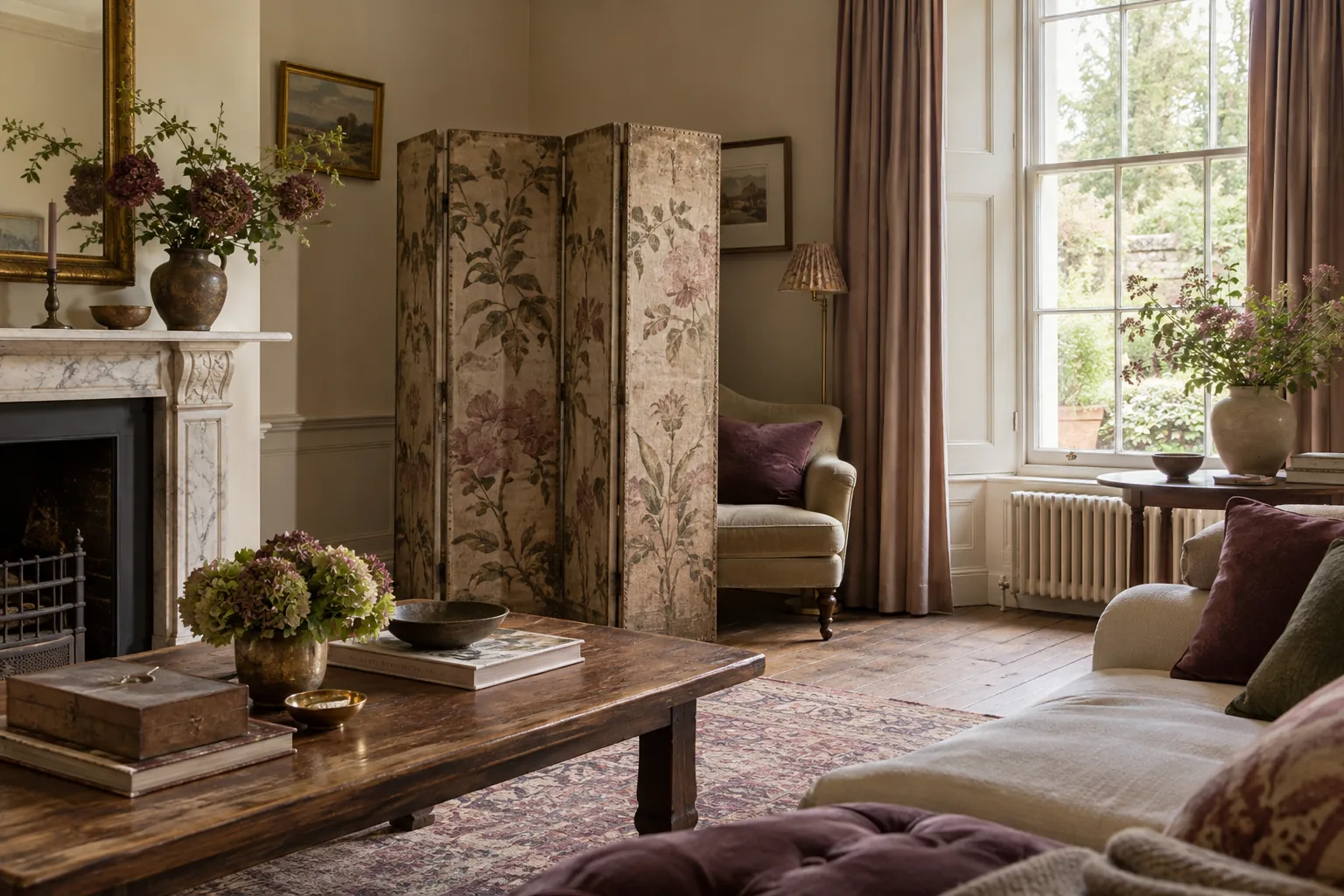
A chair, small table and light can become a recognisable reading area when a screen gives them a background. Leave enough room to enter and leave comfortably. The screen should support the activity, not make the chair feel trapped. In a bedroom, it may provide a place to dress, but check how it affects the route to storage.
Be realistic about privacy and sound. A decorative screen may interrupt a sightline without providing meaningful sound isolation or complete visual coverage. If you need a private working or changing area, assess the gaps and the room's other viewpoints carefully rather than relying on the impression created by one photograph.
Give the screen some visual space. Its pattern, frame and changing angles already provide interest, so nearby furniture can remain relatively quiet. When the arrangement works, the room feels subtly reorganised: the desk recedes, the chair gains a corner, or a previously abrupt view becomes more considered. That is a substantial contribution from a piece that can still be moved when your needs change.