Count the useful surfaces
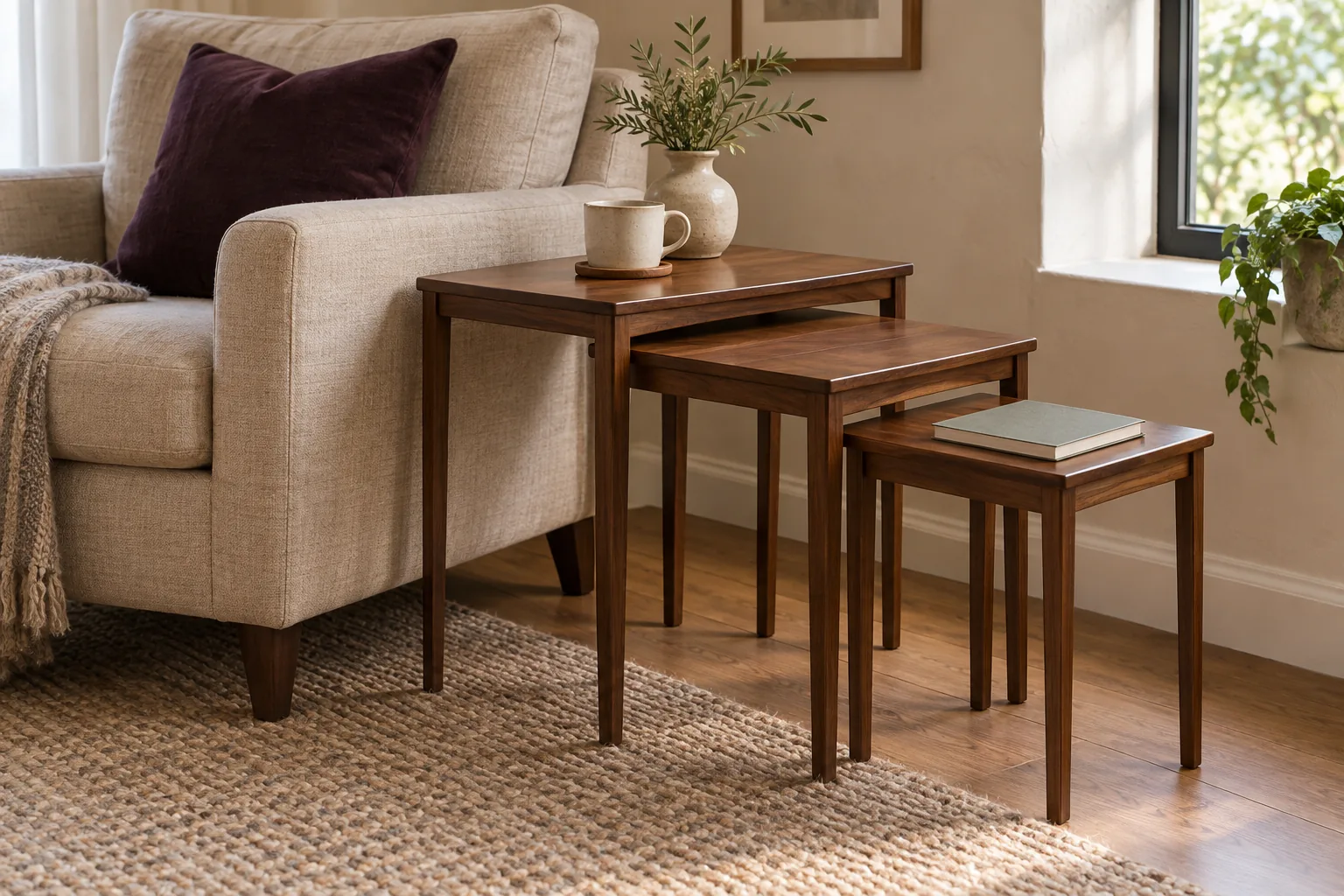
A nest of tables seems an obvious solution when a room occasionally needs extra surfaces. The attraction is simple: several tables occupy roughly the space of one. Yet the smallest member of the group can be too low or too narrow for the task you have in mind. Before buying, judge each table separately, as though you were choosing it on its own.
List the moments when the extra tables would come out. One might hold a drink beside an armchair, another a plate during a casual supper. Measure against the seats they will serve. A surface that requires an awkward stretch from the sofa will not become more convenient because it stores tidily afterwards.
Try the nesting action
Ask the seller to separate and replace the complete group. Look for catching edges, unequal clearances and places where one table rubs against another. The pieces should fit together without force. A charming mismatch of finishes may be acceptable, but an awkward fit can suggest that a group has been assembled from tables that were not designed to nest together.
That need not rule out the purchase, provided the arrangement works and is described accurately. Check dimensions, shape and condition rather than treating matching labels as the sole test. If the lower tables have to be tilted sharply to remove them, consider whether you will want to repeat the manoeuvre with a room full of visitors.
Look at the parts people miss
The top table receives most of the attention in photographs. Request clear views of the others, especially their corners, legs and underside connections. A smaller table may have spent years carrying a heavy plant or serving somewhere else in the house. Its condition can be quite different from the table above it.
Ask about stability on a level surface and inspect any movement or cracks before using the tables. Do not assume they can double as stools. Unless a piece was designed and assessed for seating, keep its purpose to holding suitable objects. The fact that a small table looks sturdy is not evidence of its ability to carry a person.
Compare the smallest table's leg spread with its top. A wide base beneath a narrow surface can be easy to overlook when the group is displayed together.
Let them move around the room
You do not have to keep the whole group nested all the time. The middle table might live permanently beside a chair, leaving two together near the sofa. This can give a room a quiet sense of connection without buying several identical side tables. It also makes the smallest surface accessible when you want it.
Choose a resting place where removing a table does not disturb a crowded display. A lamp with a trailing cable on the largest table can make the group less flexible than expected. One simple object, or an entirely clear top, often suits the furniture better. The pleasure of a nest is the ease with which it responds to an ordinary evening. If you have to dismantle an arrangement before using it, much of that pleasure disappears.
Keep the full set of measurements in your notes. A seller's single width usually describes only the largest table, leaving the practical value of the others impossible to judge.