Separate storage from display
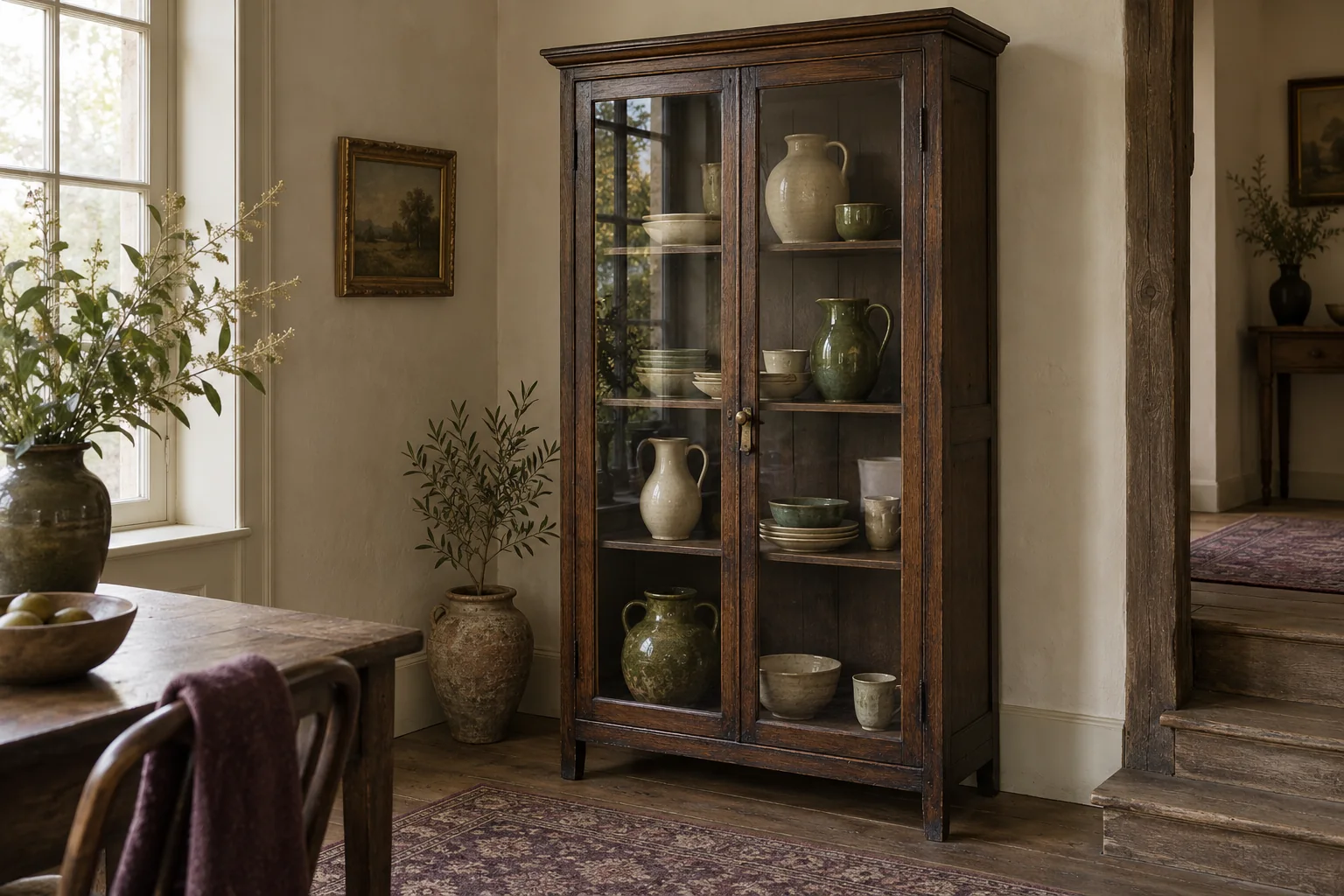
A kitchen dresser often has two personalities. The lower cupboards take care of practical storage, while the upper shelves invite a display. Problems begin when neither role is clear: the cupboards become a miscellaneous archive and the shelves fill with objects that need moving whenever you want a plate. Decide what each half will do before choosing the furniture.
Start with a small group of useful items. Everyday bowls, a favourite jug and a few plates can make a more natural display than a collection assembled only to fill the shelves. Measure their heights and diameters. A plate rack that looks generous may have slots too narrow or shallow for the pieces you own.
Check that the largest serving bowl can be lifted out without tilting against the shelf above it. A close fit in storage can still be awkward in use.
Ask how the two parts connect
Many dressers have separate upper and lower sections, but their construction and fixing arrangements vary. Ask the seller to explain how this particular example is assembled. Do not assume the upper section can stand safely by its own weight. Installation should include appropriate securing measures chosen by someone competent for the furniture and the wall.
Check the full height against the ceiling and consider any cornice or sloping section. Measure the depth of the upper shelves as well as the base. A dresser that looks slim in a front view may project farther into the room than expected. Photographs from the side are especially useful when the listing has been styled tightly against a wall.
Place it within the kitchen's routine
Think about what happens around the proposed position during cooking. A route between the worktop and table is different from a quiet wall in a dining area. Cupboard doors need to open without blocking that route, and frequently used bowls should be accessible without reaching across delicate ornaments. The dresser ought to reduce little inconveniences rather than introduce new ones.
Avoid treating an old dresser top as a replacement kitchen worktop unless its material, finish and suitability have been established. You may prefer to use it for dry storage and serving accessories instead. Keeping the working purpose modest can preserve both the surface and the pleasure of having a piece that feels different from fitted cabinetry.
Edit the shelves by shape
A display becomes easier to read when there is a little space between groups. Gather plates together, let a tall jug stand near something lower, and avoid distributing every colour evenly across all the shelves. The aim is not perfect balance. It is enough that you can recognise the objects and take one down without dismantling the arrangement.
Close the cupboards and step back before adding anything else. The dresser's own doors, mouldings and timber already contribute pattern. A strongly detailed piece may need fewer objects than a plain one. Leave at least one useful surface clear enough to set something down. That small allowance is often what makes the difference between furniture that belongs in a working home and a display you feel obliged to maintain.
Review the arrangement after a few weeks of use. Anything repeatedly moved aside probably belongs elsewhere; anything constantly fetched from another room may deserve a place within reach.