The closed shape is half the story
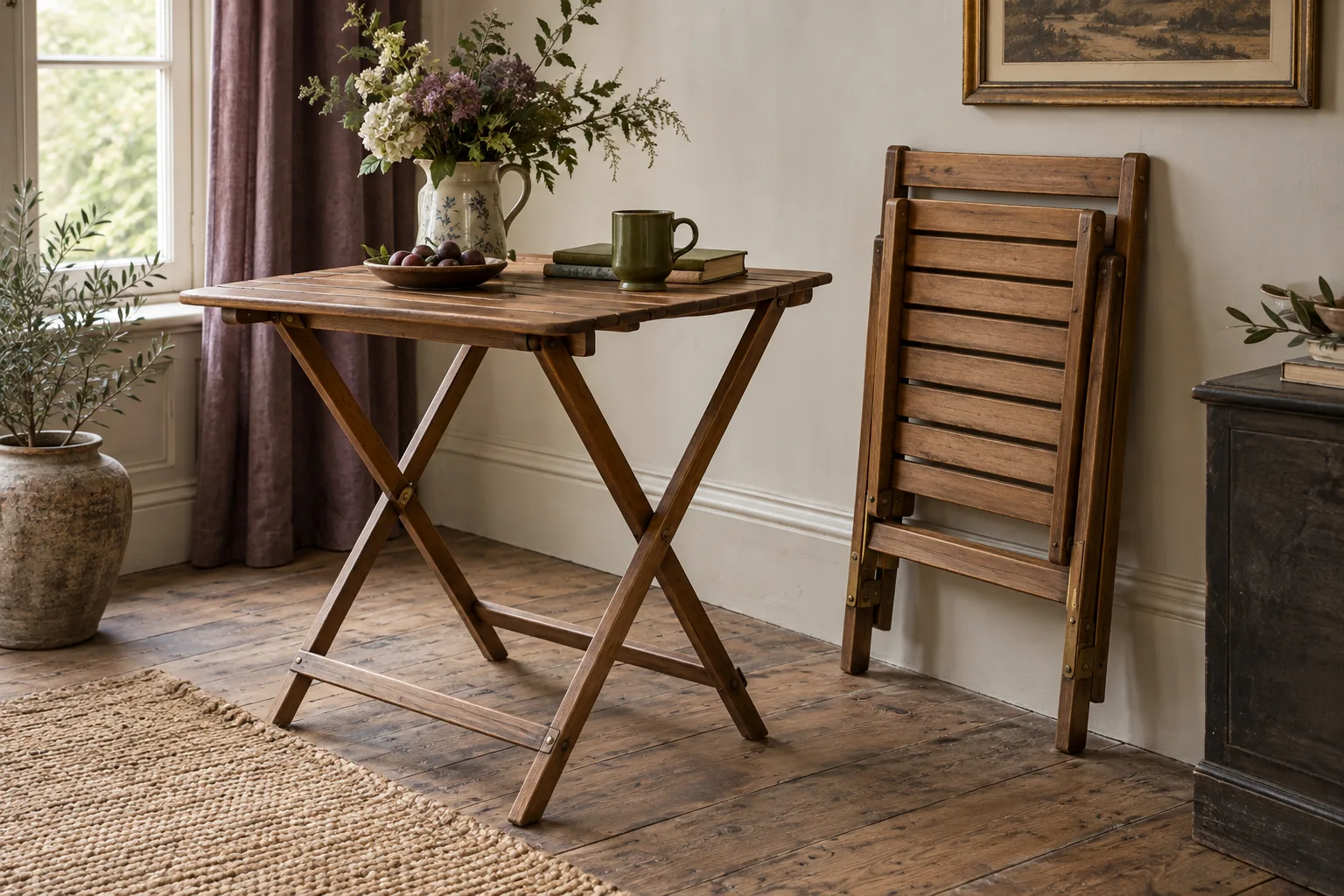
Folding furniture is often sold through a photograph of its clever compact form. That is understandable: the promise of gaining space is appealing. But the open chair or table is what you will actually use. Begin by assessing that version for comfort, dimensions and condition, then consider whether its folded shape solves a real storage problem.
Identify the place where it will wait between uses. Behind a door, inside a cupboard and beneath a bed all impose different limits. Measure that space and compare it with the complete folded dimensions, including projecting fittings. Furniture that almost fits its storage place tends to remain out in the room.
Also check the route between storage and use. A folded table that fits a cupboard may still be cumbersome to carry through a narrow doorway every evening.
Watch the mechanism work
Ask the seller to open and close the piece slowly, showing how any catches, braces or locks engage. The action should be understandable and complete. If a mechanism seems uncertain, sticks or relies on an improvised part, obtain a proper assessment before using it. A compact design offers no advantage if its support is questionable.
Keep hands clear of moving joints while it is demonstrated. Do not try to overcome resistance with force. Ask whether all components are original to the piece or whether anything has been replaced. A replacement may be perfectly suitable, but its role and condition should be clear rather than hidden in a broad description of good working order.
Test the everyday routine
Consider the full sequence: retrieve the piece, carry it into position, unfold it and return it afterwards. Weight matters during each step. A substantial folding table may store neatly but still be impractical for one person to move. If setting up requires help, decide whether that matches how you expect to use it.
For occasional dining, check the open table with the chairs that will accompany it. Folding supports can occupy the same space as knees or feet. For a chair, try the seat only once its condition is established and judge it as seating, not as a clever object. Temporary use does not mean comfort is irrelevant.
Choose a realistic frequency
Furniture opened twice a year can tolerate a more involved routine than something you want to use every morning. Be honest about your patience. If the dining table needs folding away daily, a simple and convenient operation is central to the purchase. If it serves an occasional craft project, storage efficiency may deserve greater weight.
Think about what remains on the furniture when you want to fold it. A table covered with an ongoing project cannot disappear conveniently just because it has hinges. Provide somewhere else for those materials, or accept that the table may stay open for longer periods.
The best folding piece feels ordinary once set up and untroublesome when put away. It should not demand special explanations from every guest or occupy the hallway while you decide where it belongs. Choose it because the complete routine suits your home. The ingenuity of the design is a welcome extra when the practical details already work.