Bring the hanger
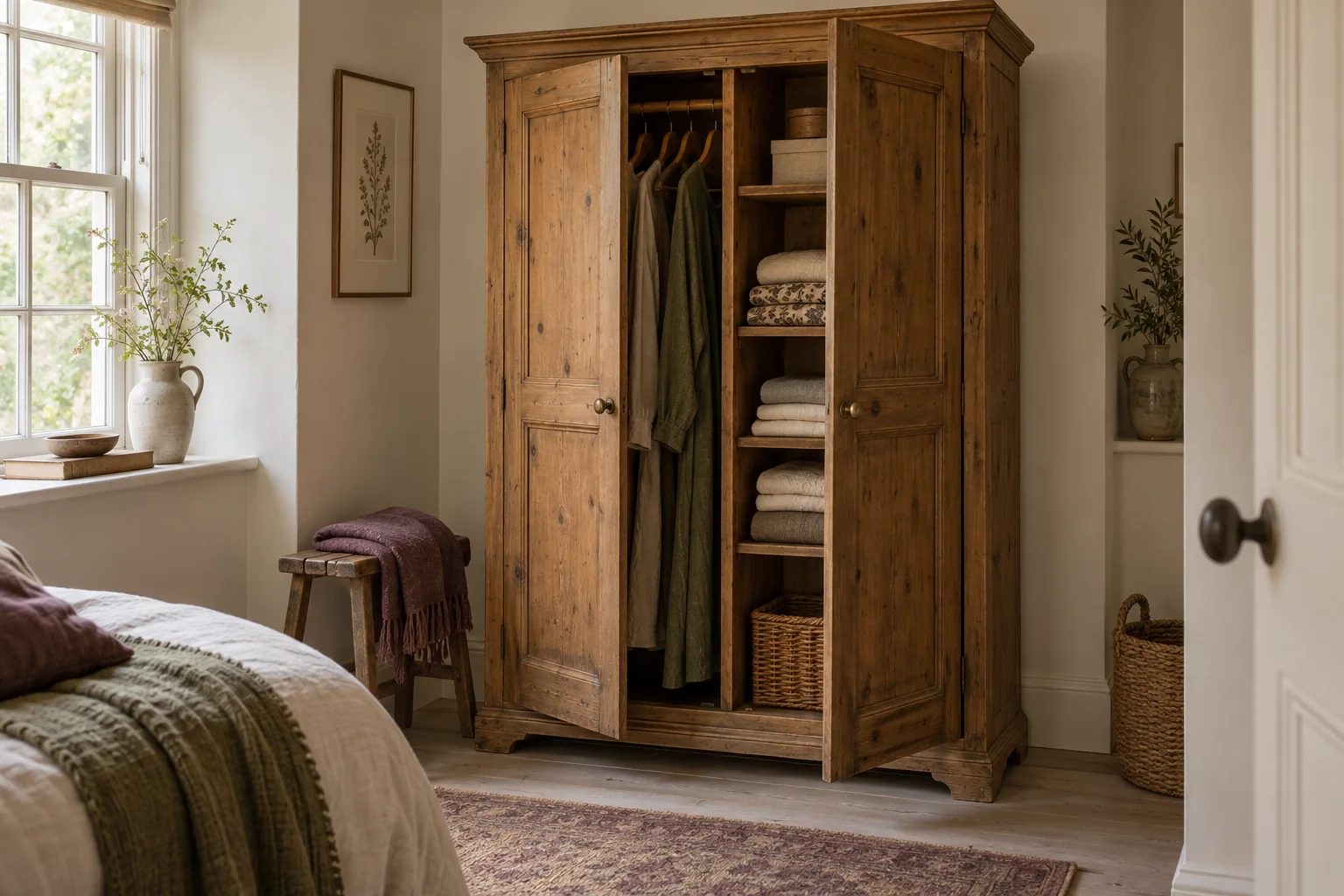
An old wardrobe can be beautifully proportioned and surprisingly awkward for contemporary clothes storage. The exterior may appear deep enough, yet the rail sits behind a thick door or too close to the back. Take one of your usual hangers to a viewing, or measure it at home. A shirt should hang freely without being folded against the door each time you close it.
Internal height deserves the same attention. A compact cupboard that suits jackets may not accommodate a long coat or dress. Write down the longest garment you intend to store and allow for the hanger above it. If the interior includes a fixed shelf, check the usable hanging space beneath it rather than relying on the overall height given in the listing.
Include shoes and bags only if you plan to keep them here. An empty-looking bottom compartment can become crowded once hems and longer sleeves occupy the space above it.
Choose between hanging and folding
A wardrobe does not have to do everything. In a bedroom with a generous chest of drawers, a simple hanging compartment may be enough. If you lack drawer storage, shelves could be more valuable than a second rail. Work out what is already housed elsewhere before buying a cabinet with an elaborate internal arrangement that solves problems you do not have.
Be cautious about assuming the interior can be changed easily. A shelf may contribute to the construction, and an old fitting may deserve to remain in place. Ask a suitable furniture professional about proposed alterations before purchase. The attractive price of an unsuitable wardrobe can disappear once modifications and refinishing become part of the plan.
Remember the door swing
In a narrow bedroom, the doors can be the deciding factor. Mark their opening arc alongside the bed and bedside furniture. You need room to stand in front of the wardrobe while reaching inside, not merely enough space for the doors to move. A mirrored door also changes what the room reflects when it is open or closed.
Check whether handles project into a busy route and whether the base accommodates the skirting board. A wardrobe that has to stand forward from the wall may feel substantially deeper than expected. Tall furniture should have appropriate anti-tip arrangements suitable for the piece and your wall; discuss installation with someone competent rather than improvising around fragile decorative elements.
Ask how it reaches the bedroom
Some wardrobes separate into sections, while others do not. Never infer that yours dismantles from the appearance of a similar example. Request photographs of the construction and written confirmation of the components that can be separated safely. A removable cornice might reduce the height without making the main body any easier to carry around a landing.
Once dimensions and delivery are settled, consider how visually demanding the piece will be. A restrained front can sit comfortably beside patterned bedding; an ornate wardrobe may need a quieter wall. Let the storage work dictate the shortlist, then choose the one you enjoy looking at. A bedroom feels more restful when its most substantial cabinet closes properly, holds the right clothes and does not require a daily negotiation with the bed.