Meet the chair without the styling
An armchair can be transformed by a well-chosen fabric, which is precisely why the fabric should not make the whole decision. In a listing, a striped cover or a beautifully worn leather surface can distract from the depth of the seat and the height of the arms. Imagine the chair in a plain cover for a moment. Does the shape still appeal?
Ask for photographs without decorative cushions or throws. They may be entirely innocent additions, but they conceal proportions and condition. You want to see the full seat, the back and the junctions around the arms. A clear side view is often more informative than another carefully styled image from the front.
Find your sitting position
Some chairs encourage an upright posture, while others invite you to curl up. Neither is a universal improvement on the other. Consider whether you plan to read, talk, watch a screen or occasionally work with a notebook. Sit in the chair long enough to find out whether it supports that activity comfortably.
Notice whether your feet rest naturally, whether the seat edge presses behind your knees and whether the arms are at a useful height. A chair chosen for one person may not suit everybody equally. If it will be the room's main spare seat, test it with more than one member of the household where possible.
Price the whole project
If you intend to reupholster, consult an upholsterer before buying. Supply dimensions and photographs, then ask what further inspection is needed for a meaningful quotation. Fabric is only one part of the work. The condition of the frame, padding and support may affect the scope considerably, and intricate shapes can require more work than they initially suggest.
Ask the seller what is known about previous refurbishment and request any documentation. A fresh cover is not proof that all the underlying components were renewed. For regular domestic use, discuss suitability and any applicable requirements with a competent upholsterer or supplier. Avoid relying on an attractive photograph or an unsupported description such as fully restored.
Set a total budget that includes collection, the work and return delivery. A low purchase price does not necessarily make the completed chair an inexpensive choice.
Allow it enough room to be comfortable
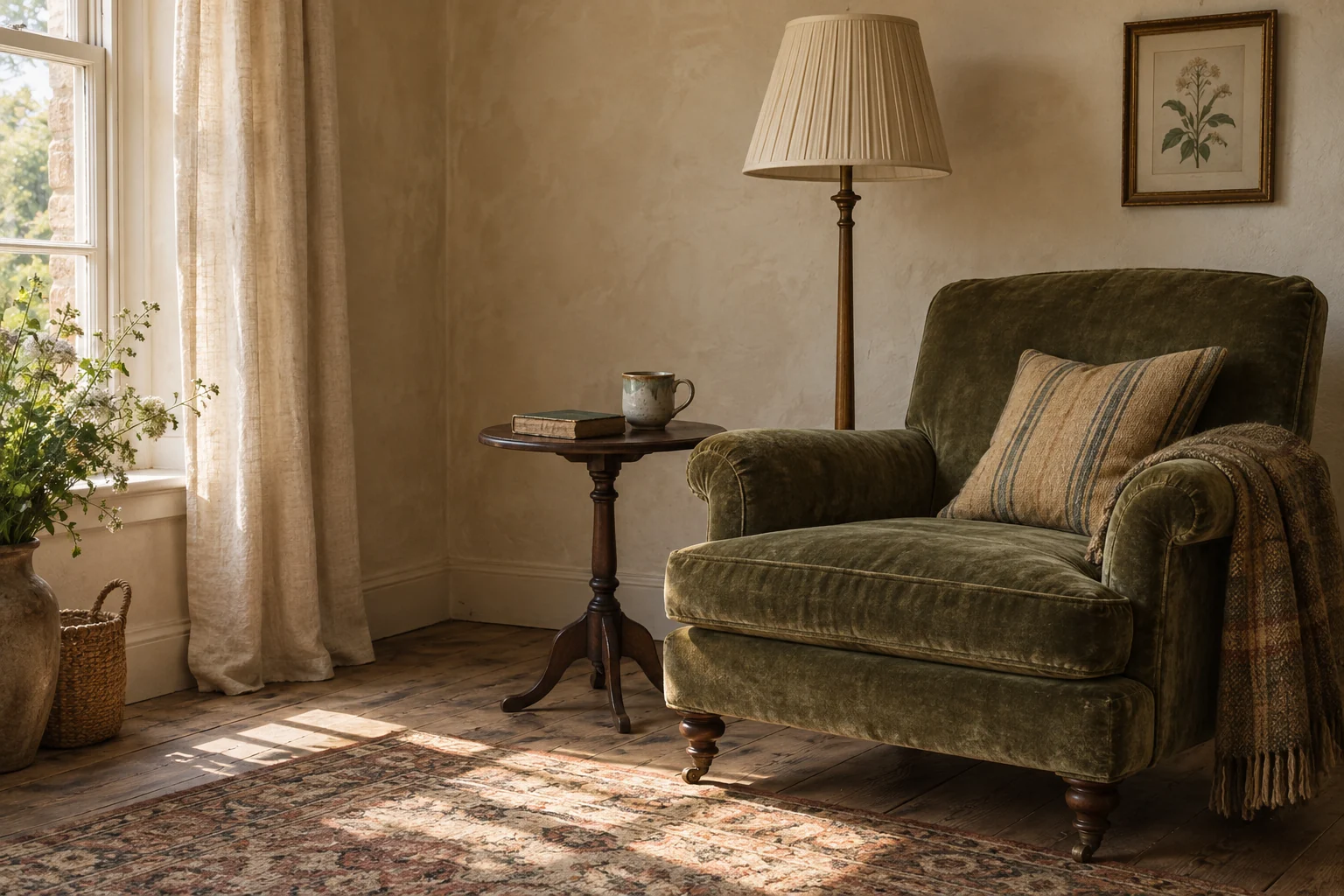
Mark the chair's full width and depth, including projecting arms. Then add space for your feet and for somebody to pass. An armchair can fit into a corner yet feel trapped there once a side table and lamp arrive. Consider the angle you want to place it at; turning a broad chair diagonally often uses more space than expected.
Choose surrounding pieces that support its use. A reading chair needs a sensible light source and somewhere reachable for a book. A conversational chair should face the room rather than stare at a wall because that is the only orientation that fits. Once these decisions are clear, enjoy selecting the fabric or finish. It will have a better chance of remaining a pleasure when the chair underneath already works.
Check the delivery route before paying a deposit. Upholstered arms cannot usually be squeezed through a narrow opening simply because their surface feels soft; the frame beneath still has a fixed size.