Look through the chair
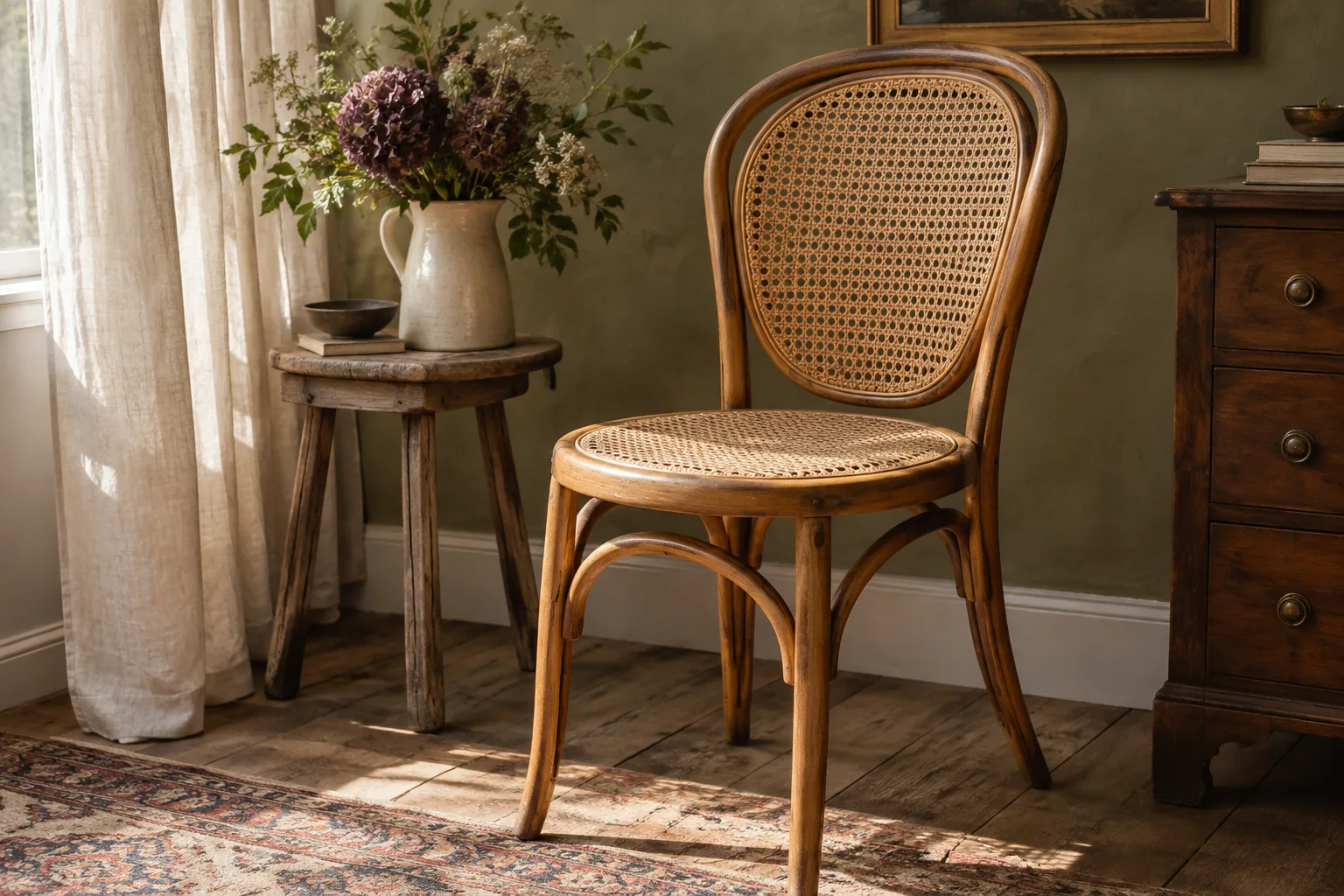
Cane has a useful visual quality: it allows a chair to occupy space without filling that space completely. Against a plain wall, the open weave casts a delicate pattern. Beside a substantial wooden table, it can make the whole arrangement feel less heavy. Before comparing styles, decide whether it is that transparency, the warm colour or the texture that attracts you.
Those qualities are visible whether the cane appears in the seat, the back or both. The practical demands differ, however. A back panel and a seat do not carry the same loads during use. A chair with a sound timber seat and a decorative woven back should not be assessed as though every part has the same role.
Ask for close photographs
Request images of the weave from above and below where accessible. Look for missing strands, splits, detached edges and conspicuous areas of sagging. Do not press hard on a doubtful seat to discover whether it will fail. Ask the seller about its condition and whether a specialist has assessed it for use.
A cushion may make a chair look inviting while obscuring the very area you need to inspect. Ask to see the uncovered seat. If repairs are necessary, consult someone who works with chair caning and provide photographs of the frame and attachment method. Different constructions can require different work; a generic repair estimate is not a reliable substitute for examining the actual chair.
Judge the timber around the weave
The frame matters as much as the woven panel. Check the seat rails, joints and the points where the back connects to the rest of the chair. Replacing cane does not remedy a weakened frame. If both need attention, obtain a coordinated assessment before buying so you understand the likely sequence and scope of work.
Ask what has already been replaced and whether the seller has records of that work. A renewed seat is not inherently a drawback, particularly if the chair is intended for regular use. The important distinction is between a clear, competent repair and an unexplained alteration. Treat an unfamiliar maker's name and a newly woven seat as separate questions.
Choose a sympathetic place to use it
A cane chair often sits beautifully beside textured linen, painted walls and simple timber furniture. It does not need an entire room of woven objects to belong. Repeating the colour in a basket or picture frame may be enough. Too many competing weaves can make the original lightness harder to appreciate.
Think about the chair's routine rather than only the styled corner. Will people move it frequently, drape heavy bags over its back, or use it as a step? Choose a different piece if the likely treatment is unsuitable. For care, follow advice appropriate to the material and its condition instead of applying an online soaking or tightening remedy. The Canadian Conservation Institute's guidance on plant materials is a useful starting point for understanding why these objects deserve material-specific care.
If you need an everyday dining set immediately, sound seating is worth prioritising over a repair project. A beautiful chair awaiting specialist work is still one less usable seat at supper.