A chest is a collection of smaller spaces
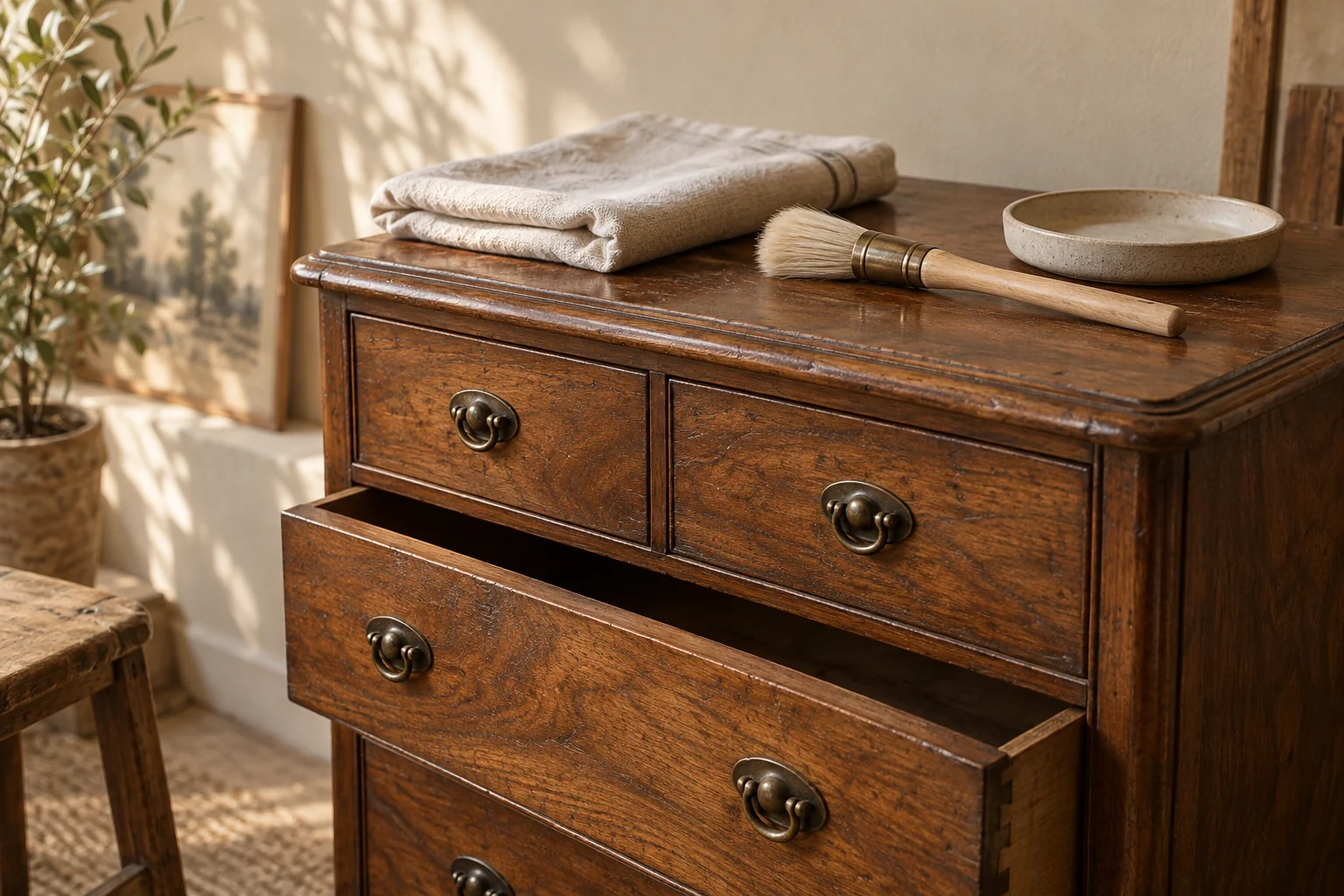
From across a shop, a chest of drawers reads as one object. At home, you use it as several separate compartments, each with its own depth and daily purpose. That difference explains why a handsome chest can prove disappointing. Its broad front may conceal shallow drawers, or its one deep bottom drawer may become an unhelpful pile of jumpers.
Decide what belongs in it before choosing the arrangement. Small items benefit from modest compartments; bulky clothing needs usable depth. Measure a folded stack that represents how you actually put clothes away. There is little point selecting furniture around an exceptionally neat folding method you have no intention of maintaining on a busy weekday.
Try the whole sequence
Ask to open each drawer separately and notice how smoothly it travels. Does it catch at the same point every time? Is there a sensible stop, or can it come free unexpectedly? Close it again and look at the fit across the front. Differences between drawers can reveal practical issues that a photograph of the closed chest cannot show.
Do not force a reluctant drawer or accept a vague assurance that use will fix it. Ask what the seller knows about the problem and whether a repair has been assessed. Drawers can be affected by several different conditions, and appearance alone will not identify the cause. A clear description is more useful than a generous application of polish before collection.
If the chest comes with a key, check which locks it operates. A key included for appearance is not the same thing as functioning storage you can secure.
Inspect where clothing will rest
Look at the bottoms and corners, including the underside when the seller can show it safely. Check for gaps, rough repairs, loose panels and strong odours. A drawer liner might conceal wear or simply reflect someone's preference; ask to see beneath it rather than making either assumption. Delicate clothes need an interior that will not snag them.
Handles deserve a practical test as well as an aesthetic judgement. Small knobs may be awkward on a heavy drawer, while projecting handles can catch clothing in a narrow room. Replacement fittings are not automatically a problem, but they should be described honestly. If the existing ones appeal to you, avoid buying with an immediate plan to change them just because a new finish is fashionable.
Place it for everyday access
A chest beside a bed needs room for a person and an open drawer at the same time. Mark that working space, including any bedside table nearby. Consider the height of the top if it will hold a mirror or serve as a place to put things while dressing. The most comfortable arrangement is often easier to recognise by trying a similar surface than by reading dimensions.
Stability is part of the purchase, not an afterthought. Discuss suitable anti-tip measures and installation for the particular chest and wall, especially where children may be present. Avoid opening several drawers together during inspection. Once the practical details are settled, the choice becomes pleasantly simple: choose a front you like, a size that fits and a set of drawers that make putting things away less of a chore.