Sort a shelf before choosing a cabinet
The quickest way to understand your storage needs is to look at the books that currently refuse to fit anywhere. Large illustrated volumes require a different space from paperbacks. A shelf filled with cookbooks behaves differently from a neat row of slim novels. Measure a representative selection, including the tallest and deepest examples, before you start comparing bookcases.
Count how much shelf length you already use and leave room for a realistic amount of growth. Avoid planning around tightly packed rows with no space to pull a volume free. If you often stack books horizontally, allow for the inconvenience of retrieving the bottom one. A bookcase should support the way you read, not require a new set of habits to preserve its appearance.
Look closely at the shelves
Ask for the internal depth and the clear height between fixed shelves. Adjustable shelves offer flexibility only when their supports are complete and suitable. Check how they are held in place and whether replacement fittings would be needed. A listing that gives only the overall height and width leaves most of the important questions unanswered.
Inspect shelves for visible bowing, damage and uncertain repairs. Old furniture rarely comes with a documented load rating, and an attractive shelf is not automatically suitable for a dense row of heavy books. Seek an informed assessment when capacity is unclear. Avoid treating glass shelves or delicate display shelves as book storage merely because the cabinet is the right size.
Choose access as carefully as appearance
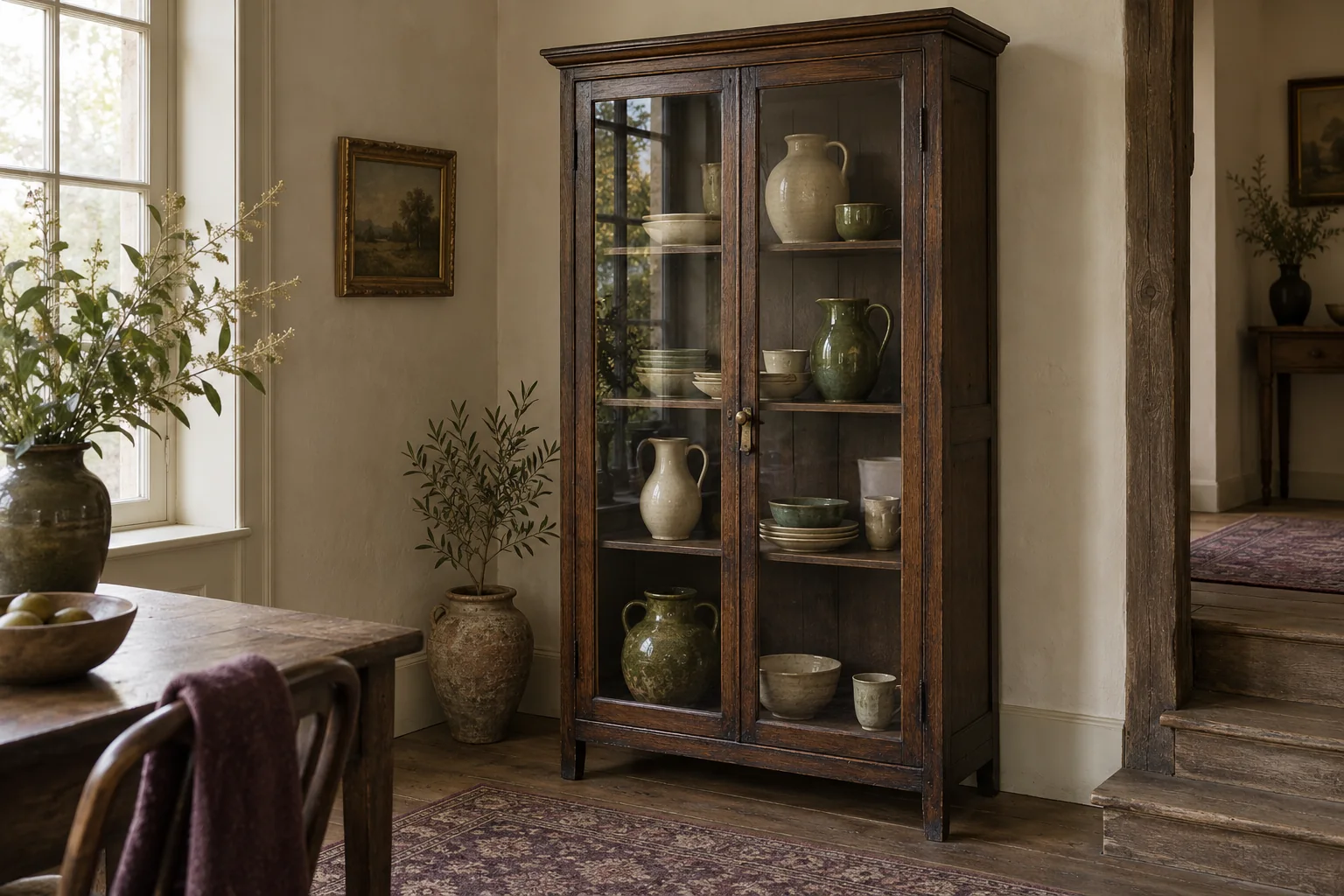
Glazed doors can create a lovely library feeling, but you need enough room to open them while holding a book. In a passage or beside a sofa, their swing may be inconvenient. Open shelves offer simpler access but put everything on view. Neither is the universally tidier choice: the result depends on how frequently the collection is used.
Consider what you can comfortably reach. High shelves may suit rarely consulted books, but furniture should never become a climbing frame. Plan safe access with an appropriate step stool and keep the route clear. Tall units also require a suitable anti-tip arrangement assessed for the cabinet, its contents and the wall; do not rely on a heavy appearance as evidence of stability.
Let the collection set the rhythm
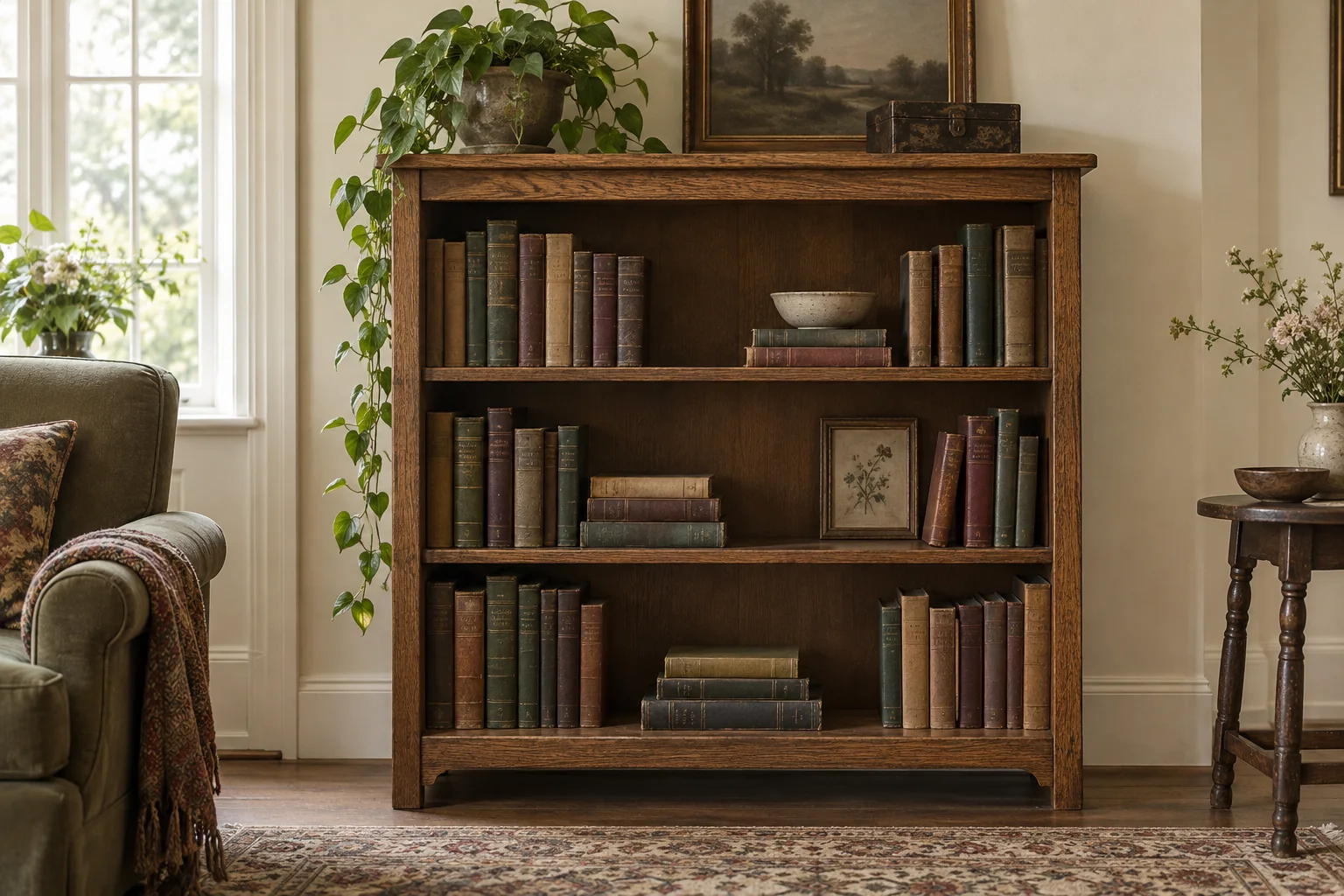
A bookcase does not need a vase in every second gap. If books are the reason for buying it, let them occupy most of the useful space. One open area for a meaningful object can be more convincing than an elaborate alternation of colours, stacks and decorative bowls. Organise in a way that lets you find things again.
Take the room's existing lines into account. A low bookcase can continue the height of a windowsill or sit behind a sofa; a tall, narrow piece can use a difficult wall without spreading across it. Compare these options before defaulting to the largest cabinet that will fit. Good book storage makes the collection accessible and the room calmer, even when the books themselves are gloriously varied.
Photograph the empty interior during a viewing. It is easier to judge shelf spacing later when you can see the structure without the seller's objects obscuring it.